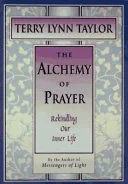
The Alchemy of Prayer
 75
75

The Alchemy of Prayer
Terry Lynn Taylor's "The Alchemy of Prayer" offers a refreshing perspective on a practice often relegated to rote repetition. The book’s strength lies in its practical, almost alchemical, approach to prayer, treating it as a process of transformation rather than a one-way request. Taylor's examination of prayer as an energetic exchange, particularly her concept of aligning internal vibrations with desired outcomes, provides a compelling framework for spiritual practitioners. A limitation, however, is the book's occasional reliance on broad assertions without extensive empirical grounding, a common challenge in esoteric literature. The passage discussing the "inner laboratory" of the mind, where intentions are refined and transmuted, stands out for its vivid metaphor. Ultimately, "The Alchemy of Prayer" serves as a valuable, accessible guide for those seeking to empower their spiritual dialogue.
📝 Description
75
Terry Lynn Taylor's 1996 book reinterprets prayer not as begging, but as a creative force.
Published in 1996, "The Alchemy of Prayer" by Terry Lynn Taylor frames prayer as more than simple entreaty. Taylor describes it as a practical, internal discipline capable of altering one's perception and experience of reality. The work moves past standard devotional repetition to examine the psychological and energetic factors behind prayer's effectiveness.
This book is for individuals seeking a more substantial connection to the divine or their own inner awareness. It addresses those who find traditional prayer unfulfilling and wish to imbue their spiritual practices with tangible outcomes and personal development. Students of esoteric thought, mystics, and anyone interested in applying spiritual principles will find value here.
This work draws on a tradition that views spiritual practice as active transformation, influenced by figures like Paramahansa Yogananda. It aligns with a mid-1990s interest in New Age spirituality, focusing on the mind-body-spirit connection and the potential for focused consciousness to affect external circumstances. The book's approach reflects a broader contemporary fascination with the practical application of spiritual principles.
💡 Why Read This Book?
• You will learn to view prayer as a potent alchemical process, understanding how your internal state of being, as explored in the "inner laboratory" concept, directly influences the efficacy of your spiritual intentions. • You will gain practical techniques for focusing your consciousness and emotional energy, moving beyond simple requests to actively co-create your reality, a method distinct from passive petitioning. • You will discover how to harmonize your personal will with universal flow, drawing on principles similar to those espoused by early 20th-century spiritual teachers who emphasized conscious alignment.
⭐ Reader Reviews
Honest opinions from readers who have explored this book.
❓ Frequently Asked Questions
When was Terry Lynn Taylor's "The Alchemy of Prayer" first published?
Terry Lynn Taylor's "The Alchemy of Prayer" was first published in 1996, marking its entry into the spiritual and self-help landscape of the mid-1990s.
What is the core message of "The Alchemy of Prayer"?
The core message is that prayer is an active, transformative alchemical process where intention, emotion, and focused consciousness are used to effect change, rather than a passive request.
Does the book offer specific techniques for prayer?
Yes, the book provides specific techniques for crafting potent prayers, focusing on visualization, emotional congruence, and aligning one's inner state with desired outcomes.
Who would benefit most from reading "The Alchemy of Prayer"?
Individuals seeking a more active and transformative approach to prayer, students of esoteric traditions, and those interested in the practical application of spiritual principles will find this book beneficial.
Is "The Alchemy of Prayer" part of a specific esoteric tradition?
While drawing from various esoteric currents, the book is not confined to a single tradition. It synthesizes principles of consciousness, energy, and manifestation applicable across different spiritual paths.
What does the book mean by 'alchemy' in relation to prayer?
The book uses 'alchemy' metaphorically to describe the process of transforming one's inner state (thoughts, emotions, beliefs) into outer reality through focused prayer and spiritual work.
🔮 Key Themes & Symbolism
Prayer as Energetic Exchange
This theme posits prayer not as a one-sided plea, but as a dynamic interaction. Taylor explores how spoken words and focused thoughts create vibrational frequencies that engage with universal energies. The book suggests that understanding this energetic exchange allows for more potent and directed spiritual work, moving prayer from a passive act of faith to an active engagement with the cosmos. It highlights the importance of the supplicant's internal energetic state in this exchange.
The Inner Laboratory
Taylor uses the metaphor of an 'inner laboratory' to describe the mind and consciousness as the space where prayer is refined and transmuted. This concept emphasizes the internal work required to prepare oneself for effective prayer. It's within this internal space that beliefs are examined, visualizations are honed, and emotional states are aligned with the desired outcome, acting as the crucible for spiritual transformation.
Conscious Co-Creation
This theme focuses on the idea that individuals are not merely recipients of divine will but active participants in the creation of their reality. The book presents prayer as a tool for conscious co-creation, where by aligning one's intentions with spiritual principles, one can influence the unfolding of events. It shifts the paradigm from asking for things to happening to actively participating in their manifestation through focused spiritual effort.
Emotional Congruence
Taylor stresses that genuine prayer requires emotional congruence – a state where one's feelings align with the desired outcome. It's not enough to intellectually ask for something; one must embody the feeling of already having it. This emotional resonance is presented as a key ingredient that amplifies the prayer's energetic signature, making it more receptive to manifestation in the external world.
💬 Memorable Quotes
Direct passages from the work, attributed to the author.
“Prayer is not a plea, but a process of energetic alignment.”
— This captures the book's central thesis: prayer is an active, dynamic force that involves aligning one's own energetic vibrations with the frequencies of what is desired or divinely intended.
“The mind is an inner laboratory where intentions are alchemically refined.”
— This highlights the internal focus of Taylor's approach, suggesting that the crucial work of prayer occurs within one's consciousness, transforming raw desires into potent, manifestable energies.
“Visualize not the request, but the fulfilled state.”
— This practical instruction guides the reader to focus on the feeling and reality of the answered prayer, rather than the act of asking, thereby strengthening the energetic imprint.
“Faith is the emotional currency of manifestation.”
— This emphasizes the vital role of emotional conviction and belief in the success of prayer, positioning faith as the essential driving force behind bringing spiritual intentions into physical reality.
“You are a co-creator, not merely a supplicant.”
— This empowers the reader, reframing their relationship with the divine and the universe from one of passive petitioning to active participation in the creative process.
🌙 Esoteric Significance
Tradition
This work draws from a broad spectrum of esoteric thought, including New Thought, practical metaphysics, and elements of Hermetic philosophy concerning the principle of "As Above, So Below." It synthesizes these into a coherent system for spiritual practice. While not strictly Gnostic or Kabbalistic, it carries the Gnostic emphasis on inner knowledge and the Kabbalistic idea of aligning with divine emanations through focused intent.
Symbolism
The core symbolism revolves around the alchemical metaphor, representing the transformation of base human consciousness (lead) into spiritual gold through the fires of focused prayer and intention. The 'inner laboratory' symbolizes the mind as a sacred space for this transmutation. Prayer itself functions as the 'elixir' or catalyst, intended to bring about profound inner and outer change.
Modern Relevance
Contemporary spiritual teachers and practitioners focusing on manifestation, conscious creation, and the power of intention often echo the principles laid out in "The Alchemy of Prayer." Its accessible approach makes it relevant to modern self-help movements, law of attraction communities, and individuals exploring energy healing and mindfulness practices that emphasize the mind's role in shaping reality.
👥 Who Should Read This Book
• Individuals seeking to deepen their spiritual practice beyond rote prayer, particularly those interested in the practical, energetic, and psychological aspects of manifestation and conscious creation. • Students of metaphysics and esoteric philosophy who wish to understand how concepts of energy, consciousness, and intent are applied to prayer from a non-denominational perspective. • Those feeling disconnected from traditional prayer methods and looking for empowering techniques to foster a more dynamic and reciprocal relationship with the divine or the universe.
📜 Historical Context
Terry Lynn Taylor's "The Alchemy of Prayer," released in 1996, emerged during a significant period for esoteric and New Age literature. The mid-90s saw a burgeoning interest in mind-body-spirit connections, heavily influenced by earlier movements like the New Thought tradition and the teachings of figures such as Ernest Holmes. Taylor’s work tapped into a broader cultural wave exploring the power of consciousness to affect material reality, a theme amplified by authors like Deepak Chopra and Marianne Williamson, who were prominent in the same era. While not directly affiliated with a singular school like Theosophy or Kabbalah, "The Alchemy of Prayer" shared common ground with the self-help and spiritual empowerment genres that were gaining traction. Its approach to prayer as an active, alchemical process distinguished it from more traditional, passive devotional practices and resonated with a generation seeking tangible spiritual results.
📔 Journal Prompts
The concept of the 'inner laboratory' and its role in refining prayer intentions.
How to cultivate emotional congruence with desired outcomes in prayer.
The energetic exchange between the supplicant and universal forces during prayer.
Identifying personal beliefs that may obstruct the 'alchemy of prayer'.
Practicing conscious co-creation through focused prayer techniques.
🗂️ Glossary
Alchemy of Prayer
The book's central concept, viewing prayer as a transformative process akin to alchemical transmutation, where intention, emotion, and consciousness are used to refine and manifest spiritual goals.
Inner Laboratory
A metaphor for the mind or consciousness, understood as the space where prayer is formulated, refined, and energetically charged before it manifests outwardly.
Energetic Exchange
The principle that prayer operates as a two-way interaction, involving the transmission and reception of energetic frequencies between the individual and universal forces.
Emotional Congruence
The state of aligning one's feelings and inner experience with the desired outcome of a prayer, considered essential for its effective manifestation.
Conscious Co-Creation
The idea that individuals actively participate with the divine or universal energies in shaping their reality through focused intention and spiritual practice.
Vibrational Frequency
The concept that thoughts, emotions, and intentions possess distinct energetic signatures that interact with the energetic fabric of the universe.
Supplicant
An individual who makes a humble or earnest entreaty or petition; in this context, one who engages in prayer.
This book appears in 1 collection
🔮 Readers Also Liked
Browse all →








From the “Spiritual Alchemy” Collection
View all →







More Free Alchemy & Hermeticism Books
View all →