Roman de la Rose
 72
72

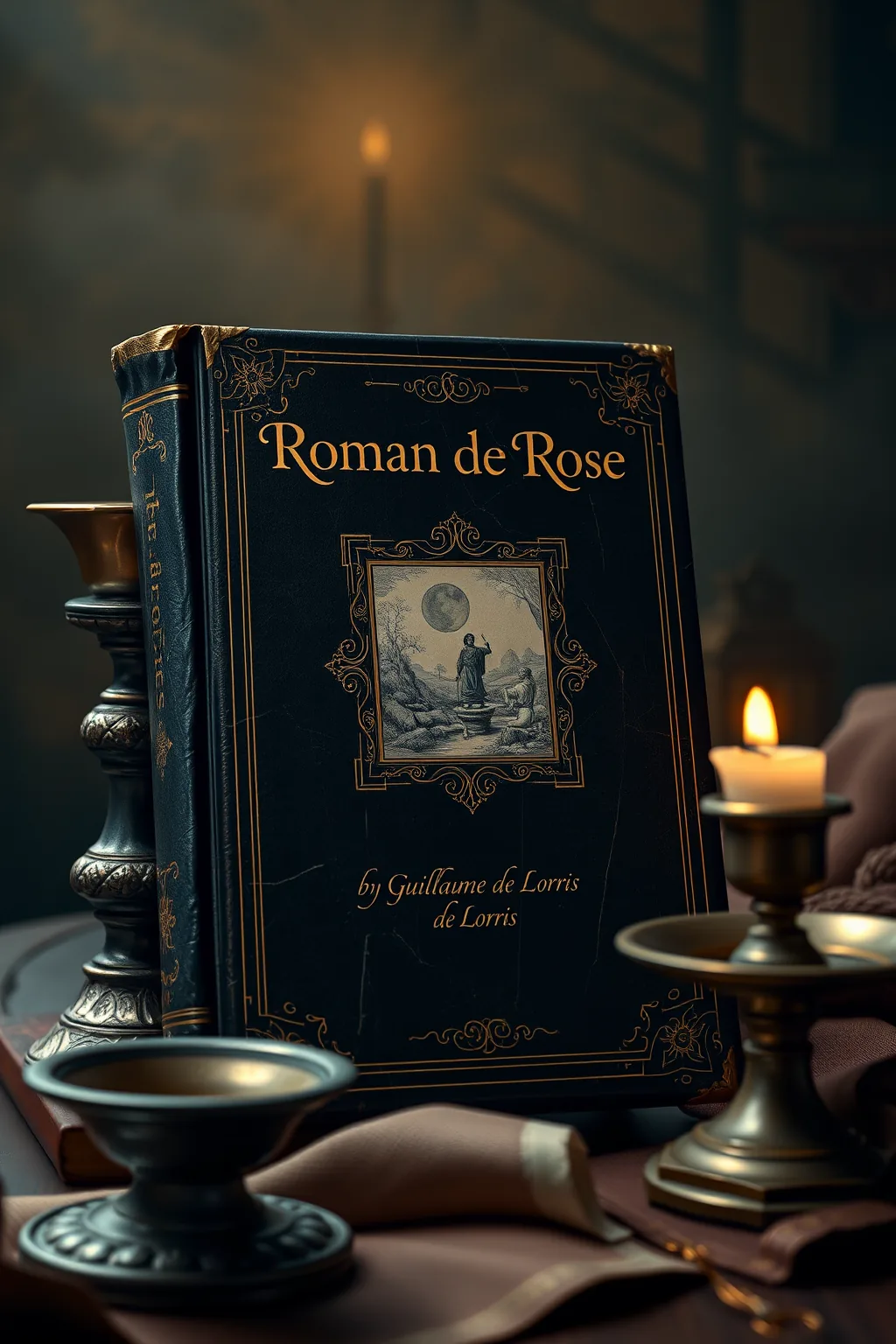
Roman de la Rose
The Roman de la Rose presents a peculiar literary duality. Guillaume de Lorris's opening is a model of courtly allegory, a delicate dreamscape where the pursuit of love is governed by intricate rules and symbolic gestures. The imagery of the Garden and the eventual attainment of the Rose, however, feels almost preparatory for the seismic shift Jean de Meun introduces. De Meun’s continuation, commencing around 1275, is less a continuation and more a wholesale transformation. His expansion injects a torrent of philosophical, scientific, and often biting social commentary that overshadows Lorris’s gentler narrative. The sheer volume of de Meun's contribution—a sprawling, encyclopedic work—can feel overwhelming, diverting attention from the initial romantic quest. Yet, it is precisely this jarring juxtaposition that gives the Roman its enduring power. The stark contrast between Lorris’s refined idealism and de Meun’s earthy naturalism provides a fascinating glimpse into the intellectual tensions of 13th-century France. While the work’s length and philosophical density can be a hurdle, its unique structure offers unparalleled insight into medieval thought. The Roman de la Rose is a monumental, albeit uneven, achievement in allegorical literature.
📝 Description
72
The Roman de la Rose, begun around 1230, is a 13th-century allegorical poem that evolved significantly.
This allegorical poem exists in two parts: Guillaume de Lorris's initial courtly love narrative and Jean de Meun's extensive, philosophical continuation. Lorris set his portion in a dream, detailing the stylized pursuit of a rose. De Meun dramatically broadened the poem's scope, adding commentary on philosophy, science, and society that made it an encyclopedic work. This dual authorship creates a notable contrast between idealized romance and a more critical, naturalistic view.
The work appeals to scholars of medieval literature and culture, especially those interested in courtly love traditions and 13th-century French thought. Students of allegory and narrative development will also find it significant. Readers expecting a simple romance may find de Meun's philosophical tangents difficult. Those interested in the links between literature, philosophy, and early science will discover much to consider. The poem acts as a complex way to examine medieval attitudes toward love, gender, and knowledge.
While not strictly an esoteric text, the Roman de la Rose touches upon themes that resonated within medieval esoteric traditions. Its allegorical method, dream vision framework, and symbolic language, particularly the central image of the rose, align with practices found in hermetic and alchemical literature. Jean de Meun's inclusion of scientific and philosophical discussions, sometimes with a critical edge towards established institutions, also reflects a broader intellectual current that questioned orthodoxies and sought knowledge through observation and reason, aspects often present in esoteric inquiry.
💡 Why Read This Book?
• Gain an understanding of the evolution of courtly love ideals, as Guillaume de Lorris meticulously constructs the symbolic pursuit of the Rose within a dream setting established circa 1230. • Explore the medieval shift towards naturalism and philosophical debate through Jean de Meun's extensive continuation, which introduces concepts like personified Natura and critiques contemporary social structures. • Witness the impact of a seminal medieval text, examining its controversial reception and influence on later literature and thought, as evidenced by figures like Jean Gerson who later commented on its content.
⭐ Reader Reviews
Honest opinions from readers who have explored this book.
❓ Frequently Asked Questions
What is the primary difference between Guillaume de Lorris's and Jean de Meun's contributions to the Roman de la Rose?
Guillaume de Lorris penned the initial 4,055 lines around 1230, focusing on a stylized courtly love allegory within a dream. Jean de Meun, writing decades later (c. 1275-1280), dramatically expanded the work, tripling its length and infusing it with philosophical, scientific, and satirical commentary, shifting the focus significantly.
When was the Roman de la Rose first published in its entirety?
The manuscript tradition dates the work to the 13th century. While the first modern critical edition was published in 1920, the poem itself circulated in manuscript form for centuries prior.
What does the 'Rose' symbolize in the Roman de la Rose?
The Rose primarily symbolizes the beloved in courtly love, representing beauty, virtue, and the object of the lover's quest. However, Jean de Meun broadens its interpretation to encompass sexual union and natural desire, adding layers of complexity.
Was the Roman de la Rose controversial in its time?
Yes, particularly Jean de Meun's continuation was highly controversial due to its frank discussions of sexuality, natural philosophy, and its critiques of the Church and social norms. It sparked significant debate and was even condemned by some.
What are some of the key philosophical ideas explored in the Roman de la Rose?
The work engages with debates on free will versus determinism, critiques the established social hierarchy, and explores natural philosophy, particularly concerning reproduction and the workings of Nature (personified as Natura). Classical philosophical texts heavily influenced these discussions.
How did the Roman de la Rose influence later literature?
Its allegorical structure, themes of love, and philosophical content profoundly influenced subsequent medieval and Renaissance literature across Europe. Chaucer's 'The Romaunt of the Rose' is a notable early English adaptation.
🔮 Key Themes & Symbolism
Allegory of Courtly Love
Guillaume de Lorris establishes the dream-vision framework, where the Garden of the God of Love becomes a symbolic space. The pursuit of the Rose is meticulously detailed, adhering to the conventions of courtly romance. This section explores the idealized and often artificial rules governing love and desire within this specific medieval literary tradition, setting a stage that Jean de Meun would later dramatically subvert.
Natural Philosophy and Science
Jean de Meun's extensive continuation injects a wealth of knowledge from contemporary scientific and philosophical texts. The personification of Natura (Nature) allows for detailed, often explicit, discussions on procreation, biology, and the natural order. This section represents a significant departure from Lorris's courtly idealism, reflecting a growing interest in empirical observation and Aristotelian thought in 13th-century France.
Social and Religious Critique
Beyond romance and science, the Roman de la Rose, particularly de Meun's part, offers sharp critiques of medieval society. It questions established hierarchies, the role of clergy, and the hypocrisy often found within institutions. The poem's frankness and questioning of authority contributed to its controversial reception and its enduring significance as a document reflecting intellectual dissent.
The Nature of Desire
The central symbol of the Rose evolves from an object of idealized romantic affection to a more complex representation of sexual desire and the fulfillment of natural urges. Both authors, in their distinct ways, grapple with the motivations behind human longing. Lorris presents a stylized pursuit, while de Meun studies the biological and psychological drivers, offering a many-sided exploration of desire.
💬 Memorable Quotes
Direct passages from the work, attributed to the author.
“Love is a desire that comes from the eye...”
— This represents the early stage of the lover's experience in Lorris's portion. It emphasizes the visual and immediate nature of attraction within the courtly framework, where love often begins as an aesthetic appreciation.
“And all things are subject to Reason, and Reason to God.”
— This reflects the philosophical underpinnings, particularly in Jean de Meun's contribution, which attempts to reconcile human agency and natural law with divine order, engaging with complex theological and philosophical debates of the era.
“For it is the duty of a wise man to be cautious...”
— This sentiment, echoing throughout the work's more didactic sections, underscores the medieval emphasis on prudence and the intellectual's role in observing and commenting upon the world, whether in love, society, or nature.
💡 Key Ideas
Editorial paraphrase of the work's core concepts — not direct quotes.
The Garden is enclosed with a high wall...
This line from Guillaume de Lorris sets the scene for the allegorical dream. The walled garden symbolizes the protected, idealized space of courtly love, separate from the mundane world, where the rules of romance are paramount.
Nature, the universal mother, desires that all things be multiplied.
This paraphrased concept from Jean de Meun's section highlights his focus on natural processes. Personified as Natura, Nature is presented as a driving force behind procreation and the continuation of the species, a stark contrast to the spiritualized love of the earlier part.
🌙 Esoteric Significance
Tradition
While not strictly belonging to a defined esoteric school like Hermeticism or Kabbalah, the Roman de la Rose functions as a key text within the broader Western esoteric tradition due to its detailed symbolism and allegorical depth. Its exploration of love, desire, and the natural world through layered metaphor aligns with symbolic interpretation methods common in Neoplatonic and Gnostic thought, albeit secularized. The dream-vision structure itself is a common trope in mystical and visionary literature, suggesting access to hidden knowledge.
Symbolism
The central symbol, the Rose, represents multiple layers of meaning: the beloved, chastity, spiritual enlightenment, and ultimately, carnal union as explored by de Meun. The Garden of the God of Love is a symbolic microcosm of the courtly world, governed by artificial rules. The Lover's journey through this garden, encountering figures like Danger, Fair Welcome, and Reason, maps out the psychological and social obstacles in the pursuit of love and self-knowledge.
Modern Relevance
Contemporary thinkers and practitioners interested in archetypal psychology, literary symbolism, and the history of ideas find relevance in the Roman de la Rose. Its exploration of desire, gender roles, and the tension between idealized love and natural impulse continues to be analyzed. Scholars of medieval thought and literature draw upon its philosophical and scientific content, while artists and writers may find inspiration in its rich allegorical landscape and its complex portrayal of human motivation.
👥 Who Should Read This Book
• Students of medieval literature and courtly traditions: To understand the foundational allegory of love and desire that shaped centuries of European poetry, starting with Guillaume de Lorris's circa 1230 vision. • Scholars of Western Esotericism and Symbolism: To analyze the layered allegorical meanings, dream-vision structure, and symbolic representation of the Rose, often interpreted through Neoplatonic or Gnostic lenses. • Readers interested in the history of philosophy and science: To engage with Jean de Meun's extensive, often controversial, philosophical and scientific discourse on Nature, free will, and society from the late 13th century.
📜 Historical Context
The Roman de la Rose emerged in 13th-century France, a period of significant intellectual ferment. Guillaume de Lorris initiated the work around 1230, contributing the initial 4,055 lines that established its dream-vision setting and courtly love allegory. Decades later, Jean de Meun appended a massive continuation (c. 1275-1280), more than tripling the poem's length and transforming its character. De Meun’s section reveals the influence of burgeoning Aristotelianism and a more empirical approach to understanding the natural world, contrasting sharply with Lorris's idealized romance. This dual authorship created a work that was both a celebration of courtly conventions and a radical, often scandalous, exploration of philosophy, science, and social critique. The poem's immense popularity is evidenced by its numerous translations and manuscript copies, but it also generated significant controversy. Figures like Jean Gerson later condemned its perceived immorality and heterodox ideas, highlighting the tension between its literary appeal and its challenging content within the religious and intellectual field of the late Middle Ages.
📔 Journal Prompts
The Garden of the God of Love's meticulously constructed rules.
Personified Natura's detailed explanations of procreation.
The Lover's internal debate with Reason.
The contrasting approaches of Lorris and de Meun to desire.
The symbolic journey toward the attainment of the Rose.
🗂️ Glossary
Allegory
A literary work where characters, settings, and events represent abstract ideas or principles, conveying a hidden meaning, often moral or political. The Roman de la Rose is a prime example, using a dream narrative to explore love and philosophy.
Courtly Love
A medieval literary and idealized concept of love between a knight and a noblewoman, characterized by chivalry, devotion, and often unfulfilled desire, as depicted in Guillaume de Lorris's section.
Dream-Vision
A literary genre where the narrator falls asleep and experiences a dream that contains symbolic or prophetic content. Guillaume de Lorris employs this to frame his allegorical narrative.
Natura
In Jean de Meun's continuation, Nature is personified as a powerful, creative force responsible for the generation and maintenance of the natural world, including human procreation. This figure allows for scientific and philosophical exposition.
Old French
The dialect of French spoken and written in the northern part of France during the medieval period, the original language of the Roman de la Rose.
Personification
Attributing human qualities or behaviors to a non-human entity or abstract concept. The Roman de la Rose uses personification extensively, notably with figures like Reason and Natura.
Satire
The use of humor, irony, exaggeration, or ridicule to expose and criticize people's stupidity or vices, particularly in the context of contemporary politics and other topical issues. Jean de Meun employs satire frequently.
🔮 Readers Also Liked
Browse all →







More by Guillaume de Lorris, Jean de Meun
All books →
More Free Alchemy & Hermeticism Books
View all →