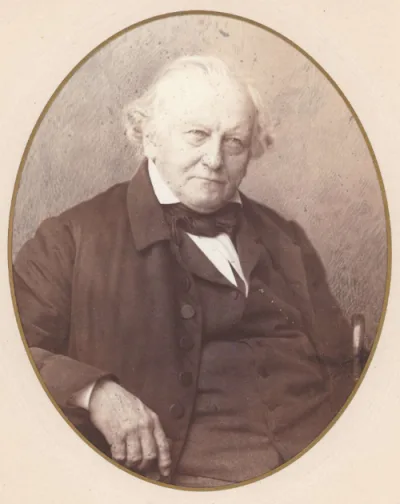
Gerard O'Daly
Gerard O'Daly is a scholar focusing on the influence of Neoplatonism on Christian thought, particularly Augustine and Pseudo-Dionysius.
Gerard O'Daly is a scholar whose work examines the significant impact of Neoplatonism on Christian theology across different historical periods. His research highlights how early Christian thinkers like Augustine of Hippo, and later figures such as Pseudo-Dionysius the Areopagite, engaged with and adapted Neoplatonic philosophical concepts. This influence was particularly strong in Late Antiquity and the Middle Ages, shaping theological discourse in both Eastern and Western Christianity. O'Daly's work delves into how these philosophers navigated and sometimes critically engaged with Neoplatonic ideas, integrating them into their own Christian frameworks.
The influence of Neoplatonism extended beyond theology into mystical contemplation and the understanding of concepts like God and the soul. The text notes that Neoplatonism also had complex relationships with other movements like Gnosticism. O'Daly's scholarship contributes to understanding this intricate philosophical and theological lineage, tracing the evolution of ideas from ancient Greek philosophy through to Christian thought and its later revivals.
Neoplatonism's Influence on Christian Thought
Neoplatonism played a crucial role in shaping Christian theology, particularly in the East and at times in the West, throughout Late Antiquity and the Middle Ages. Prominent Greek Church Fathers, including Basil, Gregory of Nyssa, and Gregory of Nazianzus, were influenced by Platonic and Neoplatonic thought, often alongside Stoicism, which sometimes led to ascetic practices. In the West, St. Augustine of Hippo's theological development was significantly impacted by early Neoplatonists like Plotinus and Porphyry. Later, the writings of Pseudo-Dionysius the Areopagite, who drew from later Neoplatonists such as Proclus and Damascius, became foundational for Greek Church Fathers, who often believed them to be the work of the biblical Dionysius the Areopagite.
Augustine and Neoplatonic Engagement
Early Christians, including Augustine of Hippo, were influenced by Neoplatonism, though they did not accept its tenets wholesale, rejecting absolute monism and emanationist theories. For Augustine, Neoplatonism served as a bridge from Manichaeism to Christianity. As a Manichee, he believed evil had substantial being and God was material. His Neoplatonic phase led him to view evil as a lack of good and God as immaterial. Crucially, the Neoplatonic emphasis on mystical contemplation as a path to direct encounter with the divine resonated deeply with Augustine. His 'Confessions' reveal how he adopted the Neoplatonic conception of God and the soul as incorporeal substances, although he also critiqued and rejected certain Neoplatonic doctrines, such as immaterialism.
Pseudo-Dionysius and Later Developments
The writings attributed to Pseudo-Dionysius the Areopagite represent a significant, albeit enigmatic, intersection of Neoplatonism and Christian thought in Late Antiquity. These works, influenced by later Neoplatonists like Proclus and Damascius, became vital for Byzantine and Roman Christianity. They were translated into Latin by John Scotus Eriugena in the 9th century. The Eastern Orthodox Church has selectively utilized Greek philosophy, including Neoplatonism, adapting concepts and terms like 'Logos'. The precise nature of Dionysius's influence—whether he was a Neoplatonist with Christian leanings or a Christian writer employing Neoplatonic frameworks—remains a subject of scholarly debate, with figures like Andrew Louth and Vladimir Lossky leaning towards the latter, while others like John Meyendorff acknowledge both positive and negative impacts on Orthodox theology.
Renaissance Revival and Esotericism
The Renaissance witnessed a significant revival of Neoplatonism, spearheaded by figures like Marsilio Ficino, who translated the works of Plotinus, Proclus, and Plato into Latin. Giovanni Pico della Mirandola was also a key participant in this movement. Both scholars were influenced by Jewish mystical Kabbalah, which itself bore the imprint of Neoplatonism. This renewed interest in Plotinian philosophy contributed to the development of rational theology and philosophy within intellectual circles such as the Cambridge Platonists. Furthermore, Renaissance Neoplatonism converged with various forms of Christian esotericism, demonstrating a continued engagement with these ancient philosophical ideas in later periods.
Key Ideas
- Neoplatonism's influence on Christian theology
- Augustine's philosophical journey from Manichaeism to Christianity via Neoplatonism
- Pseudo-Dionysius the Areopagite's synthesis of Neoplatonism and Christianity
- The role of mystical contemplation in Neoplatonism and Christianity
- Renaissance revival of Neoplatonism and its connection to Christian esotericism
Books by Gerard O'Daly
0 free public domain books · Read online or download