David R. Kinsley
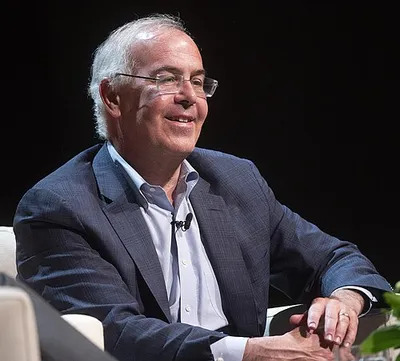
David Brooks is a Canadian-born American author and political commentator known for his moderate conservative views and analysis of cultural trends.
David Brooks, born in Toronto in 1961, is a prominent American author and commentator known for his analysis of political and cultural issues. He has held numerous journalistic positions, including roles at The Washington Times, The Wall Street Journal, The Weekly Standard, and as an opinion columnist for The New York Times. Brooks's writing often explores themes of character, society, and the evolution of cultural elites.
Brooks's career began with early journalistic work, including a stint as a police reporter and an internship at National Review. He later moved into commentary and analysis, publishing influential books such as 'Bobos in Paradise' and 'The Social Animal.' While often described as a conservative, Brooks himself has identified with moderate or centrist positions, expressing a nuanced approach to political and social issues and engaging with ideas from across the political spectrum. He has also taught at universities like Duke and Yale.
Early Life and Intellectual Development
Born in Toronto in 1961, David Brooks spent his formative years in New York City, where his parents were academics. Raised Jewish, he attended an Episcopal primary school before his family relocated to the Philadelphia suburbs. Brooks pursued history at the University of Chicago, where his undergraduate work explored themes that would later inform his commentary. Notably, his senior thesis focused on popular science writer Robert Ardrey. During his undergraduate years, Brooks engaged with campus publications, even satirizing conservative commentator William F. Buckley Jr., which unexpectedly led to a job offer from Buckley himself.
Journalistic Career and Cultural Commentary
Brooks's professional journey commenced with reporting for the City News Bureau of Chicago, an experience he credits with influencing his political views. Following an internship at National Review, he held various editorial and writing positions, including film critic for The Washington Times and an editor at The Wall Street Journal. He later served as an op-ed columnist based in Brussels, covering international affairs. Brooks gained wider recognition with his 2000 book, 'Bobos in Paradise,' which examined the emerging upper class and its blend of 1960s idealism and 1980s self-interest. His subsequent work, including 'On Paradise Drive' and 'The Social Animal,' continued to explore societal trends and the development of personal character.
Political Stance and Philosophical Influences
While often categorized as conservative, David Brooks has described himself with various labels, including centrist, moderate conservative, and even a "Burkean moderate." He has expressed a political philosophy that bridges traditional conservative thought with an engagement with liberal ideas, sometimes finding himself aligning with Democratic perspectives. Brooks has cited Edmund Burke as an influence, though his initial reaction to Burke's work was negative, evolving over time. His commentary often delves into questions of morality, character, and the cultural forces shaping society, reflecting a thoughtful, sometimes evolving, perspective on contemporary issues.
Key Ideas
- Analysis of cultural and social trends, particularly concerning the American upper class.
- Exploration of character development and its role in individual and societal well-being.
- Nuanced perspective on political ideology, often bridging conservative and moderate viewpoints.
Notable Quotes
“In the afternoons he is in the habit of going into crowded rooms and making everybody else feel inferior. The evenings are reserved for extended bouts of name-dropping.”
“Some would say I'm envious of Mr. Buckley. But if truth be known, I just want a job and have a peculiar way of asking. So how about it, Billy? Can you spare a dime?”
“I was looking for the kind of conservative writer that wouldn't make our readers shriek and throw the paper out the window. He was perfect.”
“The first six months were miserable. I'd never been hated on a mass scale before.”
“a farce”