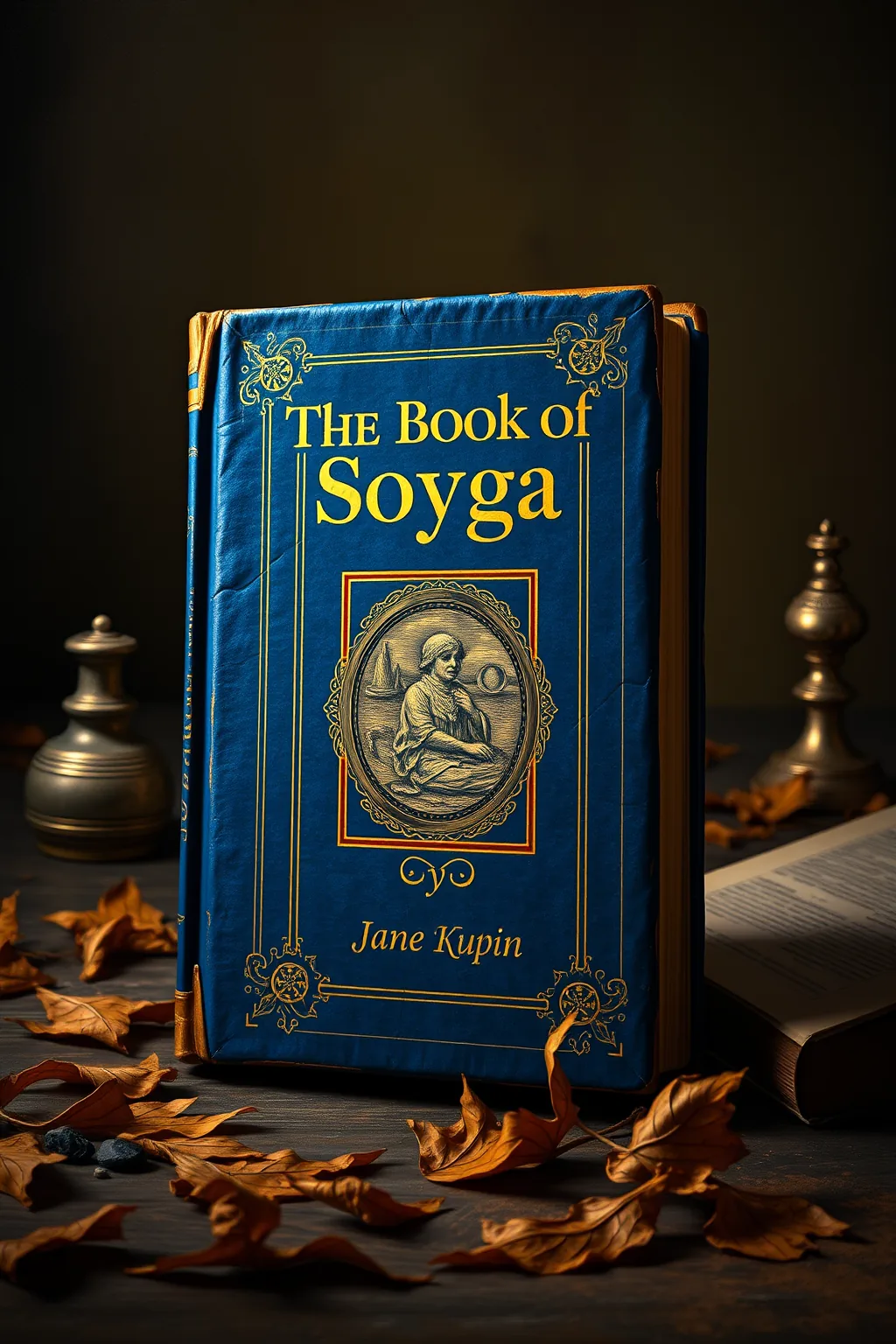
The Book of Soyga
 72
72

The Book of Soyga



Celeste Moreau (Divination & Symbolism Reviewer) — 'The Book of Soyga' is a monumental revelation for students of the Western Esoteric Tradition. Jane Kupin's meticulous presentation unveils a text of unparalleled complexity and depth. The sheer ambition of its alchemical and magical systems, particularly the cryptic letter arrangements, presents a formidable yet rewarding challenge. This book is a treasure trove for serious practitioners and scholars seeking to understand the intricate weave of 16th-century occult philosophy. Its rediscovery is a watershed moment, offering direct access to a lineage of knowledge previously thought lost. Essential reading for anyone dedicated to the Hermetic arts.
📝 Description
72
The Book of Soyga, a 16th-century magical text, contains 40,000 randomly distributed letters.
The Book of Soyga, also known as 'Aldaraia sive Soyga vocor,' emerged in the 16th century and was later infamously labeled 'Soyga: the book that kills.' This work compiles significant texts such as 'Liber Aldaraia,' 'Liber Radiorum,' and 'Liber decimus septimus,' alongside other minor books, to form a cohesive system of arcane knowledge. Its unique structure, featuring 40,000 letters arranged in complex patterns, presents a distinct challenge to interpretation. The book addresses alchemy, Hermeticism, and ceremonial magic, aiming to convey a system of hidden knowledge about the cosmos.
This text is intended for serious students of esoteric subjects. Its doctrines and structure offer a glimpse into the intellectual pursuits of its time. The challenge of its arrangement invites careful study and contemplation for those interested in the history of magic and alchemy.
The Book of Soyga belongs to the Western esoteric tradition, specifically within the late Renaissance period when interest in alchemy, Kabbalah, and Neoplatonism was high. It draws upon and contributes to the corpus of grimoires and magical treatises that sought to codify and transmit knowledge of the occult. Its unique alphabetical arrangement also suggests an interest in the symbolic power of letters, a common theme in Kabbalistic and magical traditions.
✍️ Author
Jane Kupin
Soviet nonconformist art was Soviet art produced in the former Soviet Union outside the control of the Soviet state. The art movement started in the Stalinist era and was, in particular, outside of the rubric of Socialist Realism.
💡 Why Read This Book?
Unearth a lost masterpiece of Western esotericism, directly engage with 16th-century magical theory and practice, decode complex symbolic systems, and join the ranks of scholars and practitioners who have sought this knowledge for centuries. Ideal for those drawn to alchemy, Hermeticism, and the profound mysteries of ceremonial magic.
⭐ Reader Reviews
Honest opinions from readers who have explored this book.
❓ Frequently Asked Questions
What is the primary significance of 'The Book of Soyga'?
Its primary significance lies in its comprehensive presentation of 16th-century magical and alchemical systems, particularly its unique structure involving thousands of randomly distributed letters set within specific schemes, offering a complex cipher for practitioners and scholars.
What are the main sections within 'The Book of Soyga'?
The book is comprised of several key parts, including 'Liber Aldaraia', 'Liber Radiorum', and 'Liber decimus septimus', alongside numerous minor treatises, forming a cohesive whole dedicated to arcane knowledge.
Who was Jane Kupin and what is her role?
Jane Kupin is the scholar credited with the significant rediscovery and presentation of 'The Book of Soyga'. Her work provides crucial context and accessibility to this complex historical text.
Why is 'The Book of Soyga' considered mysterious or dangerous?
Its mystery stems from its intricate symbolic language and the esoteric nature of its teachings. The nickname 'the book that kills' likely refers to the potent spiritual or psychological effects of engaging with such profound, potentially transformative, and challenging knowledge without proper preparation or understanding.
Is 'The Book of Soyga' suitable for beginners?
While its depth is immense, its complexity and the specialized knowledge required make it more suitable for dedicated practitioners and scholars. Beginners might find it challenging without foundational knowledge in Hermeticism and alchemy.
🔮 Key Themes & Symbolism
The Cipher of the Letters
The most striking feature of 'The Book of Soyga' is its unique arrangement of 40,000 letters, forming intricate schemes. This is not mere decoration but a core element of its magical system, likely acting as a complex cipher or a method for invoking specific spiritual forces and divine names. Deciphering these letter-grids is a central challenge and a key to unlocking the book's practical applications in magic and divination. It represents a sophisticated approach to sacred geometry and numerology, embedding potent energies within the very fabric of the text.
Hermetic Alchemy and Spiritual Transformation
Fundamentally, , 'The Book of Soyga' is a profound treatise on Hermetic alchemy, not just as a physical process of transmutation, but as a path to spiritual enlightenment and union with the divine. It details methods for purifying the soul, aligning oneself with celestial forces, and achieving a higher state of consciousness. The text explores the correspondence between the microcosm (man) and the macrocosm (universe), guiding the adept through stages of purification and illumination to achieve the 'Great Work' – the transformation of the self into a divine being.
The Lost Arts of Ceremonial Magic
This grimoire is a vital window into the sophisticated practices of 16th-century ceremonial magic. It outlines rituals, incantations, and the use of specific divine names and angelic hierarchies, designed to invoke and command spiritual entities for various purposes. The 'Liber Aldaraia' and other sections provide detailed instructions for practitioners, offering insights into the esoteric worldview and the methods employed to interact with the unseen realms. It is a proof of a lost tradition of potent and structured magical operations.
💬 Memorable Quotes
Direct passages from the work, attributed to the author.
“The letters dance, a silent chorus of creation's hidden tongue.”
— This evokes the mystery of the 40,000 letters, suggesting they are not random but possess a divine or magical language, a secret code of the universe waiting to be understood.
“Seek not the gold of earth, but the gold of the soul's divine fire.”
— A classic alchemical metaphor, emphasizing that the true 'Great Work' is spiritual transformation and enlightenment, rather than material wealth.
“The heavens whisper secrets to the prepared heart.”
— Highlights the importance of inner readiness, purity, and receptivity for receiving divine knowledge and engaging with celestial forces.
“Within the labyrinth of Soyga, truth lies veiled, yet beckons.”
— Acknowledges the book's complexity and challenging nature, while also suggesting that the effort to understand it will yield profound spiritual truths.
“To know the letters is to grasp the threads of destiny.”
— Connects the deciphering of the book's symbolic language to a deeper understanding and potential influence over the forces that shape one's fate.
🌙 Esoteric Significance
Tradition
The Book of Soyga is deeply rooted in the Hermetic and Alchemical traditions of Western Esotericism. It draws heavily from the principles of 'as above, so below', integrating elements of Kabbalistic numerology, astrological correspondences, and ceremonial magic. Its complex structure and symbolic language align with the Gnostic and Neoplatonic ideas of divine emanation and the spiritual ascent of the soul, making it a key text for understanding the interconnectedness of the material and spiritual realms within this lineage.
Symbolism
The book is replete with detailed symbolism, most notably the 40,000 letters arranged in schemes, which function as a profound symbolic language of divine power and cosmic order. Beyond this, it employs alchemical symbols for transformation, astrological glyphs for celestial influences, and divine names for invocation. The symbolism points to the underlying unity of all things, the potential for human spiritual metamorphosis, and the power inherent in understanding and manipulating the subtle energies of the universe.
Modern Relevance
In contemporary times, 'The Book of Soyga' offers a challenging yet immensely rewarding pathway for spiritual seekers and occult practitioners. Its complex systems of magic and alchemy provide a framework for disciplined spiritual practice, self-transformation, and the exploration of consciousness. The book encourages a deep dive into symbolic reasoning and esoteric philosophy, offering tools for personal growth, divination, and a more profound understanding of one's place within the cosmos, resonating with the modern resurgence of interest in ancient wisdom traditions.
👥 Who Should Read This Book
This profound text is essential for dedicated scholars of the Western Esoteric Tradition, particularly those interested in 16th-century Hermeticism and ceremonial magic. Experienced practitioners of alchemy and ritual magic will find its complex systems and unique approaches to be of immense value for deepening their practice and understanding. Seeker of ancient wisdom who are prepared for rigorous study and contemplation will be drawn to its profound philosophical underpinnings. While beginners might find its density challenging, those with a strong foundational interest in occult lore and a willingness to engage with intricate symbolic language may also find it a deeply rewarding, albeit demanding, read.
📜 Historical Context
The 16th century was a vibrant, tumultuous era, a crucible of the Renaissance and the Reformation, where the seeds of modern science were sown amidst a body of lingering medieval mysticism. This period saw a fervent interest in ancient texts, Neoplatonism, Kabbalah, and Hermeticism, as scholars and mystics sought to reconcile Christian theology with occult philosophy. Figures like Agrippa and Dee were active, exploring the boundaries of knowledge and the potential of magic. 'The Book of Soyga' emerged from this intellectual milieu, reflecting a sophisticated understanding of alchemy, astrology, and ceremonial magic, and demonstrating the era's belief in a divinely ordered cosmos accessible through esoteric disciplines. Its rediscovery in the late 20th century places it as a crucial artifact for understanding this central period of Western esoteric thought.
📔 Journal Prompts
Reflect on the concept of 'hidden knowledge' as presented in 'The Book of Soyga'. How does this concept resonate with your own search for understanding?
Consider the significance of the 40,000 letters. What might be the purpose of such a complex arrangement in a magical text?
How does the alchemical symbolism within the book relate to personal transformation and spiritual growth?
Imagine yourself as a 16th-century practitioner. What challenges and rewards would you anticipate in working with the rituals described in Soyga?
What does the idea of 'the book that kills' suggest about the power and potential dangers of esoteric knowledge?
🗂️ Glossary
Hermeticism
A philosophical and religious tradition based on the purported teachings of Hermes Trismegistus, emphasizing mystical knowledge, alchemy, astrology, and the unity of the cosmos.
Alchemy
An ancient protoscience and philosophical tradition that sought to transmute base metals into gold, but also represented a spiritual journey of purification and transformation of the soul.
Grimoire
A textbook of magic, typically containing instructions on how to create magical tools, cast spells, and summon spirits.
Liber
Latin for 'book', often used in the titles of ancient and medieval manuscripts, especially those pertaining to magical or philosophical subjects.
Ceremonial Magic
A form of magic that uses formalized rituals, incantations, and invocations, often involving specific timings, tools, and the summoning of spiritual entities.
This book appears in 1 collection
🔮 Readers Also Liked
Browse all →









From the “Occultism” Collection
View all →



More Free Alchemy & Hermeticism Books
View all →