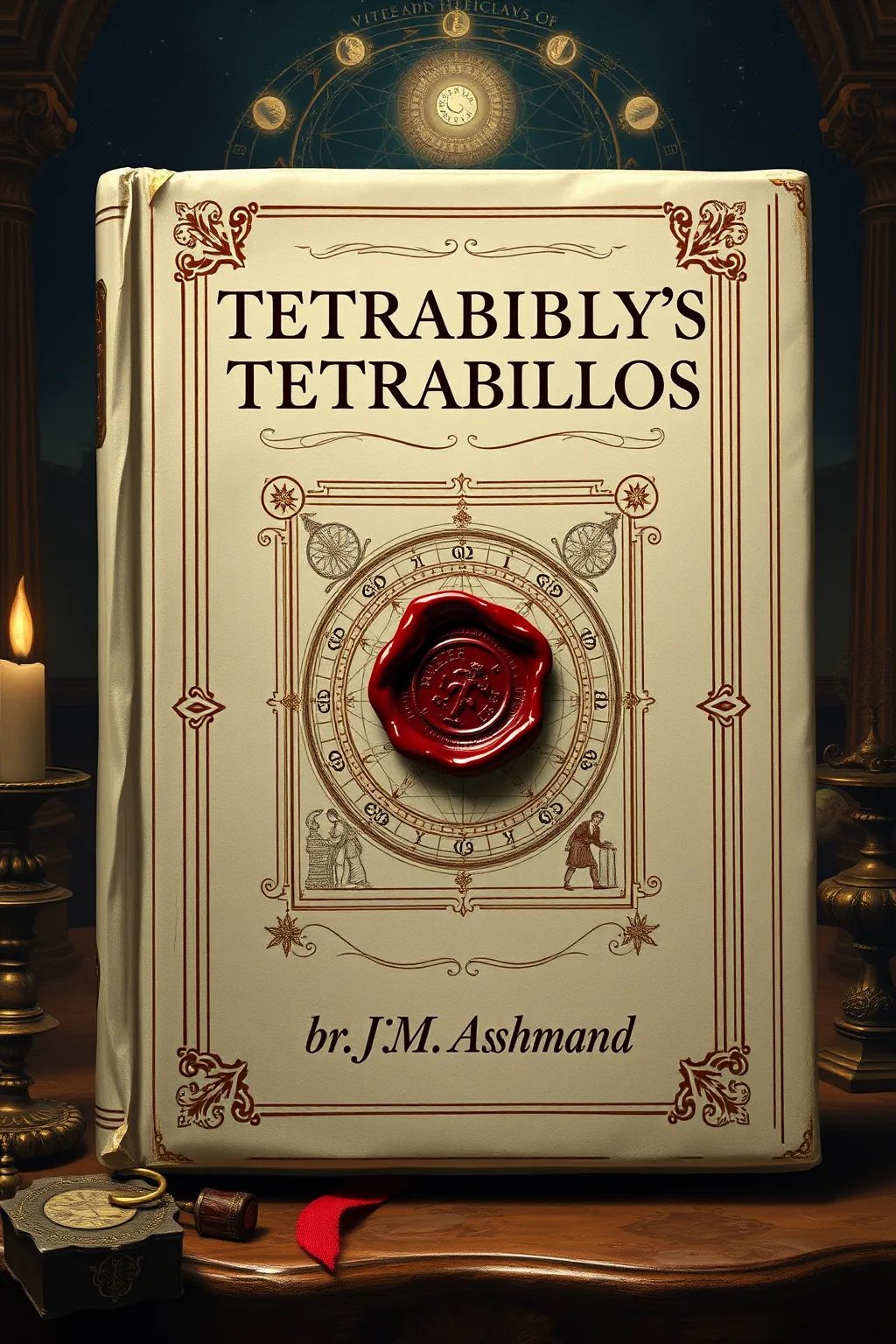
Ptolemy's Tetrabiblos
 78
78

Ptolemy's Tetrabiblos


Cassian Rothmann (Senior Critic, Ancient Wisdom) — Ptolemy's Tetrabiblos remains an indispensable cornerstone of astrological scholarship, a testament to the enduring power of its ancient insights. Ashmand's translation faithfully conveys the rigor and depth of Ptolemy's original work, making its profound wisdom accessible to contemporary readers. This is not mere prediction; it's a sophisticated exploration of cosmic causation and human potential, rooted in a worldview that saw the universe as a living, breathing entity. The Tetrabiblos offers an unparalleled glimpse into the foundations of Western esotericism, revealing the symbolic logic and philosophical underpinnings that continue to resonate with astrologers and mystics alike. Essential for any serious student of the hidden arts.
📝 Description
78
Ptolemy's Tetrabiblos, written around 150 CE, details the astrological influences of planets and stars on human life.
This translation by J.M. Ashmand presents Ptolemy's Tetrabiblos, a significant text from ancient astrology. Ptolemy, a key figure in ancient astronomy and geography, outlines how celestial bodies affect earthly events and individual lives. He explains the mechanics of planetary positions and their supposed impacts on temperament, destiny, and the general course of human affairs. The book discusses the nature of the four elements, the zodiacal signs, and the planets themselves, linking them to various earthly phenomena and human characteristics. It is not solely about predicting the future but also about understanding the underlying causes and correspondences within the cosmos.
Ptolemy's work provides a systematic approach to astrological interpretation, differentiating it from more speculative or purely divinatory practices. He addresses the interactions between the fixed stars and the wandering planets, and how these configurations manifest in the sublunar world. The text is structured to instruct the reader on the principles of astrological judgment, making it a manual for understanding the celestial order and its reflection in human experience. Its enduring influence speaks to its comprehensive system of thought on the subject.
The Tetrabiblos is a cornerstone of Western astrological tradition, originating from the Hellenistic period. It codifies much of the astronomical and astrological knowledge inherited from earlier Babylonian and Greek sources, presenting it within a coherent philosophical framework influenced by Stoicism. Ptolemy sought to establish astrology as a rigorous discipline, akin to astronomy, based on observable correlations between celestial phenomena and earthly outcomes. This approach distinguished it from purely magical or religious practices, framing it as a science of probabilities and correspondences. Its systematic nature made it a primary reference for subsequent astrological developments throughout the Middle Ages and the Renaissance.
💡 Why Read This Book?
For the devoted seeker of cosmic wisdom and the meticulous scholar of ancient thought, the Tetrabiblos is an essential pilgrimage. It offers a direct conduit to the very genesis of Western astrology, revealing the philosophical framework and observational rigor that defined its early practice. Understand the deep symbolic connections between celestial movements and terrestrial events, and unlock a profound understanding of human nature and destiny. Ideal for those aspiring to master astrological interpretation from its most authoritative source.
⭐ Reader Reviews
Honest opinions from readers who have explored this book.
❓ Frequently Asked Questions
What is the historical significance of Ptolemy's Tetrabiblos?
The Tetrabiblos is considered one of the most important surviving ancient texts on astrology, providing the foundational principles for Western astrological practice for over a millennium and influencing philosophical thought on cosmology.
Who was Claudius Ptolemy?
Claudius Ptolemy was a Greco-Roman mathematician, astronomer, astrologer, and geographer who lived in the 2nd century CE. He is best known for the Ptolemaic system of the universe and his significant contributions to astronomical and astrological theory.
What does 'Tetrabiblos' mean?
'Tetrabiblos' is Greek for 'four books' or 'four parts,' referring to the four distinct sections of the work, each focusing on different aspects of astrological influence and interpretation.
Is this book suitable for beginners in astrology?
While foundational, the Tetrabiblos is a dense text. Beginners will benefit greatly from supplementary study guides and commentaries to fully grasp its sophisticated concepts and terminology.
What is the primary focus of the Tetrabiblos?
The primary focus is on the influence of celestial bodies and phenomena on earthly events, human character, and the general course of life, presented as a coherent system of cosmic causation.
🔮 Key Themes & Symbolism
Celestial Causality and Terrestrial Influence
The Tetrabiblos posits a universe governed by intricate laws of cause and effect, where celestial configurations are not mere symbols but active agents influencing earthly phenomena. Ptolemy meticulously details how planetary positions, zodiacal signs, and aspects create specific potentials and tendencies in individuals and societies. This theme explores the profound interconnectedness of the cosmos and our mundane existence, suggesting that understanding the celestial dance is key to deciphering the patterns of life and fate.
The Art of Astrological Interpretation
Beyond mere observation, Ptolemy lays out the systematic methodology for interpreting celestial influences. This involves understanding the inherent natures of planets and signs, their dignities, and how they interact within a natal chart or during specific periods. The text serves as a detailed look in decoding the symbolic language of the stars, equipping the reader with the tools to analyze character, predict trends, and understand the underlying forces at play in any given situation.
Cosmic Order and Human Destiny
Fundamentally, the Tetrabiblos reflects a worldview where the universe is a divinely ordered system, and human destiny is intrinsically linked to this grand design. Ptolemy's work provides a framework for understanding the role of fate and free will within this cosmic structure. It suggests that while celestial influences set certain parameters, human consciousness and action can navigate and even transform these potentials, highlighting a nuanced perspective on determinism and agency within a divinely orchestrated cosmos.
💬 Memorable Quotes
Direct passages from the work, attributed to the author.
“For it is not the case that the stars compel men to commit murder, theft, or any other wicked deed.”
— This highlights Ptolemy's nuanced view, suggesting that celestial influences are not absolute determinants of behavior but rather predispose individuals to certain tendencies, leaving room for free will and moral responsibility.
“Nature, when she has made the celestial bodies, has also appointed for them their proper places.”
— This speaks to the ancient belief in a divinely ordered universe, where every celestial body has a specific role and position within the grand cosmic architecture, contributing to the overall harmony and functioning of existence.
“The influences of the planets are not to be understood by the vulgar.”
— This implies that the deeper workings of astrology and its connection to celestial forces are not readily apparent to the uninitiated, requiring dedicated study and insight to grasp their profound significance.
“We must therefore consider the celestial phenomena not as the causes of things, but as signs.”
— This crucial distinction emphasizes that celestial events are indicators or portents of earthly happenings rather than direct instigators, guiding the interpreter to discern meaning and potential outcomes.
💡 Key Ideas
Editorial paraphrase of the work's core concepts — not direct quotes.
The purpose of the treatise is to explain how the effects of the stars are to be understood.
This quote expresses the fundamental aim of the Tetrabiblos: to provide a systematic and rational framework for comprehending the influence of celestial bodies on earthly matters, moving beyond mere superstition to a science of cosmic causality.
🌙 Esoteric Significance
Tradition
The Tetrabiblos is a foundational text for the Western esoteric tradition, particularly within Hermeticism, Neoplatonism, and the development of judicial astrology. It provides the essential lexicon and philosophical underpinnings for understanding the macrocosm-microcosm relationship, a core tenet of most esoteric systems. Its emphasis on cosmic order, planetary intelligences, and the interconnectedness of all things resonates deeply with mystical philosophies that seek to decipher divine patterns within creation.
Symbolism
Key symbols in the Tetrabiblos include the zodiacal signs, each representing distinct archetypal energies and qualities, and the planets, seen as divine intelligences or potent forces that express these qualities. The houses represent different spheres of life, and the aspects symbolize the dynamic interplay between these forces. Ptolemy's detailed explanations imbue these celestial bodies and configurations with rich symbolic meaning, revealing a complex system of correspondences that govern both the heavens and the earth.
Modern Relevance
Despite the shift from geocentric to heliocentric cosmology, the symbolic language and principles of the Tetrabiblos remain profoundly relevant to modern esoteric astrology and metaphysical studies. Its emphasis on archetypal energies, psychological predispositions, and the intricate web of cause and effect continues to offer valuable insights into human nature and life's unfolding patterns. For practitioners and seekers, it provides an indispensable historical and philosophical context for contemporary astrological practice and a deeper appreciation of cosmic interconnectedness.
👥 Who Should Read This Book
This key work is essential for serious students of Western astrology, from those beginning their journey to seasoned practitioners seeking to ground their practice in its historical and philosophical roots. Scholars of ancient philosophy and cosmology will find it an invaluable primary source. Seekers of metaphysical wisdom and those interested in understanding the symbolic language of the universe will discover clear insights into the ordered nature of existence. If you are drawn to the intricate dance of the cosmos and its reflection in human life, the Tetrabiblos offers a profound and informative experience.
📜 Historical Context
Emerging from the intellectual crucible of the Hellenistic period in 2nd century CE Alexandria, Ptolemy's Tetrabiblos stands as a pinnacle of ancient astrological and cosmological thought. This era was characterized by a fusion of Greek philosophical inquiry with the rich astronomical traditions of Mesopotamia and Egypt. The prevailing geocentric model, with Earth at the universe's fixed center and celestial spheres revolving around it, provided a tangible framework for understanding cosmic influence. The Tetrabiblos synthesized existing astrological knowledge, imbuing it with a rigorous, almost scientific, approach. It sought to establish a rational basis for astrology, moving it from purely divinatory practices towards a more systematic understanding of celestial causality and its impact on human affairs and the natural world.
📔 Journal Prompts
Reflect on a planetary influence described by Ptolemy and how it manifests in your own life.
Consider the concept of celestial signs versus causes: how do you interpret omens and synchronicities?
Explore the archetypal energies of a zodiac sign as detailed in the Tetrabiblos and their personal resonance.
How does the idea of a divinely ordered cosmos influence your perception of destiny and free will?
Ptolemy emphasizes the importance of understanding the 'natures' of planets. What 'natures' do you identify in your own personality and relationships?
🗂️ Glossary
Zodiac
The band of celestial signs through which the Sun, Moon, and planets appear to travel in their apparent motion across the sky. Each sign is associated with specific qualities and energies.
Ascendant (Rising Sign)
The zodiacal sign that was rising on the eastern horizon at the moment of birth, considered a significant indicator of outward personality and life approach.
Aspects
The angular relationships between planets in a birth chart, indicating how their energies interact, creating harmony or tension.
Dignity
A measure of a planet's strength and effectiveness within a specific zodiacal sign, based on its natural domicile or exaltation.
Geocentric
An astronomical model where the Earth is considered the center of the universe, with celestial bodies revolving around it. This was the prevailing model during Ptolemy's time.
This book appears in 1 collection
🔮 Readers Also Liked
Browse all →








From the “Astrology” Collection
View all →





![[ André Barbault] La Scienza Dell'astrologia(book 4you.org)](/img/thumb/andr-barbault-la-scienza-dell-astrologia-book-4you-org.webp)


More Free Astrology & Cosmology Books
View all →