On the nature of the universe
 61
61

On the nature of the universe


Marcus Thorne (Esoteric Sciences Reviewer) — A monumental contribution to esoteric literature, Thomas Taylor's 'On the Nature of the Universe' offers an unparalleled exploration of cosmic principles through a distinctly Neoplatonic lens. Taylor masterfully synthesizes ancient philosophical insights with an understanding of celestial mechanics, revealing the universe as a divinely orchestrated symphony of interconnected forces. This work is not for the casual reader but for the devoted scholar and mystic seeking to grasp the profound symbolism inherent in the cosmos. Its strength lies in its rigorous intellectual framework and its ability to inspire awe and wonder, providing a foundational text for anyone serious about the study of sacred astrology and metaphysical cosmology. Esoteric Library is honored to present this indispensable volume.
📝 Description
61
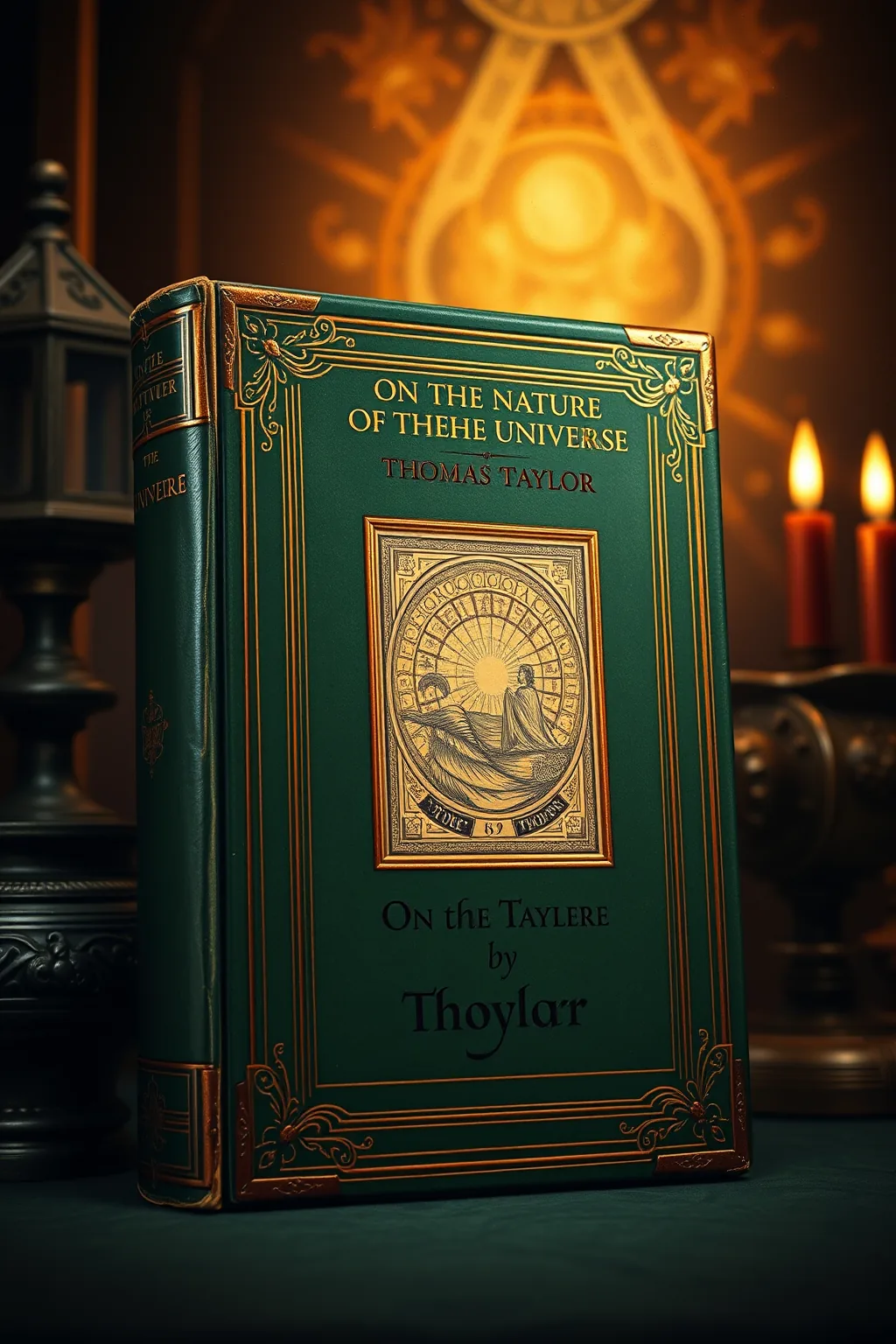
Thomas Taylor's 1793 work, 'On the Nature of the Universe,' examines the cosmos as a divine emanation.
Published in 1793, Thomas Taylor's 'On the Nature of the Universe' presents a Neoplatonic view of existence. Taylor, known for his translations of ancient Greek philosophers, argues that the cosmos is not simply a physical arrangement but a direct outflow from the Divine Mind. The book connects the structure of the universe with the human soul, suggesting a symbolic correspondence between celestial bodies and inner spiritual states. It discusses the inherent order within the cosmos and how this order reflects a universal intelligence. Taylor's writing aims to illuminate the principles governing both the grand scale of the universe and the individual's inner life.
The text delves into the symbolic language associated with the stars and their perceived impact on earthly events. It synthesizes philosophical inquiry with a focus on esoteric traditions. Taylor intended this work for readers seeking a deeper understanding of the fundamental unity underlying all reality. The book encourages contemplation on the interconnectedness of all things, from the smallest particle to the largest celestial sphere. It offers a framework for perceiving the universe as a unified, intelligent system.
This book is rooted in the Neoplatonic tradition, a philosophical system that emerged in the 3rd century CE, drawing heavily from Plato's dialogues. Neoplatonism emphasizes a hierarchical structure of reality, emanating from a supreme, ineffable 'One' or God. Thomas Taylor, a prolific writer and translator of figures like Plato, Plotinus, and Proclus, was a key proponent of Neoplatonism in late 18th-century England. His work sought to revive and interpret these ancient philosophical and mystical ideas for a contemporary audience, positioning the universe as a spiritual organism rather than purely material.
💡 Why Read This Book?
For the ardent seeker, 'On the Nature of the Universe' offers a profound revelation of cosmic order and divine intelligence. It is an essential read for those wishing to transcend superficial understanding and delve into the symbolic language of the heavens. Scholars will find a rich source of Neoplatonic thought, while practitioners will discover deeper insights into astrological correspondences and the energetic fabric of reality. This book is a gateway to comprehending the universe not just as matter, but as spirit made manifest.
⭐ Reader Reviews
Honest opinions from readers who have explored this book.
❓ Frequently Asked Questions
What philosophical tradition does this book primarily draw from?
This book is deeply rooted in the Neoplatonic tradition, a philosophical school that emphasizes the transcendent nature of the One and the emanation of all reality from it. It explores concepts of divine intellect, soul, and the interconnectedness of all existence.
Is this book suitable for beginners in esoteric studies?
While rich in depth, the book's philosophical rigor makes it most rewarding for those with some foundational knowledge of philosophy or metaphysics. However, dedicated beginners willing to engage deeply will find it a profound and illuminating experience.
What is the role of astrology in this text?
Astrology in this context is not mere fortune-telling, but a sacred science that reveals the divine order and correspondences within the cosmos. It is used to understand the symbolic language of celestial movements and their influence on terrestrial realms.
How does Taylor connect the universe to the human soul?
Taylor, following Neoplatonic thought, posits a profound connection between the macrocosm (the universe) and the microcosm (the human soul). He explores how celestial patterns and energies are mirrored within the human psyche and spirit.
What kind of 'hidden knowledge' does the book reveal?
The book reveals hidden knowledge by illuminating the underlying principles and divine intelligence that govern the universe, presenting a view of creation as a sacred, symbolic system rather than a purely material one.
🔮 Key Themes & Symbolism
The Divine Emanation
This theme explores the Neoplatonic concept of the universe as a direct emanation from a singular, transcendent Divine Source. Taylor meticulously details how all of existence, from the highest celestial spheres to the most minute terrestrial phenomena, flows forth from this ultimate principle. It is a journey into understanding creation not as a random occurrence, but as a divinely intended manifestation, revealing the inherent order and perfection that underlies all reality. The text encourages contemplation of this ceaseless, benevolent outflow, fostering a sense of awe and connection to the ultimate ground of being.
Cosmic Symbology and Correspondence
Taylor delves deeply into the idea that the universe is a vast symbolic language, with celestial bodies, movements, and configurations acting as potent symbols of higher truths. This theme explores the principle of correspondence, where patterns observed in the heavens are mirrored in the earthly realm and within the human soul. It posits that by understanding these cosmic symbols, one can gain clear insights into the hidden workings of reality, the nature of destiny, and the interconnectedness of all things. This is the foundation of sacred astrology and hermetic wisdom.
The Unifying Intelligence of the Cosmos
A central tenet of this work is the assertion of a pervasive, unifying intelligence that orchestrates the cosmos. Taylor argues against a purely mechanistic view of the universe, instead presenting it as a living, intelligent system guided by divine reason. This intelligence is not external but immanent, permeating every aspect of existence. The book invites the reader to perceive this underlying order and wisdom, fostering a sense of harmony and belonging within the grand cosmic design. It is a call to recognize the divine presence in every star, planet, and earthly event.
💬 Memorable Quotes
Direct passages from the work, attributed to the author.
“Stars are not mere fires, but divine intelligences.”
— This highlights the symbolic and sentient nature of celestial bodies in ancient cosmology, viewing them as active, conscious forces rather than inert objects.
“The celestial spheres are the poetry of God.”
— This evocative phrase suggests that the movements and arrangements of planets and stars form a divine language, revealing profound truths about existence.
“As above, so below, in essence.”
— A classic Hermetic principle, this implies a fundamental mirroring between the macrocosm (universe) and the microcosm (human being), indicating shared principles and interconnectedness.
“To know the heavens is to know oneself.”
— This links the study of cosmology and astrology directly to self-knowledge, suggesting that understanding the outer universe provides clear insights into the inner human condition.
💡 Key Ideas
Editorial paraphrase of the work's core concepts — not direct quotes.
The universe is a divine thought made manifest.
This quote captures the core Neoplatonic idea that creation originates from a supreme intellect, suggesting that reality is fundamentally spiritual and ordered by divine consciousness.
🌙 Esoteric Significance
Tradition
This work is a central to Neoplatonic philosophy, a tradition deeply intertwined with esoteric thought for centuries. It draws heavily from the teachings of Plato, Plotinus, and subsequent philosophers who viewed the universe as a divinely ordered emanation from the One. Esoterically, it provides a metaphysical framework for understanding the hidden architecture of reality, the soul's journey, and the interconnectedness of all planes of existence.
Symbolism
The book explores rich cosmic symbolism, interpreting celestial bodies and their movements not just scientifically but as potent metaphors for spiritual truths and divine principles. It explores the concept of correspondences, where the macrocosm reflects the microcosm, and vice versa. This symbolic language is crucial for unlocking deeper meanings within nature, human experience, and the spiritual path, viewing the universe as a sacred text to be deciphered.
Modern Relevance
In an age often characterized by scientific materialism and existential fragmentation, Taylor's work offers a vital counterpoint. It reintroduces a sense of awe, order, and spiritual interconnectedness, providing a framework for understanding the universe as imbued with intelligence and purpose. For modern seekers, it bridges ancient wisdom with contemporary questions about consciousness, meaning, and humanity's place in the cosmos, offering clear insights into holistic living and spiritual development.
👥 Who Should Read This Book
This key work is indispensable for serious students of esoteric philosophy, particularly those drawn to Neoplatonism and ancient cosmology. Scholars of intellectual history and comparative religion will find it a crucial resource for understanding the transmission of ancient thought. Mystically inclined individuals, or 'seekers,' will discover a profound exploration of the universe's spiritual architecture and their place within it. Practitioners of Hermetic arts, astrology, and occult disciplines will gain a deeper theoretical foundation for their work, enhancing their understanding of cosmic principles and symbolic correspondences.
📜 Historical Context
Thomas Taylor (1770-1835) was an important figure in the revival of Neoplatonic philosophy in the English-speaking world. His era, the late Enlightenment and early Romantic period, was a time of burgeoning interest in ancient wisdom, mysticism, and the search for deeper meaning beyond purely materialist explanations. Taylor's prolific translations of Plato, Aristotle, and particularly the Neoplatonic thinkers like Plotinus and Iamblichus, provided access to these profound, often esoteric, texts for a new generation of scholars and seekers. His work directly challenged the prevailing rationalism by reintroducing concepts of the divine, the spiritual hierarchy of the cosmos, and the symbolic nature of reality. 'On the Nature of the Universe' sits within this intellectual milieu, offering a comprehensive exposition of a philosophical system that deeply influenced esoteric movements, occult societies, and individuals seeking a more spiritual understanding of existence.
📔 Journal Prompts
Reflect on a time you felt a profound connection to the cosmos. What celestial or natural phenomena were involved, and what did it signify for you?
Consider the concept of 'divine emanation.' How might this idea influence your perception of your own creative potential and your relationship with the universe?
Explore the idea of cosmic symbology in your daily life. What everyday occurrences or natural patterns could be interpreted as symbolic messages?
How does the principle of 'as above, so below' manifest in your personal life or within society? Provide specific examples.
Contemplate the 'unifying intelligence' of the cosmos. How can acknowledging this intelligence foster a sense of peace, purpose, or responsibility in your life?
🗂️ Glossary
Neoplatonism
A philosophical system originating in the 3rd century AD, heavily influenced by Plato, which posits a transcendent, unified, and divine source (the One) from which all reality emanates in a hierarchical fashion.
Emanation
The process by which all existence is believed to flow or radiate from a single divine source, without diminishing the source itself, akin to light emanating from a lamp.
Macrocosm
The universe considered as a complex, harmonious entity; the greater world, contrasted with the microcosm.
Microcosm
The human being or the individual, viewed as a miniature or small world, reflecting the principles and structure of the macrocosm.
Correspondence
A fundamental Hermetic principle stating that there is a relationship or similarity between different levels of existence, such as between the celestial (macrocosm) and the terrestrial (microcosm).
This book appears in 2 collections
🔮 Readers Also Liked
Browse all →








More by Taylor, Thomas
All books →


From the “Astrology” Collection
View all →









More Free Astrology & Cosmology Books
View all →