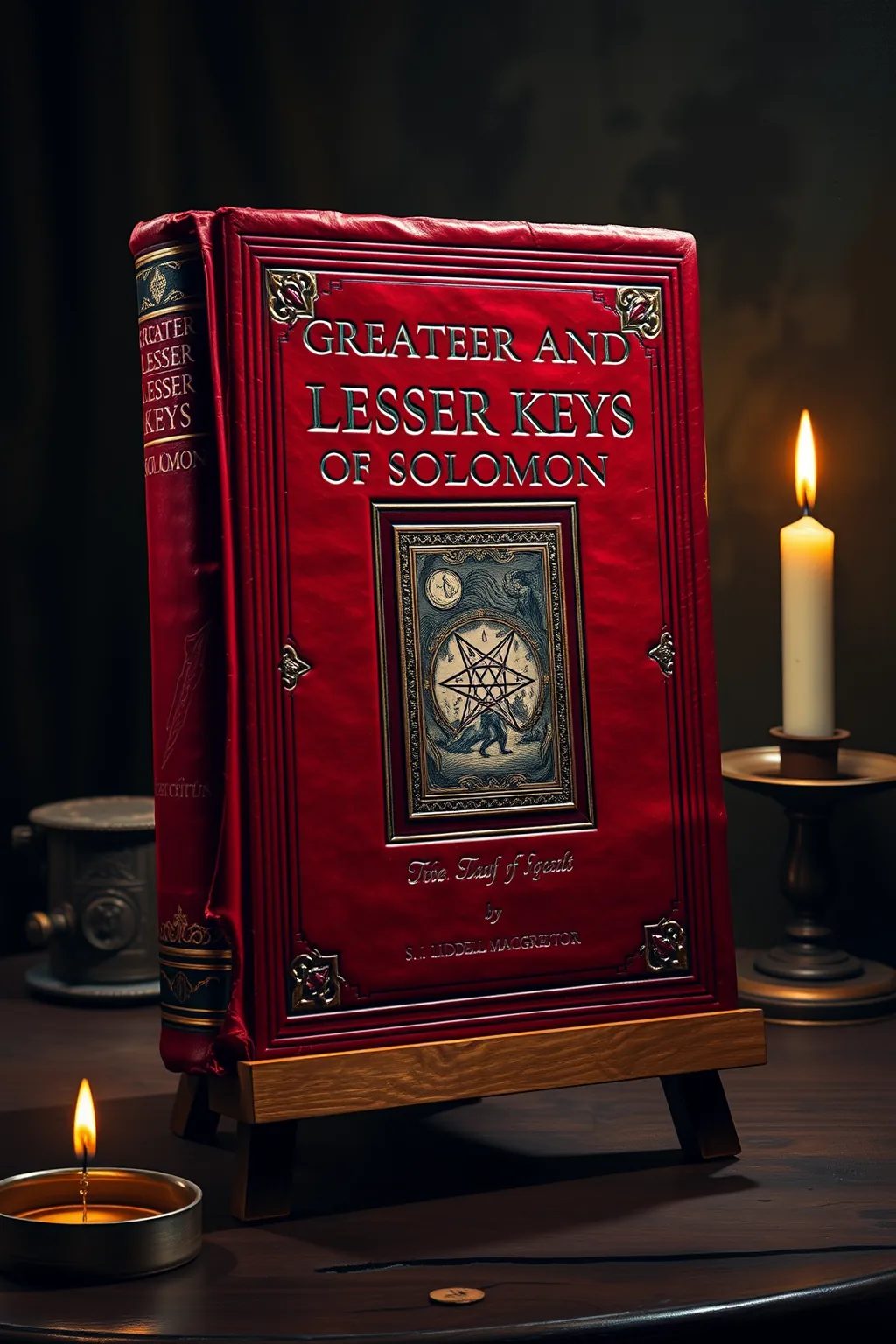
Greater and Lesser Keys of Solomon
 61
61

Greater and Lesser Keys of Solomon


Marcus Thorne (Esoteric Sciences Reviewer) — The 'Greater and Lesser Keys of Solomon,' as presented by S. Liddell MacGregor Mathers, stands as a monumental pillar in the edifice of ceremonial magic. Mathers’ translation breathes life into these potent texts, offering clarity and depth to complex rituals and divine appellations. This edition is indispensable for its rigorous scholarship, providing essential context for understanding the angelic hierarchies, planetary intelligences, and the sophisticated symbolic language of Solomonic magic. Its strength lies in its comprehensive presentation, making it an invaluable resource for serious practitioners and academic researchers alike, seeking to engage with the authentic currents of Western occultism.
📝 Description
61
First published in 1904, S. Liddell MacGregor Mathers' translation of the Greater and Lesser Keys of Solomon presents authentic magical texts.
Mathers' translation of the Greater and Lesser Keys of Solomon offers Western occultists a direct encounter with grimoires attributed to King Solomon. This edition makes available detailed instructions for conjuring spirits, constructing magical tools, and performing rituals. It covers the organization of angelic hierarchies, the use of divine names, and the creation of talismans. The texts themselves are presented as a system for spiritual advancement and interaction with supernatural forces. Mathers sought to provide an accurate rendering of these complex magical systems for students of the occult.
The book includes sections on various spirits and their seals, methods for divination, and the preparation of instruments like the wand and pentacle. It is structured to guide the practitioner through specific operations, detailing the required invocations and the proper timing based on planetary alignments. The material aims to grant the user knowledge and control over both spiritual and material aspects of existence.
The Greater and Lesser Keys of Solomon are foundational texts within the Western esoteric tradition, specifically in ceremonial magic. Their lineage traces back to medieval grimoires that compiled earlier magical knowledge, often attributed to the biblical King Solomon for their perceived authority. This tradition emphasizes the systematic invocation of spirits and angels, the use of symbolic language, and the precise execution of rituals. These grimoires were particularly influential during the Renaissance and later occult revivals, shaping practices in groups like the Hermetic Order of the Golden Dawn, of which Mathers was a prominent figure.
💡 Why Read This Book?
Unlock ancient secrets of divine power and spiritual discipline. This tome offers a direct lineage to Solomonic magic, vital for practitioners seeking to understand and perform foundational rituals. Scholars will find invaluable historical and symbolic insights, while spiritual seekers can explore a profound path of personal gnosis and self-mastery. Ideal for those dedicated to the serious study of Western esotericism.
⭐ Reader Reviews
Honest opinions from readers who have explored this book.
❓ Frequently Asked Questions
What are the 'Greater' and 'Lesser' Keys?
The 'Greater Key' primarily focuses on the art of invocation and the creation of magical tools, emphasizing the philosophical and theological underpinnings of magic. The 'Lesser Key' (often referring to the 'Lemegeton' or 'Goetia') details the conjuration of spirits and demons, requiring rigorous preparation and ethical consideration.
Is this book suitable for beginners?
While accessible, this is an advanced text. Beginners should approach with caution, ideally with guidance, focusing on the philosophical and preparatory aspects before attempting complex rituals.
What is the historical significance of this work?
This collection represents a cornerstone of Western ceremonial magic, consolidating centuries of grimoire traditions and influencing countless occultists, mystics, and secret societies from the Renaissance onward.
What kind of magic does it describe?
It describes ceremonial magic, a structured system involving ritualistic practices, invocations, consecrations, and the summoning of spiritual intelligences and elemental forces, all rooted in a Judeo-Christian esoteric framework.
Are the rituals dangerous?
The effectiveness and perceived danger of these rituals are subject to the practitioner's intent, preparation, spiritual discipline, and understanding. Proper ethical grounding and a strong inner foundation are paramount for safe and beneficial engagement.
🔮 Key Themes & Symbolism
The Science of Solomonic Magic
This theme explores the systematic approach to magic presented in the Keys, treating it not as mere superstition but as a disciplined art and science. It looks at the principles of divine authority, angelic mediation, and the creation of sacred space. The text emphasizes the importance of purity, prayer, and specific ritualistic actions to align the practitioner with cosmic forces, transforming the mundane into the sacred and enabling communication with higher or lower intelligences. It highlights the rigorous preparation required, both internal and external, for successful magical operations.
Angelic Hierarchies and Divine Names
Central to the Keys is the intricate mapping of angelic realms and the potent power embedded within divine names. The text reveals a complex hierarchy of celestial beings, each associated with specific planetary influences, powers, and functions. Understanding and invoking these intelligences, often through their sacred names, is presented as a primary method for achieving magical goals. This theme examines the theological framework that underpins these invocations, positioning them as acts of devotion and channels for divine grace and power, rather than mere commands.
The Art of Talismanic Creation and Consecration
The 'Greater Key' in particular provides detailed instructions for the creation and consecration of magical implements, talismans, and amulets. This theme focuses on the symbolic language embedded in these objects, their astrological attunements, and the ritualistic processes by which they are imbued with spiritual energy and purpose. It explores how specific metals, colors, times, and inscribed symbols are combined to create potent instruments for protection, influence, and the manifestation of desired outcomes, emphasizing the profound connection between matter, form, and spirit.
💬 Memorable Quotes
Direct passages from the work, attributed to the author.
“The knowledge of these matters is the most secret of all secrets.”
— This highlights the esoteric nature of the text, suggesting that its wisdom is not readily apparent and requires dedicated study and initiation to grasp.
“And God said, Let there be light: and there was light.”
— A foundational quote from Genesis, underscoring the creative power of the divine word and the fundamental principle of manifestation through divine utterance.
“Let the Magus be fortified by the prayers of the righteous.”
— Emphasizes the importance of spiritual purity and divine favor in magical practice, suggesting that ethical conduct and devotion are prerequisites for wielding magical power effectively.
“Know thyself, and thou shalt know the Universe and the Gods.”
— A classic Hermetic dictum, pointing towards introspection and self-awareness as the ultimate keys to understanding all existence, both material and spiritual.
💡 Key Ideas
Editorial paraphrase of the work's core concepts — not direct quotes.
All things are subject to God, and therefore to the Magus who acts in His name.
This quote articulates the ultimate authority granted to the magician who operates within the divine cosmic order, linking human will to celestial power.
🌙 Esoteric Significance
Tradition
The 'Greater and Lesser Keys of Solomon' are deeply rooted in the Western Esoteric Tradition, specifically within the branches of ceremonial magic, Kabbalah, and Hermeticism. It draws heavily from Judeo-Christian angelic lore, planetary magic, and Gnostic principles, presenting a structured system for interacting with spiritual forces and achieving personal spiritual evolution through ritual and divine invocation.
Symbolism
Symbolism is paramount in the Keys, encompassing angelic names, divine appellations, geometric figures (like the Seal of Solomon), planetary correspondences, colors, numbers, and astrological alignments. Each element is imbued with specific spiritual energies and meanings, acting as keys to unlock different levels of consciousness and power. The careful arrangement and use of these symbols are crucial for the efficacy of the rituals and the practitioner's understanding of the interconnectedness of the cosmos.
Modern Relevance
In contemporary occultism, the 'Keys of Solomon' remain a foundational text. Modern practitioners and scholars continue to study and adapt its rituals, seeking to understand the underlying principles of consciousness, energy manipulation, and spiritual development. Its enduring relevance lies in its comprehensive approach to magic as a spiritual path, emphasizing discipline, ethical responsibility, and the pursuit of divine wisdom, offering a timeless framework for exploring the human potential and the nature of reality.
👥 Who Should Read This Book
This key work is essential for serious practitioners of ceremonial magic seeking to engage with historical Solomonic traditions. Scholars of Western esotericism will find it an invaluable primary source for understanding occult history and philosophy. Spiritual seekers dedicated to gnosis and self-mastery will discover useful insights into the nature of divine power and the human soul. While beginners can approach the philosophical aspects, those intending to perform rituals should do so with thorough study, diligent preparation, and ideally, guidance from experienced practitioners.
📜 Historical Context
The 'Greater and Lesser Keys of Solomon' emerged from the body of Renaissance European esotericism, a period characterized by a fervent interest in ancient wisdom traditions, Hermeticism, Kabbalah, and astrology. Grimoires, or books of magic, flourished during this era, often synthesizing older magical texts with contemporary philosophical and theological ideas. S. Liddell MacGregor Mathers, a prominent figure in the Hermetic Order of the Golden Dawn, translated and edited these texts in the late 19th century, presenting them to a wider audience within the context of modern occult revival. His work aimed to systematize and legitimize these ancient practices, making them accessible to a new generation of occult scholars and practitioners seeking a direct connection to historical magical lineages.
📔 Journal Prompts
Reflect on a divine name or angelic hierarchy presented; what immediate intuitive associations do you have, and why?
Consider the ethical implications of commanding spirits. How does the text's emphasis on divine authority mitigate potential misuse?
Analyze the symbolism of a specific talisman or ritual tool described. What does its construction and purpose reveal about the magician's worldview?
How does the concept of 'sacred space' as depicted in the Keys relate to your own understanding of personal sanctuaries or moments of heightened awareness?
If you were to create a modern adaptation of a Solomonic ritual, what core principles would you retain and how would you adapt the elements to contemporary context?
🗂️ Glossary
Grimoire
A textbook of magic, typically containing instructions for invoking spirits, casting spells, and performing magical rituals, often associated with specific historical periods and traditions.
Invocation
A formal and solemn petition to a divine being or spiritual entity for aid, protection, or guidance. In ceremonial magic, it often involves calling down spiritual presence or power.
Sigil
A symbol or sign charged with magical intent, often created by distilling a phrase or concept into a unique design. In Solomonic magic, sigils are frequently used for identification and invocation of spirits.
Kabbalah
A system of Jewish mysticism and esoteric interpretation of the Torah, focusing on the divine nature, the creation of the universe, and the relationship between God and humanity, often represented by the Tree of Life.
Astrological Correspondences
The assignment of specific planets, signs, or stars to magical rituals, herbs, colors, deities, or spirits, based on perceived sympathies and influences within astrological systems.
This book appears in 3 collections
🔮 Readers Also Liked
Browse all →







More by S. Liddell MacGregor Mathers
All books →



From the “Ritual Magic” Collection
View all →







More Free Magic & Ritual Books
View all →