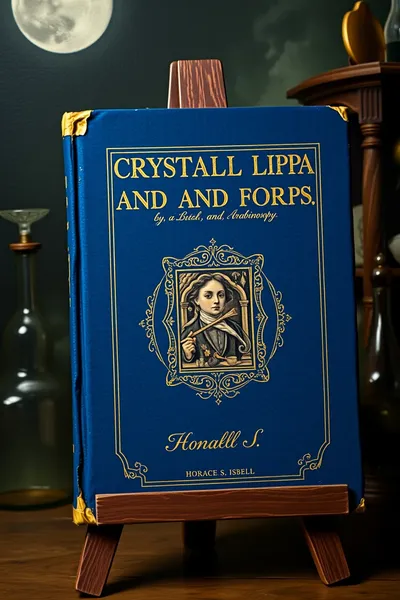
DNA and the I Ching

 61
61

DNA and the I Ching



Lorelei Sage, Contemplative Literature Editor – Johnson F. Yan masterfully bridges the chasm between cutting-edge biotechnology and the timeless wisdom of the I Ching in 'DNA and the I Ching.' This work is a revelation, meticulously weaving scientific understanding with profound esoteric insight. Yan doesn't just present parallels; he uncovers a shared vibrational language, suggesting that the hexagrams are not merely tools for divination but perhaps a cosmic blueprint reflected in our own genetic makeup. It's a challenging yet deeply rewarding read for those who ponder the fundamental nature of existence, offering a fresh perspective on the interconnectedness of all things. Highly recommended for serious students of the occult, metaphysics, and those seeking to integrate scientific discovery with ancient spiritual paradigms.
📝 Description
61
Johnson F. Yan's 2023 book connects the I Ching's hexagrams to genetic structures.
Johnson F. Yan's "DNA and the I Ching" examines the potential parallels between the ancient Chinese oracle and modern genetics. The book proposes that the 64 hexagrams of the I Ching may correspond to fundamental patterns within human DNA. Yan suggests that the binary structure of the hexagrams could reflect the binary code of genetic information, and that the principles of change and transformation central to the I Ching might also be observed in biological processes. He invites readers to consider how these two seemingly disparate systems might share a common underlying logic.
The author frames this inquiry within an esoteric tradition, seeking connections beyond conventional scientific understanding. The work is intended for those interested in exploring the intersection of biology, philosophy, and mystical traditions. It posits a view of the universe where natural phenomena and ancient symbolic systems can illuminate each other, offering a different perspective on the organization of life.
This book fits within esoteric traditions that seek correspondences between macrocosmic principles and biological or physical forms. It echoes earlier attempts to find universal patterns, such as those in alchemy or numerology, but focuses specifically on the I Ching's symbolic language and its potential resonance with the molecular basis of life. The approach is less about empirical proof and more about symbolic interpretation and analogical reasoning, common in hermetic and Taoist thought.
💡 Why Read This Book?
Embark on a paradigm-shifting journey that harmonizes the scientific marvel of DNA with the ancient prophetic wisdom of the I Ching. Discover how your genetic code might echo the profound principles of the Tao. This book is essential for seekers of esoteric knowledge, scientists intrigued by consciousness, and practitioners wishing to deepen their understanding of universal patterns and personal destiny. Uncover the hidden unity between the microcosm and macrocosm.
⭐ Reader Reviews
Honest opinions from readers who have explored this book.
❓ Frequently Asked Questions
What is the core premise of 'DNA and the I Ching'?
The book posits a profound connection between the structure and function of DNA and the symbolic language of the I Ching, suggesting they represent parallel expressions of universal order and transformation.
Is this book suitable for someone without a scientific background?
While it touches on scientific concepts, the primary focus is on the philosophical and esoteric implications. The author makes complex ideas accessible to a broad audience interested in metaphysical connections.
How does the I Ching relate to DNA in this book?
The book explores how the sixty-four hexagrams of the I Ching may mirror the genetic code's complexity, offering insights into patterns of change, potential, and the fundamental forces governing life.
Who is the ideal reader for this esoteric work?
This book is ideal for seekers of hidden knowledge, scholars of comparative mysticism, practitioners of divination, and anyone curious about the intersection of ancient wisdom and modern science.
What kind of esoteric insights can one expect?
Readers can expect insights into the energetic blueprint of life, the symbolic representation of universal laws, and a deeper appreciation for the interconnectedness of all phenomena, from the cellular to the cosmic.
🔮 Key Themes & Symbolism
The Universal Language of Patterns
This theme explores the idea that fundamental patterns underpin both the biological realm and the symbolic systems of ancient wisdom. It looks at how the binary nature of DNA's nucleotides might find resonance in the yin and yang of the I Ching's trigrams and hexagrams. The book suggests a universal grammar of existence, where the principles of change, balance, and transformation are expressed through vastly different mediums, yet speak a common, profound language. It invites readers to perceive the intricate order woven into the fabric of reality.
Biotechnology as Esoteric Revelation
Rather than viewing biotechnology solely through a material lens, this theme reframes it as a potential window into esoteric truths. The discovery and manipulation of DNA are presented not just as scientific advancements but as a modern unfolding of ancient cosmic secrets about life's blueprint. The book encourages a contemplative approach to scientific inquiry, suggesting that the deeper we probe into the mechanics of life, the more we may find elements of metaphysical principles and spiritual laws that have been understood for millennia through intuitive and divinatory practices.
The I Ching as a Genetic Oracle
This theme provocatively proposes the I Ching as a symbolic representation or a 'genetic oracle' that reflects the potential pathways and transformations inherent in life's fundamental code. It explores how the dynamic shifts within the hexagrams might correspond to the evolutionary and developmental processes encoded within DNA. Readers are invited to consider the ancient wisdom of the I Ching not just as a tool for personal guidance but as a profound commentary on the very essence of biological existence and the cyclical nature of creation, preservation, and change.
💬 Memorable Quotes
Direct passages from the work, attributed to the author.
“The Tao whispers through our very genes.”
— Suggests that the fundamental principles of the Tao, representing the natural order of the universe, are not external but are intrinsically present and expressed within our biological makeup.
“Science unveils what mystics have long divined.”
— Highlights the convergence of modern scientific discovery and ancient esoteric knowledge, implying that empirical investigation is gradually validating intuitive and symbolic understandings of reality.
“Change is the code, life the unfolding.”
— Connects the inherent mutability described by both DNA and the I Ching, framing life as a continuous process of transformation guided by underlying informational principles.
“The blueprint of being, a cosmic resonance.”
— Emphasizes the idea that our genetic code is not merely a biological instruction manual but a manifestation of a larger, interconnected universal order and energetic harmony.
💡 Key Ideas
Editorial paraphrase of the work's core concepts — not direct quotes.
Within the helix, a hexagram's echo lies.
This quote captures the central thesis: the profound, underlying structural or informational similarities between the molecular blueprint of life and the ancient symbolic system of the I Ching.
🌙 Esoteric Significance
Tradition
This work draws heavily from Taoist philosophy, particularly the I Ching (Book of Changes), and intersects with modern esoteric interpretations of biology and consciousness. It posits a universal principle of order and transformation, aligning with Hermetic traditions that speak of 'as above, so below,' suggesting that cosmic laws are reflected in all levels of existence, from the microscopic genetic code to the macrocosmic patterns of the universe.
Symbolism
The core symbolism lies in the binary nature of DNA nucleotides (A, T, C, G) and the yin-yang duality that forms the basis of the I Ching's trigrams and hexagrams. The book explores how the sequence and arrangement of these elements can be seen as analogous, representing potential, change, and the underlying structure of reality. The hexagrams themselves become symbols of genetic possibilities and life's dynamic processes.
Modern Relevance
In an age increasingly dominated by genetic science and biotechnology, 'DNA and the I Ching' offers a crucial counterpoint, urging a more holistic and spiritual understanding of our biological selves. It provides a framework for contemplating the ethical and philosophical implications of genetic manipulation by grounding it in ancient wisdom about balance and natural order. The book encourages individuals to see their genetic makeup not as fixed destiny but as part of a dynamic, interconnected cosmic process.
👥 Who Should Read This Book
This esoteric exploration is designed for a diverse audience. **Beginners** to esoteric thought will find a fascinating entry point into the symbolic language of the I Ching and its surprising resonance with modern science. **Scholars** of comparative religion, mysticism, and the philosophy of science will appreciate the rigorous, yet imaginative, synthesis of disparate fields. **Seekers** of deeper meaning and purpose will discover new perspectives on their own existence and the universe's intricate design. **Practitioners** of divination and spiritual disciplines can enhance their understanding by exploring the potential energetic and informational parallels between ancient oracles and the fundamental code of life.
📜 Historical Context
Published in an era of burgeoning interest in consciousness studies, quantum physics' implications for metaphysics, and the integration of Eastern philosophies into Western thought, 'DNA and the I Ching' emerged as a central text. The late 20th and early 21st centuries witnessed a growing realization that traditional paradigms might be insufficient to explain the complexities of existence. As scientists delved deeper into the human genome, a parallel spiritual and philosophical quest sought to understand life's deeper meaning. This book arrived at a time when the lines between the empirical and the esoteric were becoming increasingly blurred, offering a compelling synthesis that resonated with a generation eager to reconcile scientific advancement with ancient wisdom.
📔 Journal Prompts
How do you perceive the concept of 'pattern' in your own life, both internally and externally?
If your DNA holds a 'code,' what might be the 'language' it speaks beyond biological function?
Reflect on a time you experienced significant personal change. How might the principles of the I Ching apply to that transformation?
Consider the ethical implications of understanding life's 'blueprint.' What responsibilities arise from such knowledge?
In what ways can ancient wisdom traditions offer guidance or perspective on modern scientific discoveries?
🗂️ Glossary
I Ching
An ancient Chinese divination text and one of the oldest of the Chinese classics, containing a fundamental symbolic system of 64 hexagrams, representing the world's philosophical concepts of change and duality.
Tao (Dao)
The fundamental principle of the universe in Chinese philosophy, often translated as 'the Way,' representing the natural order, the source of all things, and the underlying force that governs existence.
Hexagram
A figure composed of six stacked horizontal lines, each line being either yin (broken) or yang (solid), used in the I Ching to represent a specific situation, principle, or state of change.
Trigram
A figure composed of three stacked horizontal lines, each line being either yin or yang. Eight basic trigrams form the building blocks of the sixty-four hexagrams in the I Ching.
Yin and Yang
The concept of dualism in Chinese philosophy, representing complementary, interconnected, and interdependent forces that give rise to everything in the universe. Yin is typically associated with the passive, feminine, and dark, while Yang is associated with the active, masculine, and light.
This book appears in 4 collections
🔮 Readers Also Liked
Browse all →





From the “I Ching” Collection
View all →









More Free Divination & Tarot Books
View all →