Death of Feng Shui and the Start of a New Chinese Astrology
 61
61

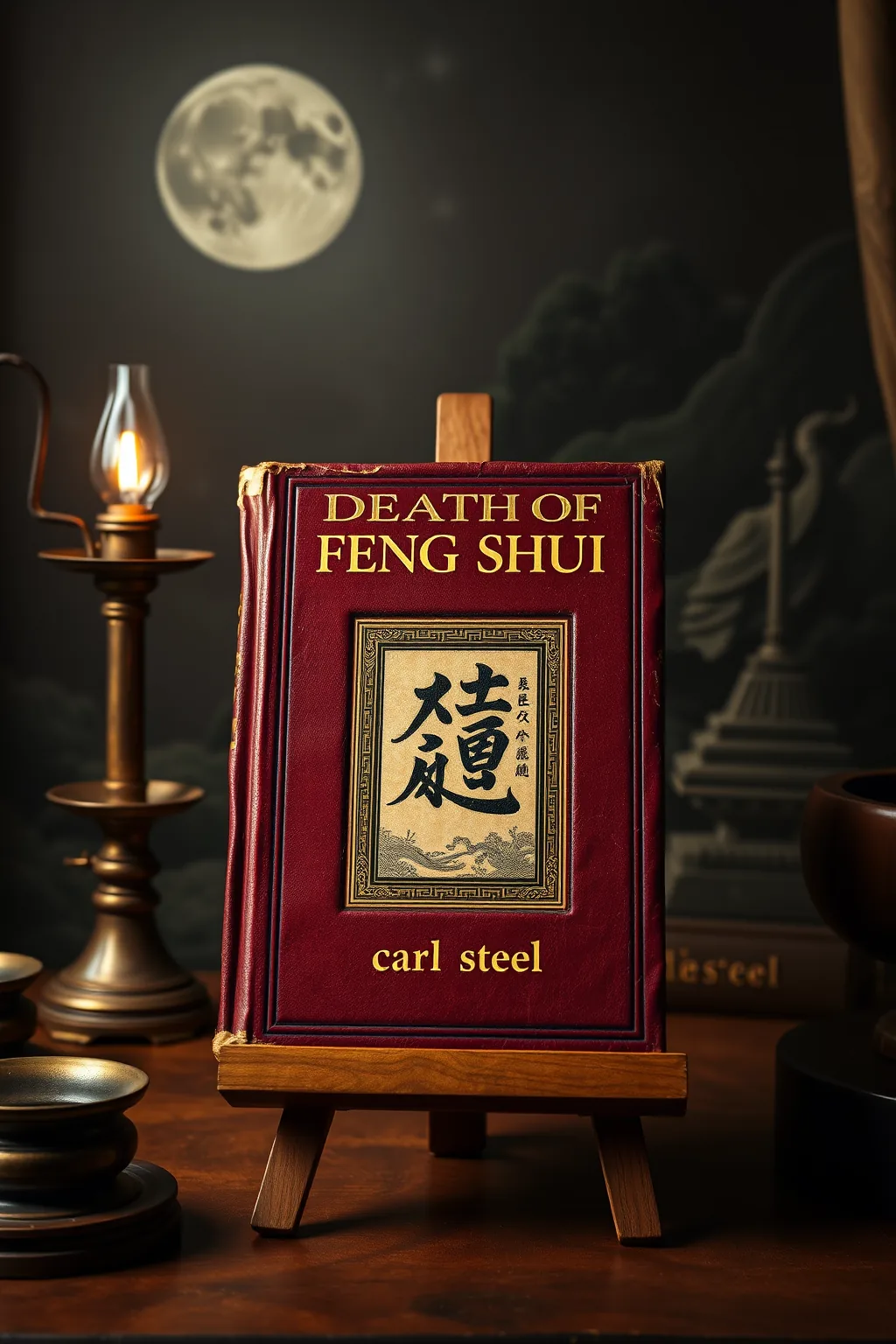
Death of Feng Shui and the Start of a New Chinese Astrology


Silas Hawthorne, Hermetic Studies Editor: Carl Steel's "Death of Feng Shui and the Start of a New Chinese Astrology" is a revelatory work that courageously dissects the popular understanding of Feng Shui to unearth the potent, foundational principles of authentic Chinese Astrology. Steel masterfully navigates the esoteric currents, revealing the profound symbolism embedded within the BaZi and the Five Element theory. His insights into the cyclical nature of time and cosmic influence offer a fresh perspective for both seasoned practitioners and curious newcomers. This is not merely a book of predictions, but a guide to self-awareness and spiritual attunement, a vital addition to any serious library on Eastern metaphysics.
📝 Description
61
Carl Steel's 2017 book argues that traditional Feng Shui has reached its end, replaced by a new Chinese astrology.
Carl Steel's "Death of Feng Shui and the Start of a New Chinese Astrology" (2017) proposes a shift in Chinese esoteric thought. The work contends that the established practices of Feng Shui, focused on geomancy and spatial arrangement, have become insufficient. Instead, Steel posits that a revitalized form of Chinese Astrology offers a more direct channel to understanding cosmic influences and personal destiny. The book examines the cyclical patterns of the I Ching and the interplay of the Five Elements, framing them not just as predictive mechanisms but as fundamental forces shaping existence. It also analyzes the symbolism of the zodiacal animals within this astrological framework.
This text aims to move beyond surface-level interpretations of Chinese cosmology. It seeks to connect readers with the philosophical underpinnings of these traditions, viewing them as pathways to deeper self-awareness and a more informed perception of universal energies. The book addresses those interested in esoteric studies and seeking a more substantial engagement with Chinese metaphysical systems.
This book operates within the broader field of Chinese metaphysics, which traditionally links celestial phenomena, earthly energies, and human fate. It engages with concepts like Qi (vital energy), the Five Phases (Wu Xing), and the cyclical timekeeping of the Chinese calendar. Steel's work specifically questions the contemporary relevance of Feng Shui, a practice focused on harmonizing human environments with natural forces, and suggests a reorientation towards astrological principles that he believes offer a more accurate reflection of cosmic order and individual destiny in the modern era.
💡 Why Read This Book?
Uncover the profound, often-misunderstood, esoteric underpinnings of Chinese Astrology. This book offers a critical re-evaluation of popular practices, guiding readers towards a deeper, more spiritual comprehension of celestial influences. Ideal for seekers of hidden wisdom, astrology enthusiasts looking for advanced insights, and scholars of Eastern metaphysics seeking a rigorous exploration of cosmic principles.
⭐ Reader Reviews
Honest opinions from readers who have explored this book.
❓ Frequently Asked Questions
What is the core argument of the book regarding Feng Shui?
The book posits that the contemporary understanding of Feng Shui has become detached from its deeper astrological and cosmological roots, suggesting a need to return to its foundational principles for a more authentic practice.
How does this book differ from typical Chinese Astrology guides?
This work emphasizes the philosophical and spiritual dimensions of Chinese Astrology, moving beyond simple predictions to explore its role in self-discovery and understanding cosmic patterns.
Is this book suitable for beginners in Chinese Astrology?
While it delves into complex esoteric concepts, the author's clear exposition makes it accessible to dedicated beginners eager to grasp the deeper meanings, though prior foundational knowledge would be beneficial.
What does the author mean by a 'New Chinese Astrology'?
It refers to a revitalization and deeper exploration of the ancient principles, stripping away superficial interpretations to reveal the potent, transformational power of the system.
What is the philosophical significance of this re-examination?
It encourages a shift from a purely materialistic or superficial approach to understanding cosmic influences, fostering a more integrated and spiritual worldview.
🔮 Key Themes & Symbolism
The Dissolution of Superficial Feng Shui
This theme critically examines the modern, often commercialized, interpretation of Feng Shui, arguing that it has lost touch with its profound cosmological origins. The book suggests that a focus on superficial remedies and aesthetics has obscured the deeper energetic principles and the intricate relationship between human destiny and celestial cycles. Steel guides the reader to understand how this dilution has led to a disconnect from the true transformative potential inherent in the ancient arts of Chinese metaphysics, paving the way for a more authentic and potent astrological practice.
Revitalization of Authentic Chinese Astrology
This central theme champions the resurgence of a deeply spiritual and philosophically rich Chinese Astrology. The book argues for a return to the core tenets of the BaZi (Eight Characters) and the Five Element theory, presenting them not as deterministic fate, but as dynamic energetic blueprints for self-understanding and growth. Steel emphasizes the symbolic language of the zodiac, the elemental interactions, and the cyclical patterns as profound tools for navigating life's challenges and unlocking individual potential, fostering a connection to the cosmic intelligence that governs existence.
The Interplay of Cosmic Cycles and Human Destiny
This theme examines the intricate dance between the grand cycles of the cosmos and the unfolding narrative of human life. The book explores how the movements of celestial bodies, the elemental transformations, and the energetic currents of time profoundly influence individual destinies. Steel elucidates the symbolic representations of these forces within Chinese Astrology, encouraging readers to see themselves not as passive recipients of fate, but as active participants within a vast, interconnected cosmic web, capable of conscious engagement and transformation.
💬 Memorable Quotes
Direct passages from the work, attributed to the author.
“Beyond the currents of chi, lies the river of destiny.”
— This highlights the deeper, more fundamental forces at play in Chinese cosmology, differentiating between the immediate energetic flows (chi) and the overarching, predetermined paths of fate.
“The zodiac is not a cage, but a map of the soul's potential.”
— This reframes astrological signs as empowering guides rather than restrictive labels, emphasizing their role in revealing inherent strengths and developmental pathways.
“When the old forms crumble, the seeds of new wisdom are sown.”
— This speaks to the transformative nature of the book's thesis, suggesting that the 'death' of outdated practices is essential for the emergence of deeper, more relevant spiritual insights.
“To read the heavens is to read the self, writ large.”
— This emphasizes the profound mirror that astrology holds, connecting the macrocosm of the universe to the microcosm of the individual human experience and consciousness.
💡 Key Ideas
Editorial paraphrase of the work's core concepts — not direct quotes.
The true stars do not merely predict, they illuminate.
This quote suggests that authentic astrology's purpose is not solely to foretell events, but to provide useful insights and spiritual understanding, guiding the soul's journey.
🌙 Esoteric Significance
Tradition
This work is deeply rooted in the esoteric traditions of Taoism and ancient Chinese cosmology, drawing heavily from the I Ching, the principles of Yin and Yang, and the Five Element theory. It aligns with the hermetic principle of "As Above, So Below," viewing the celestial bodies and their movements as a direct reflection of the energies and patterns that govern human life and the Earth. The book seeks to revive the philosophical and spiritual dimensions often overlooked in popular interpretations.
Symbolism
The book meticulously deciphers the body of symbols within Chinese Astrology. Key symbols include the Twelve Earthly Branches (representing cyclical time and archetypal energies), the Ten Heavenly Stems (representing the Five Elements in their Yin and Yang manifestations), and the complex interactions between these elements. The animal signs of the zodiac are explored not just as personality traits, but as potent archetypal forces influencing destiny and character development, revealing a profound symbolic language of cosmic influence.
Modern Relevance
In an age often characterized by disconnection and a search for meaning, this book offers a profound framework for self-understanding and spiritual integration. By revealing the deeper astrological currents, it empowers individuals to navigate life's challenges with greater awareness and purpose. Its emphasis on cyclical time and elemental balance provides a holistic perspective that is highly relevant to modern concerns about sustainability, personal growth, and finding one's place within the grand cosmic order.
👥 Who Should Read This Book
This book is essential for seasoned practitioners of Feng Shui seeking to deepen their understanding and reconnect with its astrological roots. Astrologers of all traditions will find a wealth of new perspectives and symbolic interpretations. Students of Eastern philosophy and comparative mysticism will appreciate its rigorous scholarship and useful insights. For the spiritual seeker yearning for a more meaningful connection to the cosmos, and for scholars interested in the evolution of esoteric thought, this work offers an clear and transformative journey into the heart of ancient Chinese wisdom.
📜 Historical Context
Written in an era where globalization often leads to the superficial adoption of Eastern practices, "Death of Feng Shui and the Start of a New Chinese Astrology" emerges as a crucial intervention. As interest in Eastern metaphysics surged, many traditions, including Feng Shui, were simplified or misunderstood, losing their intricate philosophical depth. Carl Steel's work appears at a time when scholars and practitioners are increasingly seeking to reclaim the authentic essence of these ancient systems. The book is influenced by a lineage of esoteric scholarship that emphasizes the cyclical nature of time, the interconnectedness of all things, and the symbolic language of the cosmos, echoing the intellectual currents of hermeticism and comparative mysticism.
📔 Journal Prompts
Reflect on how your personal understanding of Feng Shui has evolved, and how it might be enriched by astrological principles.
Identify the dominant elements in your BaZi chart and consider how their interactions manifest in your life's journey.
Explore a personal challenge you are currently facing through the lens of the cyclical energies described in Chinese Astrology.
Consider the 'death' of old paradigms in your life and how new, more authentic understandings are emerging.
How can the symbolic language of the Chinese zodiac help you to better understand your own archetypal patterns and potential?
🗂️ Glossary
BaZi (八字)
Literally 'Eight Characters,' the system of Chinese astrology based on the year, month, day, and hour of birth, forming four pairs of Heavenly Stems and Earthly Branches.
Qi (氣)
The vital life force or energy that flows through all things, a fundamental concept in Taoism and traditional Chinese medicine and metaphysics.
I Ching (易經)
The ancient Chinese divination text and wisdom book, also known as the Book of Changes, which uses hexagrams to represent cosmic principles and predict outcomes.
Yin and Yang (陰陽)
The fundamental Taoist concept of dualistic, complementary forces that interact to create and sustain the universe, representing opposing but interconnected principles.
Five Elements (五行)
The five fundamental elements (Wood, Fire, Earth, Metal, Water) that interact and transform, forming the basis of much of Chinese philosophy, medicine, and cosmology.
This book appears in 2 collections
🔮 Readers Also Liked
Browse all →


![Mr. Patridge's [sic] judgement and opinion of this frost. Foretelling how long it is like to continue, according to the rules of astrology. ... 1709](/img/thumb/mr-patridge-s-sic-judgement-and-opinion-of-this-frost-foretelling-how-long-it-is-like-to-continue-according-to-the-rules-of-astrology-1709-patridge-mr.webp)




From the “Astrology” Collection
View all →








More Free Astrology & Cosmology Books
View all →