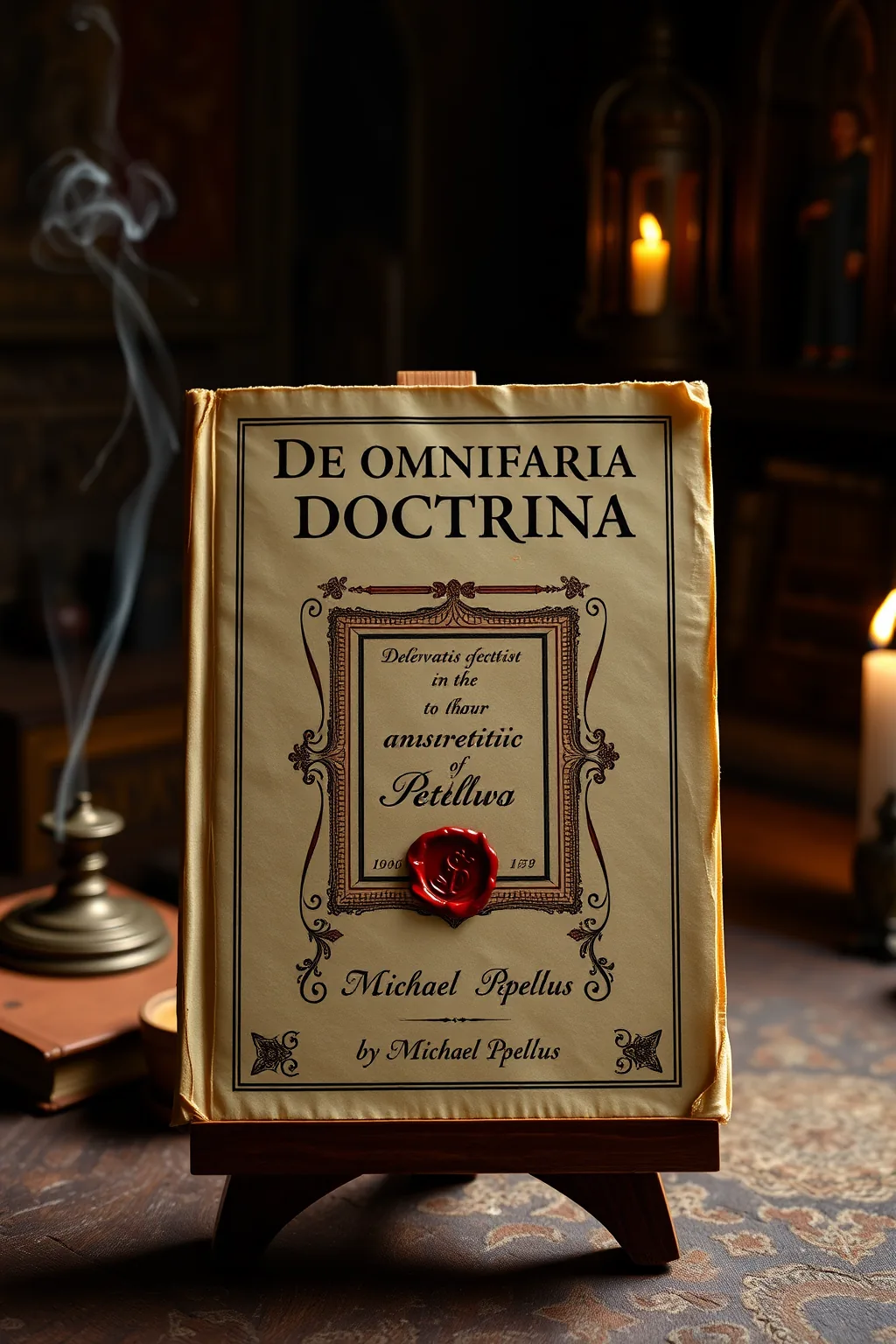
De omnifaria doctrina
 61
61

De omnifaria doctrina


Review by Cassian Rothmann (Senior Critic, Ancient Wisdom) — De omnifaria doctrina by Michael Psellus is a masterclass in esoteric literature, offering profound insights into the hidden dimensions of Eastern Orthodox theology and Neoplatonic philosophy. Psellus' work is a beacon for those who seek to unravel the mysteries of the universe through the lens of ancient wisdom. The text is rich in symbolism and esoteric knowledge, making it an invaluable resource for scholars and practitioners of Hermeticism. Psellus' ability to blend mystical themes with theological doctrine is nothing short of extraordinary, providing readers with a unique perspective on the spiritual journey. This book is particularly suited for those who are already familiar with the esoteric traditions and are looking to deepen their understanding of the mystical underpinnings of Eastern Orthodox thought.
📝 Description
61
Michael Psellus wrote De omnifaria doctrina around 1050 AD, attempting to reconcile Neoplatonism with Orthodox Christianity.
Michael Psellus's De omnifaria doctrina, composed in the mid-11th century, is a complex work that attempts to bridge the philosophical traditions of Neoplatonism with the theological framework of Eastern Orthodoxy. Psellus, a prominent Byzantine scholar, engages with concepts of the divine, the nature of reality, and the human soul's ascent toward God. The text is dense with symbolism and philosophical argument, requiring careful attention from the reader. It examines how abstract philosophical ideas can inform or be integrated into Christian doctrine, particularly concerning cosmology and the divine intellect.
This book invites contemplation on the relationship between the visible and invisible worlds. Psellus's writing reflects a desire to understand the underlying spiritual principles that govern existence, drawing heavily on earlier Greek philosophical thought. It addresses those interested in the intellectual history of Byzantine theology and its engagement with classical philosophy, showing how ancient ideas were adapted and reinterpreted within a Christian context.
De omnifaria doctrina stands as an example of Byzantine intellectual synthesis, where classical philosophy, particularly Neoplatonism, was reinterpreted through the lens of Orthodox Christian theology. Psellus sought to demonstrate the compatibility of Platonic ideas about the One and the Forms with Christian doctrines of God and creation. This tradition of philosophical engagement with Christian faith was common among Byzantine intellectuals, aiming to provide a sophisticated theological understanding that could withstand philosophical critique and illuminate spiritual truths.
💡 Why Read This Book?
Read De omnifaria doctrina to gain a deeper understanding of the mystical and esoteric traditions that have shaped Eastern Orthodox theology. This book is ideal for seekers of hidden knowledge, scholars of Hermeticism, and practitioners of spiritual disciplines who wish to explore the profound symbolism and philosophical significance of ancient doctrines. Psellus' work offers a unique perspective on the divine and the earthly, making it a valuable addition to any esoteric library.
⭐ Reader Reviews
Honest opinions from readers who have explored this book.
❓ Frequently Asked Questions
What is the significance of Neoplatonism in De omnifaria doctrina?
Neoplatonism is central to the text, as it provides the philosophical framework for understanding the mystical dimensions of Eastern Orthodox doctrine. Psellus integrates Neoplatonic concepts to explore the nature of the divine and its relationship with the human experience.
How does this book relate to Hermeticism?
De omnifaria doctrina is deeply rooted in Hermetic traditions, offering insights into the hidden knowledge and symbolism that are central to Hermeticism. Psellus' work serves as a bridge between Eastern Orthodox theology and the esoteric practices of Hermeticism.
Who would benefit most from reading this book?
Scholars of esoteric traditions, practitioners of spiritual disciplines, and seekers of hidden knowledge will find this book particularly enlightening. It is also valuable for those interested in the philosophical significance of ancient doctrines and their influence on modern thought.
What are some key symbols in the text?
The text is rich in symbolism, with key symbols representing the divine, the earthly, and the mystical journey. These symbols are integral to understanding the deeper meanings and esoteric insights presented in the book.
How does this book contribute to the understanding of Eastern Orthodox theology?
De omnifaria doctrina offers a unique perspective on Eastern Orthodox theology by exploring its mystical and esoteric dimensions. Psellus' work provides insights into the hidden knowledge and symbolism that underpin the theology, making it a valuable resource for scholars and practitioners.
🔮 Key Themes & Symbolism
Neoplatonism and Eastern Orthodoxy
Psellus masterfully integrates Neoplatonic philosophy with Eastern Orthodox doctrine, creating a body of mystical thought. This theme explores the divine and the earthly, offering insights into the hidden dimensions of spirituality.
Symbolism and Hidden Knowledge
The text is replete with symbolism that represents the mystical journey and the quest for enlightenment. Psellus' use of hidden knowledge and esoteric symbolism is central to understanding the deeper meanings of the text.
The Mystical Journey
De omnifaria doctrina invites readers on a profound journey of spiritual growth and enlightenment. This theme looks at the personal and philosophical significance of the mystical journey, as explored through the lens of Eastern Orthodox theology and Hermeticism.
💬 Memorable Quotes
Direct passages from the work, attributed to the author.
“Seekers of hidden knowledge will find their path illuminated by the light of ancient wisdom.”
— Psellus encourages readers to examine the mysteries of the universe, using the wisdom of ancient traditions to guide their journey.
“The quest for enlightenment is a personal journey, unique to each seeker.”
— Psellus emphasizes the individual nature of the spiritual journey, encouraging readers to find their own path to enlightenment.
💡 Key Ideas
Editorial paraphrase of the work's core concepts — not direct quotes.
The divine is not separate from the earthly, but intertwined in a mystical dance.
This passage underscores the interconnectedness of the divine and the earthly, a central theme in Psellus' esoteric philosophy.
The symbols of the divine are scattered throughout the earthly realm, waiting to be discovered.
This quote highlights the importance of symbolism in understanding the deeper meanings of the mystical journey.
The mysteries of the universe are revealed to those who seek with an open heart and mind.
This passage underscores the importance of openness and curiosity in the quest for esoteric knowledge.
🌙 Esoteric Significance
Tradition
De omnifaria doctrina belongs to the Hermetic tradition, which emphasizes the pursuit of hidden knowledge and the mystical journey. It draws heavily on Neoplatonic philosophy and Eastern Orthodox doctrine, blending these traditions to create a unique perspective on the divine and the earthly.
Symbolism
Key symbols in the text represent the divine, the earthly, and the mystical journey. These symbols are integral to understanding the deeper meanings and esoteric insights presented in the book, serving as guides for seekers of hidden knowledge.
Modern Relevance
This book remains relevant today for modern practitioners of esoteric traditions and spiritual seekers. Its exploration of the mystical dimensions of Eastern Orthodox theology and Hermeticism offers valuable insights into the quest for enlightenment and the pursuit of hidden knowledge.
👥 Who Should Read This Book
Beginners interested in esoteric traditions will find De omnifaria doctrina to be an enlightening introduction to the mystical dimensions of Eastern Orthodox theology and Hermeticism. Scholars of ancient philosophy and theology will appreciate the depth of Psellus' insights and the integration of Neoplatonic concepts. Spiritual seekers and practitioners of spiritual disciplines will benefit from the profound symbolism and philosophical significance of the text. Those involved in Hermetic studies will find this book to be a valuable resource for understanding the hidden knowledge and esoteric practices of the tradition.
📜 Historical Context
De omnifaria doctrina was written during a time of great intellectual and spiritual ferment in the Eastern Orthodox world. Michael Psellus, a prominent scholar and theologian, sought to reconcile the mystical traditions of Neoplatonism with the doctrines of the Eastern Orthodox Church. This work was important for its time as it provided a bridge between ancient philosophical thought and contemporary religious practice. Its influence can be seen in the enduring interest in esoteric and Hermetic traditions, as well as in the continued exploration of the mystical dimensions of Eastern Orthodox theology.
📔 Journal Prompts
Reflect on how Neoplatonism influences your understanding of Eastern Orthodox theology.
Consider the role of symbolism in your spiritual journey.
Explore the concept of the divine and the earthly in your personal experiences.
Write about the importance of hidden knowledge in your quest for enlightenment.
Reflect on the personal significance of the mystical journey as described by Psellus.
🗂️ Glossary
Neoplatonism
A philosophical tradition that blends Platonic ideas with mystical and esoteric concepts, emphasizing the divine and the mystical journey.
Hermeticism
An esoteric tradition that seeks hidden knowledge and mystical insights, often through the study of ancient texts and symbols.
Symbolism
The use of symbols to represent deeper meanings and esoteric insights, integral to understanding mystical and spiritual texts.
Mystical Journey
The personal quest for spiritual growth and enlightenment, often involving the exploration of hidden knowledge and divine mysteries.
Eastern Orthodox Theology
The theological doctrines and practices of the Eastern Orthodox Church, which often incorporate mystical and esoteric elements.
This book appears in 2 collections
🔮 Readers Also Liked
Browse all →








From the “Neoplatonism” Collection
View all →






More Free Alchemy & Hermeticism Books
View all →