Ancient Chinese Science and the Chinese I Ching
 61
61

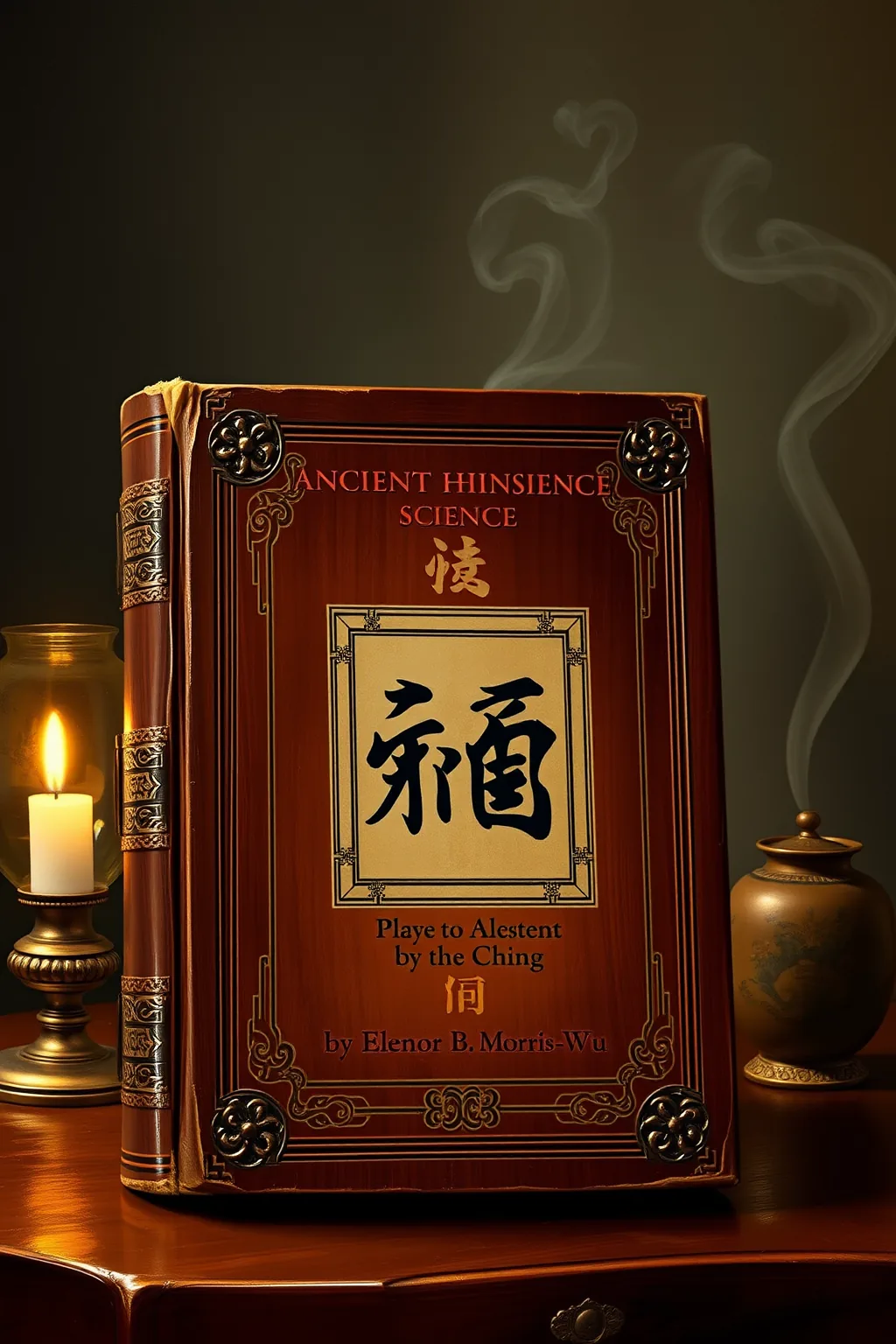
Ancient Chinese Science and the Chinese I Ching



By Cassian Rothmann (Senior Critic, Ancient Wisdom) — Eleanor B. Morris-Wu's 'Ancient Chinese Science and the Chinese I Ching' is a revelation for those who seek beyond the superficial. Morris-Wu doesn't merely describe; she invites readers into the very mindset of ancient Chinese mystics and scientists. Her exploration of the I Ching, framed within its scientific and philosophical context, is both rigorous and deeply insightful. The book masterfully connects the seemingly disparate elements of ancient Chinese thought – astronomy, philosophy, and divination – revealing a unified vision of cosmic order. This is not a casual read; it is a profound engagement with a complex, yet ultimately accessible, system of knowledge. Highly recommended for serious students of esoteric traditions and anyone seeking to understand the universe through the wisdom of the ancients.
📝 Description
61
Eleanor B. Morris-Wu's 1995 book connects ancient Chinese science with the I Ching.
Eleanor B. Morris-Wu's 'Ancient Chinese Science and the Chinese I Ching' examines the worldview of a civilization that saw the cosmos as a living system. The book looks at the 'mystical sciences' that shaped this perspective, including the concept of Qi and the philosophical structure of the I Ching. Morris-Wu analyzes how celestial observations, geomancy, and natural patterns were interpreted as sources of knowledge.
This work aims to show how these elements formed a coherent system for understanding the universe. It details the symbolic language and the methods used to derive meaning from the natural world. The book presents the I Ching not just as a divination tool but as a framework for understanding cosmic principles.
This book situates the I Ching and related Chinese practices within a broader esoteric tradition that views the universe as animated by vital forces and governed by sympathetic correspondences. It contrasts this with Western mechanistic views of nature. The work highlights how ancient Chinese thinkers sought to understand and align with cosmic patterns, using systems like the I Ching and geomancy as tools for this endeavor. It places these practices as integral to a worldview where the human and natural realms are deeply interconnected.
💡 Why Read This Book?
Uncover the secret science behind the I Ching's profound wisdom. Explore a worldview where the cosmos is alive with meaning and interconnectedness. This book offers a unique perspective for seekers, scholars, and practitioners of divination who wish to deepen their understanding of ancient Chinese philosophy and its practical applications in modern life. Discover the hidden patterns that govern existence.
⭐ Reader Reviews
Honest opinions from readers who have explored this book.
❓ Frequently Asked Questions
What is the core philosophy presented in the book?
The book presents a holistic worldview where the universe is seen as an interconnected system of energies and principles, with the I Ching serving as a map of these cosmic dynamics and a guide to harmonious living within them.
How does the book connect science and mysticism?
It demonstrates how ancient Chinese 'science' was deeply intertwined with mystical observation and philosophical inquiry, viewing natural phenomena as expressions of underlying esoteric laws and energies.
Is prior knowledge of the I Ching required?
While prior familiarity is beneficial, the book is structured to guide newcomers through the foundational concepts and complex symbolism, making it accessible to dedicated beginners.
What esoteric traditions does this book draw from?
It primarily draws from Taoism, Confucianism, and ancient Chinese cosmology, focusing on the I Ching as a central text that bridges philosophical, scientific, and spiritual inquiry.
What makes this book unique compared to other I Ching resources?
Its strength lies in its comprehensive integration of the I Ching with the broader scientific and philosophical landscape of ancient China, offering a more holistic and contextual understanding of its wisdom.
🔮 Key Themes & Symbolism
The Living Cosmos and Qi
This theme explores the ancient Chinese perception of the universe as a vibrant, pulsating entity, animated by the flow of Qi (vital energy). It explores how this concept informed their scientific endeavors, from understanding weather patterns to the subtle influences of celestial bodies. The book illustrates how this dynamic view of existence contrasts with modern mechanistic paradigms, offering a richer, more interconnected understanding of reality and our place within its energetic currents.
The I Ching as Cosmic Blueprint
Beyond mere divination, the I Ching is presented as a profound philosophical and scientific text, a blueprint of universal change and transformation. Morris-Wu elucidates how the 64 hexagrams represent archetypal patterns of cosmic and human experience, reflecting the cyclical nature of existence. This section explores the intricate relationship between the hexagrams, their imagery, and the underlying principles of yin and yang, offering a sophisticated framework for understanding the forces that shape destiny and guide wise action.
Esoteric Sciences of Harmony
This theme examines the practical applications of ancient Chinese esoteric sciences, including principles of geomancy (Feng Shui) and the study of celestial cycles, as tools for achieving harmony with universal forces. It highlights how these disciplines were not separate from philosophy or divination but were integral components of a unified system aimed at aligning human life with the natural order. The book reveals how understanding these ancient sciences can offer clear insights into creating balance and fostering well-being in the modern world.
💬 Memorable Quotes
Direct passages from the work, attributed to the author.
“The I Ching is not a fortune teller, but a mirror reflecting the currents of becoming.”
— This highlights the I Ching's role as a tool for self-understanding and navigating change, rather than a passive predictor of fate, emphasizing its dynamic and reflective nature.
“To know the stars is to know the patterns within oneself.”
— This poignant statement links celestial observation with inner self-knowledge, suggesting that cosmic order mirrors the order or disorder within the human soul.
“Every line is a breath, every hexagram a cosmic conversation.”
— This evocative description portrays the I Ching as a living text, where each component actively participates in a dialogue with the universe, revealing profound truths through its structure.
💡 Key Ideas
Editorial paraphrase of the work's core concepts — not direct quotes.
The universe breathes in and out, and we are part of its sacred rhythm.
This quote captures the core belief in a living cosmos, emphasizing humanity's intrinsic connection to universal energetic cycles and the importance of attuning to them.
Science was the language of the divine, spoken through the voice of nature.
This quote defines ancient Chinese science as a sacred endeavor, a means of deciphering the divine will and wisdom embedded within the observable natural world.
🌙 Esoteric Significance
Tradition
This work is deeply rooted in the esoteric traditions of Taoism and ancient Chinese cosmology. It explores the philosophical underpinnings of the I Ching, viewing it not merely as a divinatory tool but as a sacred text that captures the fundamental principles of the universe, the interplay of yin and yang, and the ceaseless process of change. It highlights the Taoist emphasis on living in accordance with the natural flow of the Tao, using the I Ching as a guide to understanding and harmonizing with these cosmic rhythms.
Symbolism
The book meticulously deciphers the detailed symbolism embedded within the I Ching's hexagrams and trigrams. It explores how these abstract figures are not arbitrary but are derived from natural phenomena, representing archetypal forces, situations, and transformations. Key symbols like Heaven (Qian), Earth (Kun), Water (Kan), and Fire (Li) are analyzed for their profound cosmological and psychological meanings, revealing how the ancient Chinese used visual and conceptual symbolism to map the entirety of existence and human experience.
Modern Relevance
In an age often characterized by fragmentation and a perceived disconnect from nature, 'Ancient Chinese Science and the Chinese I Ching' offers a powerful antidote. Its exploration of interconnectedness, vital energy (Qi), and cyclical change provides a framework for understanding contemporary challenges from a more holistic and balanced perspective. The book's insights into navigating change, fostering harmony, and understanding universal patterns remain remarkably relevant for personal growth, ethical decision-making, and cultivating a deeper sense of purpose in the modern world.
👥 Who Should Read This Book
This book is a treasure for a diverse audience. **Beginners** seeking an accessible yet profound introduction to the I Ching and ancient Chinese thought will find a clear guide. **Scholars** of Eastern philosophy and history will appreciate the rigorous scholarship and unique contextualization. **Seekers** of spiritual wisdom and alternative perspectives on reality will be drawn to its esoteric depth. **Practitioners** of divination, Feng Shui, or Traditional Chinese Medicine will discover invaluable insights that enrich their craft and deepen their understanding of the underlying principles.
📜 Historical Context
Eleanor B. Morris-Wu's 'Ancient Chinese Science and the Chinese I Ching' emerges from a period of renewed interest in Eastern philosophies and esoteric traditions during the mid-to-late 20th century. This era saw scholars and seekers actively exploring ancient texts and practices that offered alternative perspectives to Western scientific and spiritual paradigms. The book is situated within this context, seeking to bridge the perceived gap between empirical observation and mystical insight, a hallmark of ancient Chinese thought. It contributes to a deeper understanding of how a civilization could simultaneously develop sophisticated scientific methods – in areas like astronomy, mathematics, and medicine – and imbue them with profound philosophical and spiritual significance. The work reflects a growing appreciation for the holistic worldview that underpinned these achievements, challenging the modern tendency to compartmentalize knowledge.
📔 Journal Prompts
Reflect on a time when you felt 'out of sync' with natural rhythms. How might the principles discussed in this book have guided you differently?
Consider the concept of 'Qi' in your own life. Where do you feel its flow strongest, and where does it feel blocked?
Choose a hexagram that appeals to you currently. Journal about its imagery and potential meaning in your life, drawing from the book's interpretations.
How does the ancient Chinese view of a living, interconnected cosmos challenge or affirm your current understanding of reality?
Explore the idea of 'change' as presented in the I Ching. What personal transformations are you currently undergoing or resisting, and how can this knowledge inform your approach?
🗂️ Glossary
Qi (Chi)
The fundamental vital life force or energy that animates all things in the universe. It is considered the basis of all phenomena and is central to understanding ancient Chinese philosophy and medicine.
I Ching (Yijing)
The 'Book of Changes,' an ancient Chinese text that is both a philosophical treatise and a method of divination, using hexagrams to interpret the dynamics of change and guide decision-making.
Hexagram
A figure composed of six stacked horizontal lines, each line being either solid (yang) or broken (yin). There are 64 possible hexagrams, representing archetypal situations and transformations.
Yin and Yang
The complementary and interdependent forces that govern the universe. Yin represents passive, dark, and feminine principles, while Yang represents active, light, and masculine principles.
Tao (Dao)
The fundamental principle of the universe in Taoism; the natural order of things. It is often described as the 'Way' or the ineffable source of all existence.
This book appears in 2 collections
🔮 Readers Also Liked
Browse all →







From the “I Ching” Collection
View all →









More Free Divination & Tarot Books
View all →