Tzure
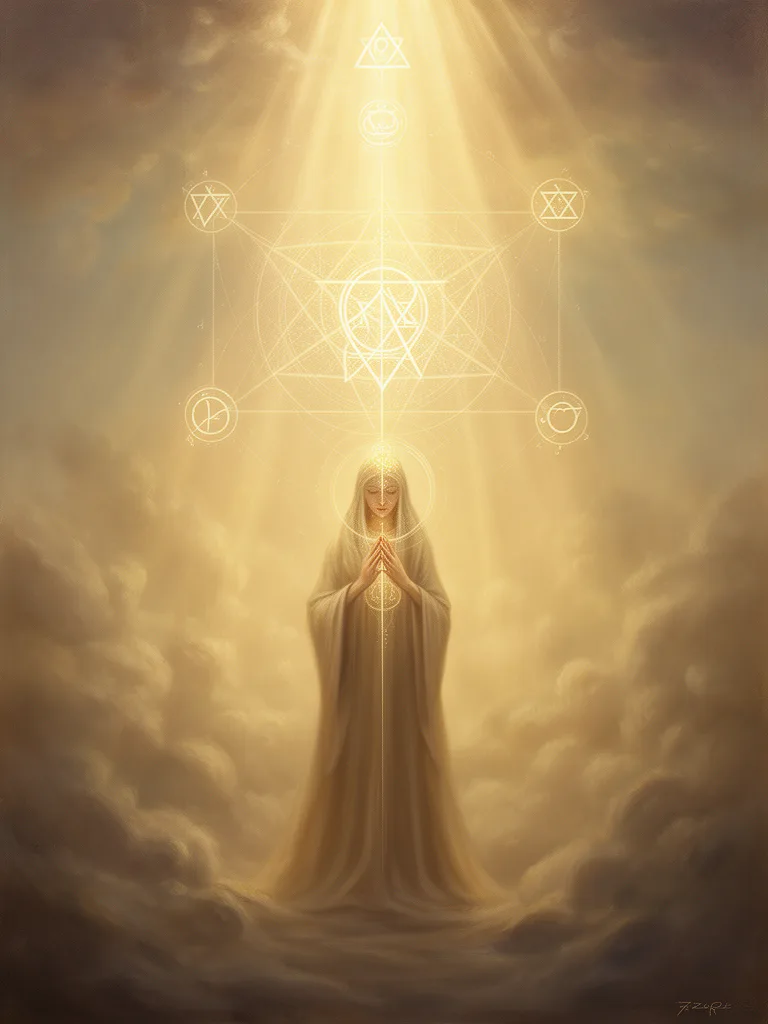
Tzure, a Kabbalistic concept, refers to the divine archetype or "image" (tzelem) from which both divine and human Adam are conceived. It signifies a primordial blueprint or pattern, distinct from a physical form, representing the essence of creation.
Where the word comes from
The term "Tzure" is not a direct Hebrew word but appears to be a transliteration or interpretation by Blavatsky of the Hebrew concept of Tzelem (צלם), meaning "image" or "likeness." This relates to the divine imprint on creation, particularly in Genesis.
In depth
Almost the same as the above: the prototype of the "Image" tzelem; a Kabbalistic term used in reference to the so-called creation of the divine and the human Adam, of which the Kahala (or Kahhalah) lias four types, agreeing with the root-races of men. The Jewish Occultists knew of no Adam and, refusing to recognise in the ^rst human race Humanity with its Adam, spoke only of "primordial sparks". 324 TlIKDSoi'iiir'AL U. u. —The twenty-first letter of the Latin alpiiabet, whieli has no equivalent in Hebrew. As a number, however, it is considered very mystical botii by the Pythajjoreans and the Kabbalists, as it is the product of 3X7. The latter consider it the most sacred of the old numbers, as 21 is the sura of the numerical value of the Divine Name arir, or cira, or apraiii nh< ihc — /hus (read backward, ahrihr)-. he i he a 5+10+5+1=21. In Alchemy it symbolizes the twenty-one days necessary tor tlic transmutation of baser metals into silver.
How different paths see it
What it means today
Blavatsky’s engagement with "Tzure," though perhaps a less common rendering, points to a profound Kabbalistic notion of the divine image as a generative force. This is akin to Plato's theory of Forms, where perfect, eternal archetypes exist in a higher realm, serving as the blueprints for all earthly manifestations. In Kabbalah, this "image" is not static but a dynamic principle, a divine intention that shapes and animates existence. It challenges a purely materialistic view of creation, suggesting that the essence of a thing, its Tzelem, precedes its physical form. This resonates with Carl Jung's concept of archetypes, universal, archaic patterns and images that derive from the collective unconscious and are the psychic counterpart of the instincts. The contemplation of Tzure invites a reorientation of perception, moving from the ephemeral to the eternal, from the accident of form to the necessity of the underlying pattern. It suggests that true self-knowledge is found in recognizing the divine imprint, the primordial spark that connects us to the source. This understanding can foster a sense of sacredness in the ordinary, revealing the archetypal within the everyday. The pursuit of this inner image is a path toward recognizing the unity of all existence, a primordial oneness that underlies the apparent diversity of the manifest world. It is an invitation to see the signature of the divine in the very fabric of being.
RELATED_TERMS: Tzelem, Archetype, Divine Image, Form, Blueprint, Emanation, Sefirot, Collective Unconscious ---
Related esoteric terms
No reflections yet. Be the first.
Share your interpretation, experience, or question.
