Theurgist
A theurgist is an individual who practices theurgy, a form of ritual magic aimed at invoking divine beings or spiritual entities. This practice seeks to achieve union with the divine or to influence the cosmos through sacred rites, often involving purification and specific ceremonial actions.
Where the word comes from
The term "theurgist" derives from the Greek words "theos" (god) and "ergon" (work), meaning "god-worker." It signifies someone engaged in the divine work of invoking or cooperating with deities, a concept prominent in Neoplatonic philosophy and ancient religious practices.
In depth
Tlie first .scliool of practical theurgy (from (r)to^, god. and V{)yoi\ work,) in tlie Cliristian period, was founded by lamblichus among certain Alexandrian Platonists. The priests, however, who were attached to the temples of Egypt, Assyria, Babylonia and Greece, and whose business it was to evoke the gods during the celebration of tlie Mysteries, were known by this name, or its equivalent in other tongues, from the earliest ai-eliaic period. Spirits (but not tliose of the d«'ad, the evocation of whicli was called Ntcromancg) were made visilile to the eyes of mortals. Thus a theurgist had to be a hierophant and an expert in the esoteric learning of the Sanctuaries of all great countries. The Neoplatonists of the school of lamblichus were called theurgists, for they performed the so-called "ceremonial magic'', and evoked the simulacra or the images of the ancient heroes, "gods", and daimonia ( <\i(unna, divine, spiritual entities). In the rare eases wlu-n tlie presence of a tangible and visil)Je "si)irit" w;is required, the tlieurgist had to furnish the weird ai>parition witli a i)ortion of his own flesh and blood — he had to perform the thcopaa, or the "creation of gods", by a mysterious process well known to the old, and perhaps some of the modern. Tiuitrikas and initiated Brahmans of India. Such is what is said in the Book of Evocations of the pagodas. It shows the jK-rfcet identity of rites 306 THEUSorilKAI. and wiviiionial between flu- oldest liriiliiniinii- tlniii-jiy jiiid that of tlie
How different paths see it
What it means today
The concept of the theurgist, as illuminated by thinkers like Iamblichus, offers a potent counterpoint to modern secularism's often atomized view of reality. It posits a universe interconnected by divine currents, accessible not through passive observation but through active, sacred participation. The theurgist is an artisan of the divine, a craftsman who understands that the material and the spiritual are not separate realms but interwoven dimensions of existence.
This ancient practice, far from being mere superstition, suggests a sophisticated understanding of consciousness and its relationship to the cosmos. As Mircea Eliade noted in his studies of shamanism and archaic religions, the ecstatic or visionary states achieved by theurgists are not simply psychological phenomena but channels through which the sacred is experienced and manipulated. The rituals, the invocations, the carefully constructed symbols—these are not arbitrary gestures but tools designed to resonate with the fundamental frequencies of existence, much like a musician tunes an instrument to produce a specific harmony.
For the modern seeker, the theurgist offers a model of agency within the spiritual quest. It is not enough to believe; one must also do. The theurgist’s work involves a profound ethical and intellectual discipline, a purification of the self to become a worthy vessel for divine contact. This is echoed in the Sufi tradition, where the "work" of the mystic is a lifelong dedication to shedding the ego and becoming a mirror for the Divine Light, a process requiring intense spiritual effort and inner transformation. The theurgist, in essence, becomes a conduit, an alchemical agent facilitating the descent of the divine into the mundane, and conversely, the ascent of the human towards the divine. Their practice is a testament to the idea that the universe is not a silent mechanism but a living, responsive entity, waiting to be awakened through the sacred arts.
RELATED_TERMS: Invocation, Ritual Magic, Neoplatonism, Gnosticism, Alchemy, Mysticism, Divine Union, Sacred Arts
Related esoteric terms
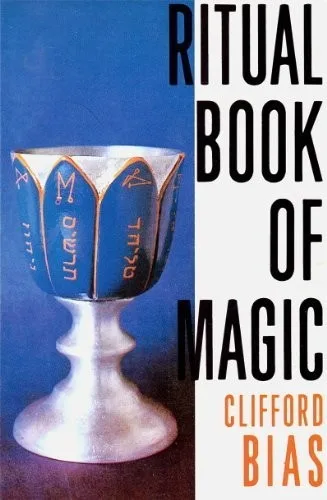
Books on this concept




No reflections yet. Be the first.
Share your interpretation, experience, or question.
