Talisman
A talisman is an object, often inscribed with symbols or written words, believed to possess protective or beneficial magical powers. Its efficacy is amplified by the user's faith in its inherent virtue and the maker's intent.
Where the word comes from
The term "talisman" likely derives from the Arabic ṭilasm, itself a borrowing from Greek telesma, meaning "completion" or "initiation." This Greek root is connected to the verb telein, "to complete" or "to initiate." The concept of magically imbued objects has ancient roots across many cultures.
In depth
From the Arabic iilism or iilsam, a "magic image". An object, whether in stone, metal, or sacred wood ; often a piece of parchment filled with characters and images traced under certain planetary influences in magical formula?, given by one ver.sed in occult sciences to one unversed, either with the object of preserving him from evil, or for the accomplishment of certain desires. The greatest virtue and efficacy of the talisman, however, resides in the faith of its pos.sessor: not because of the credulity of the latter, or that it pos.se.sses no virtue, but because faith is a quality endowed with a most potrnt ereative power; and therefore — unconsciously to the believer — intensifies a hundredfold the power originally imparted to the tali.sman by its maker.
How different paths see it
What it means today
The talisman, in its most elemental form, is a physical anchor for intention, a tangible manifestation of a desired outcome or a protective shield against perceived threats. Blavatsky's definition, with its nod to the Arabic iilsam and the Greek telesma, points to a lineage of objects imbued with an efficacy that transcends mere superstition. It is not simply about the inscribed characters or the metal from which it is forged, but about the confluence of maker's intent, celestial timing, and, crucially, the possessor's belief.
Mircea Eliade, in his explorations of shamanism and archaic techniques of ecstasy, consistently highlights the role of sacred objects as mediators between the mundane and the transcendent. These objects are not inert; they are alive with power, animated by the belief systems that surround them. The talisman, therefore, functions as a focal point for this animation, a locus where the invisible forces are made manifest. Carl Jung’s concept of the archetype, the universal patterns of the collective unconscious, also resonates here. The symbols and forms on a talisman often tap into these deep, shared psychological structures, giving them a power that feels both personal and universal.
The emphasis on faith is particularly illuminating. It suggests that the efficacy of the talisman is not an objective, measurable force in the scientific sense, but a subjective, experiential one. The believer’s conviction creates a psychological resonance, a focused mental energy that, in turn, is said to interact with the object’s inherent properties. This is akin to how prayer or meditation can alter consciousness and, by extension, one's perception and experience of reality. The talisman becomes a tool for this focused intention, a physical reminder to maintain a particular state of mind or spiritual awareness.
In contemporary terms, one might see the talisman as a form of psychological technology, a device that helps individuals to harness their own mental and emotional energies. Whether viewed through the lens of ancient magic, Jungian psychology, or even modern mindfulness practices, the principle remains: the focused intent and belief of the individual are paramount. The talisman, in its enduring appeal, suggests a deep human need to find tangible expressions for the intangible forces that shape our lives, to hold in our hands a symbol of hope, protection, or aspiration. It is a reminder that our inner world possesses a creative power that can, quite literally, shape our outer experience.
Related esoteric terms
Books on this concept
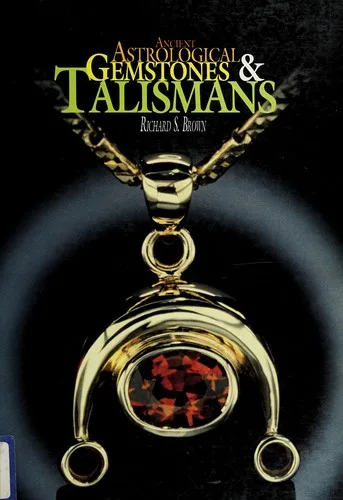





No reflections yet. Be the first.
Share your interpretation, experience, or question.
