Satta
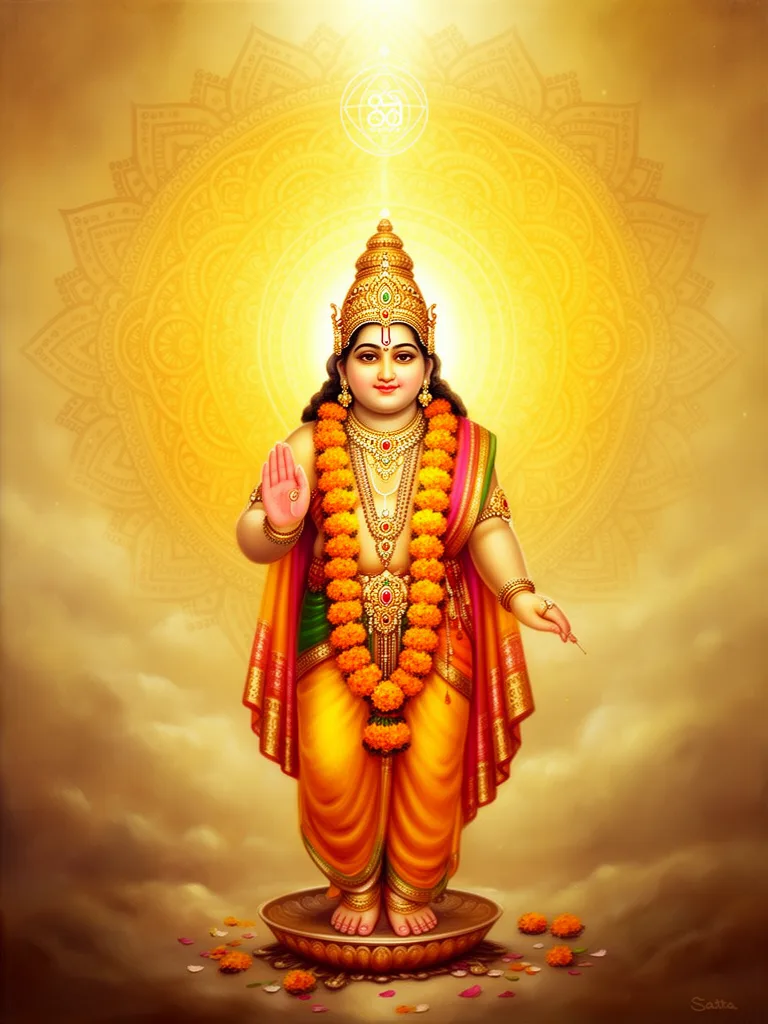
Satta signifies the ultimate, singular reality or existence, understood as the ground of all being. It is the supreme state of consciousness, encompassing all that is and is not, often identified with Brahman in Hindu philosophy. It represents absolute beingness.
Where the word comes from
Satta derives from the Sanskrit root 'sat', meaning 'being' or 'existence'. It is the neuter noun form, denoting the state of being or reality itself. The term is fundamental in Vedanta, signifying the absolute and unchanging nature of ultimate reality, the underlying truth of all phenomena.
In depth
The "one and sole Existence" — Brahma (neut.). 272 TIIEOSOPHICAL Satti or Sutt(<, (Sk.). Tinl)iiniiii'i of living' widows top'tlu-r with their dead husbands — a custom now happily al»olishi'd in India; lit. "a chaste and devoted -wife".
How different paths see it
What it means today
Blavatsky's definition, while including a secondary, more literal meaning of 'sati' (widow's sacrifice), correctly identifies the primary esoteric significance of 'Satta' as the "one and sole Existence," synonymous with Brahman. This concept, deeply rooted in the Vedic and Upanishadic traditions, offers a profound counterpoint to the fragmented, object-oriented perception that often characterizes modern consciousness. Mircea Eliade, in his exploration of eternal return, touches upon the cyclical nature of existence, yet Satta points beyond mere cycles to an unchanging, foundational reality. It is the bedrock upon which the cosmic play unfolds, the silent witness to all creation and dissolution.
To grasp Satta is to begin to understand the philosophical underpinnings of systems that seek to transcend the limitations of the empirical self. It is the absolute 'Is-ness' that underlies the apparent 'manyness' of the world. This is not an abstract philosophical concept to be merely contemplated, but a state to be realized. The practices within Vedanta, such as jnana yoga, aim at the direct apprehension of this singular existence, dissolving the illusion of a separate ego. Carl Jung's exploration of the collective unconscious and archetypes hints at a unifying principle, a psychic reality that resonates with Satta's all-encompassing nature. It suggests that our deepest sense of self is not an isolated entity but an expression of this universal being.
The challenge for the modern seeker lies in integrating this profound concept into daily life, moving beyond intellectual assent to experiential knowing. It means recognizing the divine spark, the substratum of existence, not just in moments of meditation or contemplation, but in the mundane interactions of life, in the rustling of leaves, the murmur of conversation, the very breath we take. Satta invites us to see the universe not as a collection of separate objects, but as a unified field of consciousness, a single, vibrant expression of absolute existence. It is the quiet hum beneath the cacophony of the world, the truth that remains when all illusions fade.
RELATED_TERMS: Brahman, Atman, Sat, Existence, Reality, Being, Consciousness, Non-duality
Related esoteric terms
No reflections yet. Be the first.
Share your interpretation, experience, or question.
