Putra
Putra is a Sanskrit term meaning "son" or "offspring." In Hindu traditions, it carries a deeper spiritual connotation, signifying one who delivers their ancestors from hell, thus ensuring spiritual continuity and liberation for the lineage. It is also used metaphorically for a spiritual descendant.
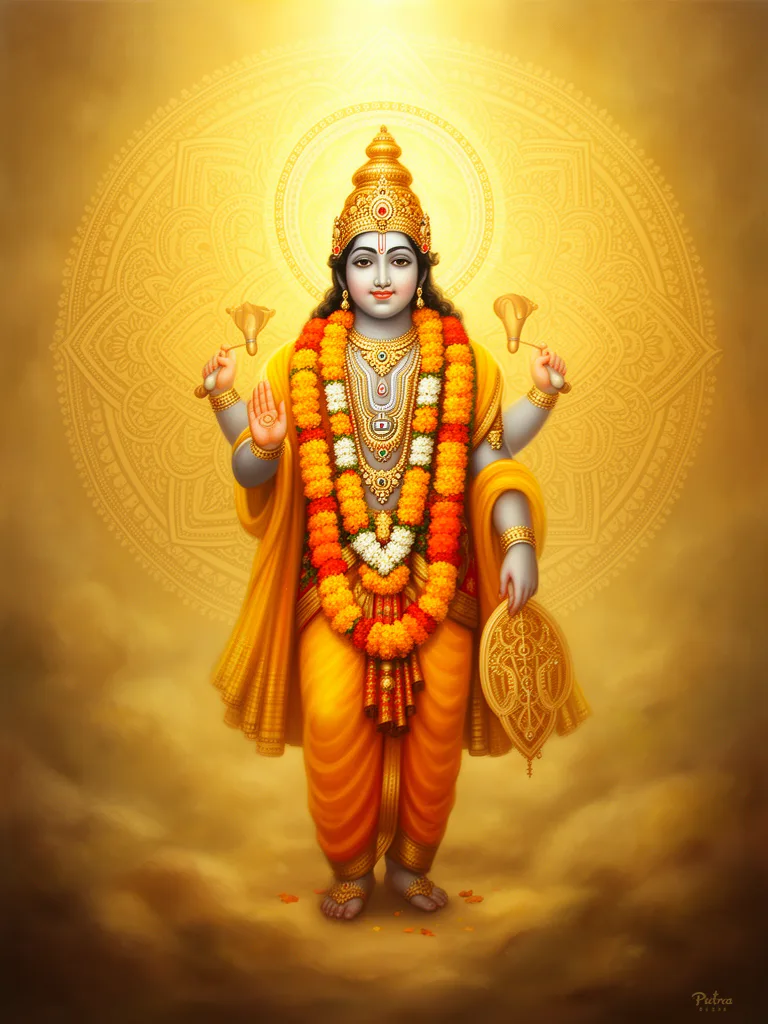
Where the word comes from
The Sanskrit word "putra" (पुत्र) derives from the root "put," meaning "hell," and "tra," meaning "protector" or "deliverer." Thus, a putra is literally one who saves their ancestors from hell. This etymological interpretation highlights the profound ancestral duties and spiritual responsibilities associated with lineage in ancient Indian thought.
In depth
A son. Pu-tsi K'iun-ling (Chin.). Lit., "the Universal Saviour of all beings". A title of Avalokiteswara, and also of Buddha.
How different paths see it
What it means today
The term "putra," while literally meaning "son," resonates with a far more profound existential weight within the Hindu tradition. Mircea Eliade, in his studies of comparative religion, often explored the sacredness of lineage and the transmission of spiritual merit across generations. The putra, in this context, is not merely an heir but a vital conduit, a spiritual engineer ensuring the smooth passage and liberation of the ancestral souls. This is not a passive inheritance but an active, sacred duty, akin to the priestly functions that mediate between the human and the divine. The very etymology, suggesting one who saves from "put" (hell), imbues the role with an almost redemptive power. It speaks to a holistic understanding of existence where the individual is inextricably bound to their ancestral past, and the actions of the living have direct karmic consequences for those who have already departed. This notion finds echoes in various spiritual traditions that emphasize the interconnectedness of all beings and the importance of spiritual practice for collective well-being. The spiritual descendant, the disciple who carries forward the master's teachings, can also be seen as a form of putra, a spiritual offspring ensuring the continuation of wisdom. This concept challenges modern notions of individualism, reminding us of the enduring power of connection and responsibility that spans the temporal divide. It suggests that our lives are threads in a much larger, ongoing cosmic narrative, and our actions ripple outwards, affecting not only our present but also the echoes of the past.
Related esoteric terms
No reflections yet. Be the first.
Share your interpretation, experience, or question.
