Helena Blavatsky
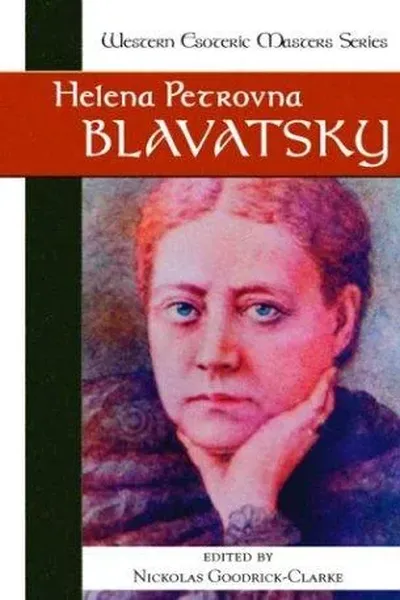
Helena Blavatsky was a Russian-American mystic and writer, co-founder of the Theosophical Society in 1875, who became the principal architect of Theosophy, a complex philosophical and religious system drawing from Eastern and Western esoteric traditions.
Where the word comes from
The name "Blavatsky" is a Russian surname. Helena Petrovna Hahn, her birth name, was born into a noble family. She later adopted the surname of her first husband, Russe Blavatsky. Her influence is primarily tied to her original writings and the movement she inspired.
In depth
Helena Petrovna Blavatsky (née Hahn von Rottenstern; 12 August [O.S. 31 July] 1831 – 8 May 1891), often known as Madame Blavatsky, was a Russian and American mystic and writer who co-founded the Theosophical Society in 1875. She gained an international following as the primary founder of Theosophy as a belief system. Born into an aristocratic family in Yekaterinoslav, Blavatsky traveled widely around the empire as a child. Largely self-educated, she developed an interest in Western esotericism during...
How different paths see it
What it means today
Helena Blavatsky stands as a colossal figure in the late 19th-century spiritual revival, a veritable alchemist of ideas who transmuted obscure texts and whispered traditions into the potent elixir of Theosophy. Her writings, particularly "Isis Unveiled" and "The Secret Doctrine," were not mere compilations but ambitious attempts to construct a universal religion, a "Wisdom Religion" that she believed lay at the heart of all faiths. Mircea Eliade, in his explorations of shamanism and archaic techniques of ecstasy, would recognize in Blavatsky's narrative a modern echo of the perennial quest for transcendent knowledge, a journey often undertaken through ecstatic states and visionary experiences.
She offered a cosmic drama, a vast evolutionary unfolding of spirit through matter, populated by hierarchies of beings—Dhyan Chohans, Lipikas—who mediated the divine will. This intricate cosmology, while sometimes dense and esoteric, provided a framework for understanding human existence as part of a grand, purposeful design, a stark contrast to the mechanistic universe then gaining ascendancy. Carl Jung, in his own explorations of the collective unconscious and archetypes, might have seen in Blavatsky's symbolism a powerful expression of humanity's innate spiritual yearnings, a projection of the psyche's deep-seated need for meaning and connection to the divine.
Blavatsky's method was often one of audacious assertion and selective interpretation, drawing from Sanskrit epics, Gnostic gospels, Hermetic fragments, and Kabbalistic lore with equal fervor. She presented these disparate elements not as mere historical curiosities but as fragments of a single, unbroken chain of esoteric knowledge, a divine science transmitted through the ages. For the modern seeker, her work remains a challenging invitation: to look beyond the surface of religious dogma and scientific materialism, and to consider the possibility of a hidden order, a profound interconnectedness that binds the stars to the dust, the mind to the cosmos. Her legacy is not in the literal acceptance of every detail, but in the persistent, vital question she posed about the nature of reality and our place within it.
RELATED_TERMS: Theosophy, Karma, Reincarnation, Secret Doctrine, Universal Brotherhood, Esotericism, Perennial Philosophy, Divine Wisdom
Related esoteric terms
Books on this concept



No reflections yet. Be the first.
Share your interpretation, experience, or question.
