Euronymous
Euronymous, a stage name derived from Greek, signifies "he who drives out the bear," a mythological epithet for the god Hermes. In Hermetic traditions, it represents the active, outward-manifesting aspect of divine intelligence, often associated with the messenger function and the dispelling of ignorance.
Where the word comes from
The name Euronymous originates from the Greek "Eurōnymos," meaning "wide-naming" or "he who drives out the bear." This epithet was applied to Hermes, the swift messenger god, and by extension, to Hades in his role as the ruler of the underworld, suggesting a connection to hidden realms and potent, pervasive influence.
In depth
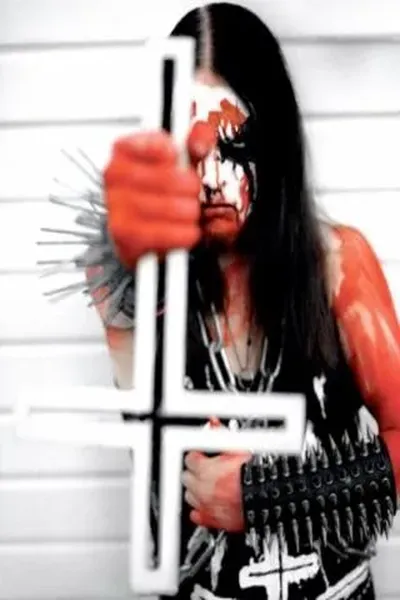
Øystein Aarseth (22 March 1968 – 10 August 1993), better known by his stage name Euronymous, was a Norwegian musician and a founder of and central figure in the early Norwegian black metal scene. He was a co-founder and guitarist of the Norwegian black metal band Mayhem and was the only constant member from the band's formation in 1984 until his murder in 1993. He was also founder and owner of the extreme metal record label Deathlike Silence Productions and record shop Helvete. Euronymous professed...
How different paths see it
What it means today
The figure of Euronymous, particularly as invoked in Hermetic lore, offers a potent lens through which to examine the active principle of knowledge. The name itself, rooted in Greek mythology and applied to Hermes, the fleet-footed messenger, carries the weight of communication and transition. It is not merely a designation but an active force, "he who drives out the bear," a symbolic confrontation with primal, perhaps primal fear or ignorance, represented by the bear, a creature of raw, untamed nature. This act of "driving out" is not an erasure but a displacement, a revelation of what lies beneath the obscuring presence.
In the context of Hermetic philosophy, this resonates with the understanding of the divine intellect as a force that disseminates its light, dispelling the shadows of illusion and unknowing. Hermes, as the psychopompos, guides not only the souls of the departed but also the living through the labyrinthine paths of understanding. The outward-manifesting aspect of Euronymous points to the necessity of engagement, of speaking the truth, of bringing hidden wisdom into the light of day. It is a call to intellectual courage, to become a conduit for understanding, rather than a passive recipient.
This active principle, this outward drive, is crucial for the modern seeker. It suggests that the esoteric path is not one of silent contemplation alone, but also of articulation and action. The wisdom gained within must find its expression, its outward journey, to truly illuminate. As Mircea Eliade observed in his studies of shamanism and archaic religions, the sacred is often revealed through acts of transformation and mediation, where the individual bridges the gap between the mundane and the divine. Euronymous embodies this bridging, this active dispelling that allows for a more profound apprehension of reality. It reminds us that the greatest illuminations often emerge from the courage to confront and transform what we do not yet understand.
Related esoteric terms
Books on this concept



No reflections yet. Be the first.
Share your interpretation, experience, or question.
