Dr
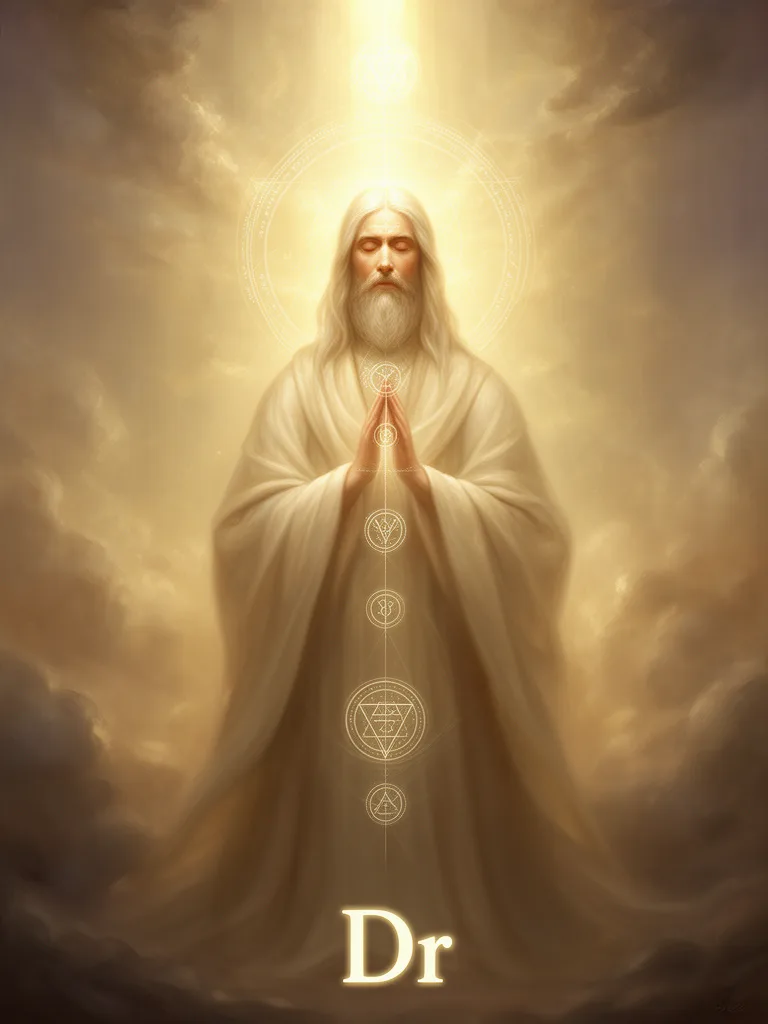
White Magic is the practice of benevolent, selfless arcane arts aimed at universal good, distinct from sorcery which arises from selfish motives and the pursuit of personal power. It represents the ethical application of extraordinary abilities for altruistic ends.
Where the word comes from
The term "magic" originates from the Old Persian magūš, referring to a priestly caste, later adopted into Greek as mageia. "White" denotes purity, beneficence, and ethical intent, distinguishing it from "black" magic. The concept of distinguishing ethical from unethical magical practice is ancient.
In depth
Carter Blake truly remarks, "the nineteenth century is not that which has observed the genesis of new, nor the completion of old, methods of tiiought"; to which Mr. Bonwick adds that "if the ancients knew but little of our mode of investigations into tiie secrets of nature, we know still less of their mode of research". Magic, White, or "Beneficent Magic", so-called, is elivine magic, devoid of selfishness, love of power, of ambition, or lucre, and bent only on doing good to the world in general, and one's neighbor in particular. The smallest attempt to use one's abnormal powers for the gratification of self, makes of these powers sorcery or black magic. Magic Black. (Vide Supra.).
How different paths see it
What it means today
Blavatsky’s definition of White Magic, as distinct from its darker counterpart, resonates with an enduring human aspiration to harness extraordinary powers for the betterment of existence. This is not a new dichotomy; Mircea Eliade, in his seminal works on shamanism and the history of religions, observed that across cultures, the shaman's journey into the spirit world was often fraught with ethical peril, the potential for personal gain or harm always present. The distinguishing factor, as Blavatsky implies, is the locus of intent: is the power directed outward, towards alleviating suffering and fostering harmony, or inward, towards self-aggrandizement?
This distinction finds echoes in the Hermetic axiom, "As above, so below," suggesting that the macrocosmic order, divine and benevolent, should be mirrored in the microcosm of human action. The adept who practices White Magic seeks to align their will with this divine order, acting not as a manipulator of forces, but as a channel for their beneficent flow. Carl Jung, in his exploration of the collective unconscious and archetypes, might see White Magic as an attempt to manifest the archetype of the benevolent helper or the divine healer, integrating the shadow aspects of power through conscious ethical choice.
The practice, then, is less about spells and incantations, and more about a profound inner discipline. It requires a rigorous self-examination, a constant vigilance against the subtle temptations of ego, ambition, or even the desire for recognition. This is the alchemical work of transforming base desires into the gold of selfless service. The Sufi tradition, with its emphasis on fana (annihilation of the ego in God) and baqa (subsistence in God), offers a parallel path where spiritual power is a byproduct of utter devotion and surrender, never a tool for personal dominion. As Seyyed Hossein Nasr has noted, the true spiritual path is one of purification and ascent, where power, if it arises, is a sign of divine favor and responsibility, not an end in itself. The modern seeker, often overwhelmed by the sheer complexity of the world and the perceived impotence of individual action, might find in the concept of White Magic a potent reminder that ethical intention, coupled with focused will, can indeed be a force for positive change, a subtle yet persistent light against the encroaching shadows. It is a call to recognize the sacred potential within every act, however small, when undertaken with a heart attuned to the welfare of all.
Related esoteric terms
No reflections yet. Be the first.
Share your interpretation, experience, or question.
