Devaki
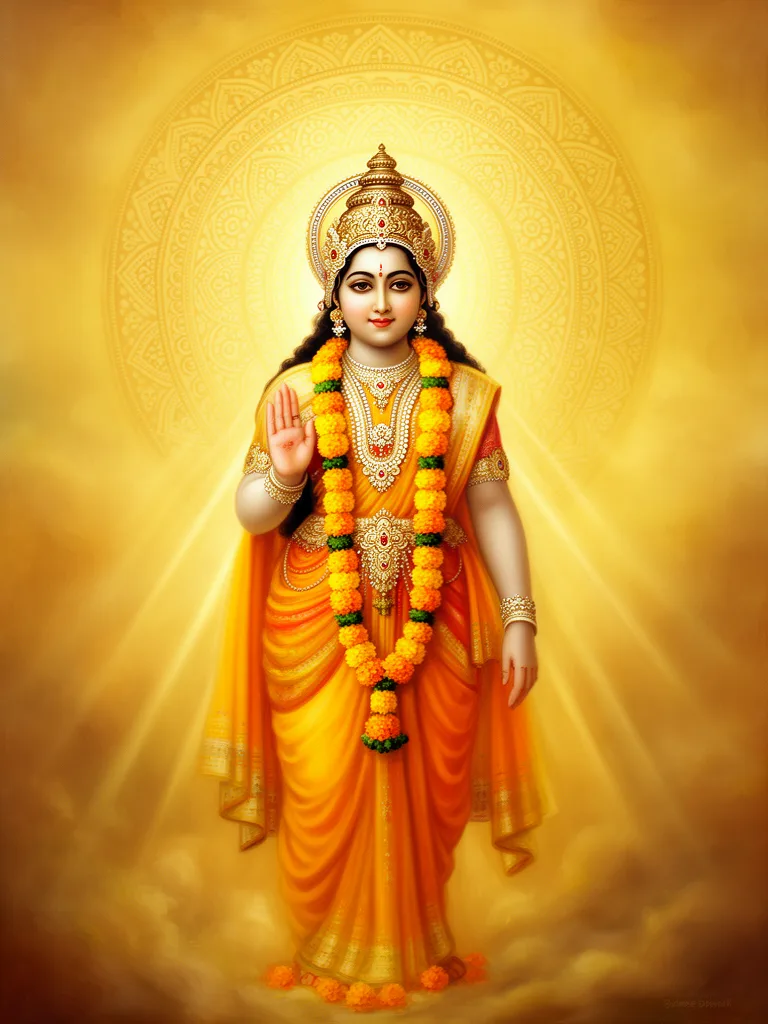
Devaki is the divine mother of Krishna in Hindu mythology, known for her chastity and devotion. Imprisoned by her brother, she miraculously conceived Krishna through divine intervention, symbolizing the birth of the divine within the human realm despite oppressive circumstances.
Where the word comes from
The name Devaki derives from the Sanskrit word "Deva," meaning "god" or "divine being." Its root suggests a connection to the celestial or sacred. The name appears in ancient Sanskrit texts, most notably the Puranas and the Mahabharata, solidifying its place in the Hindu pantheon.
In depth
The mother of Krishna. She was shut up in a dungeon by her brother. King Kansa, for fear of the fulfilment of a prophecy which stated that a son of his sister should dethrone and kill him. Notwithstanding the strict watch kept, Devaki was overshadowed by Vishnu, the holv Spirit, and thus gave birth to that god's avatara, Krishna. (See "Kansa").
How different paths see it
What it means today
The figure of Devaki, mother of Krishna, resonates deeply within the Hindu tradition, offering a profound lens through which to examine the interplay of destiny, divine will, and human resilience. Her plight, imprisoned by her brother Kansa out of fear of a prophecy, is a stark reminder of how societal or familial forces can attempt to stifle the emergence of the sacred. Yet, it is precisely within this confinement that the divine union, the overshadowing by Vishnu, occurs, leading to the birth of Krishna, an avatar of the divine. Mircea Eliade, in his exploration of the sacred and the profane, would likely see in Devaki's story an instance of hierophany, a manifestation of the sacred within the ordinary, even the oppressive.
This narrative transcends a simple familial drama; it speaks to the universal human experience of facing seemingly insurmountable obstacles. The purity and devotion of Devaki are not passive virtues but active forces that create the receptive vessel for divine grace. Carl Jung's concept of the anima, the feminine principle within the psyche, might find a powerful reflection in Devaki's role as the nurturer of the divine child, embodying a profound creative and spiritual potential. Her story suggests that the most fertile ground for spiritual birth is often found not in freedom and comfort, but in the very constraints that challenge our deepest faith. The divine, in this context, does not merely arrive but is brought forth through the consecrated suffering and unwavering hope of the human heart.
Devaki's conception of Krishna is a profound metaphor for the soul's ability to bring forth spiritual realization, even when seemingly trapped by karmic circumstances or external pressures. It underscores the idea that the divine is not merely an external force but an immanent presence that can be awakened and nurtured within. This echoes the insights of mystics across traditions who speak of the indwelling divine spark, waiting for the right conditions to ignite. The act of divine conception within a dungeon transforms the prison into a sacred birthplace, demonstrating that true liberation is not the absence of external bonds but the internal freedom to connect with the divine.
RELATED_TERMS: Krishna, Vishnu, Avatar, Karma, Moksha, Divine Mother, Shakti, Samsara
Related esoteric terms
No reflections yet. Be the first.
Share your interpretation, experience, or question.
