Church Universal and Triumphant
The Church Universal and Triumphant (CUT) is a modern spiritual organization founded in 1975, synthesizing Christian, Buddhist, Hindu, and Theosophical teachings. It claims to channel divine messages and promotes a path of spiritual ascension.
Where the word comes from
The name "Church Universal and Triumphant" evokes a sense of cosmic scope and ultimate victory. "Church" signifies a spiritual community, "Universal" its inclusive, all-encompassing nature, and "Triumphant" suggests a final, victorious state of spiritual realization.
In depth
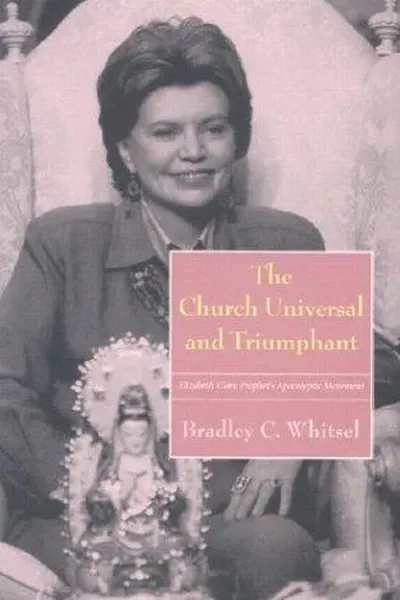
The Church Universal and Triumphant (CUT) is a New Age religious organization combining elements of Christianity, Buddhism, Hinduism and Theosophy, founded in the United States in 1975 by Elizabeth Clare Prophet. The church is headquartered near Gardiner, Montana, and the church has local congregations in more than 20 countries. Influenced by Theosophy and I AM, the Church originated as The Summit Lighthouse, established by Mark L. Prophet in 1958. He claimed to be a Messenger who was dictating messages...
How different paths see it
What it means today
The appellation "Church Universal and Triumphant" carries a weight of ambition, a spiritual aspiration that seeks to encompass the totality of existence while promising a definitive and glorious conclusion. In its synthesis of disparate traditions, it mirrors a broader modern impulse to find a singular, unifying truth amidst a fragmented world. The notion of "triumph" suggests not merely a passive state of grace but an active, earned victory, a concept that resonates with the human desire for agency in the spiritual quest. This echoes Mircea Eliade's observations on the human need for a sacred cosmos, a framework that provides meaning and direction. The organization's claim to channel divine dictations, as articulated by Elizabeth Clare Prophet, can be viewed through the lens of Jungian archetypes, where the collective unconscious erupts into consciousness through visionary figures, offering guidance for the individual psyche. The very act of synthesizing Christian, Buddhist, and Hindu elements speaks to a post-modern sensibility, one that views religious traditions not as exclusive dogmas but as reservoirs of wisdom to be drawn upon. It is an attempt to construct a spiritual edifice that stands firm against the erosion of secularism, proclaiming a final, triumphant integration of the divine into the human. The quest for a "universal" church suggests a desire to transcend the limitations of historical and cultural particularity, seeking an eternal, unchanging core of spiritual reality.
Related esoteric terms
Books on this concept



No reflections yet. Be the first.
Share your interpretation, experience, or question.
