Chaitanya
Chaitanya refers to consciousness, awareness, or spirit, particularly the divine consciousness that pervades all existence. In Hinduism, it is the animating principle of life, the sentient aspect of reality that distinguishes the living from the inert. It is the fundamental awareness that allows for experience and knowledge.
Where the word comes from
From Sanskrit, caitanya (चैतन्य) derives from cit (चित्), meaning "consciousness" or "awareness." The root signifies pure knowing or intelligence. It denotes the sentient principle, often translated as spirit or consciousness, and is central to Vedantic philosophy, appearing in texts from the Upanishads onward.
In depth
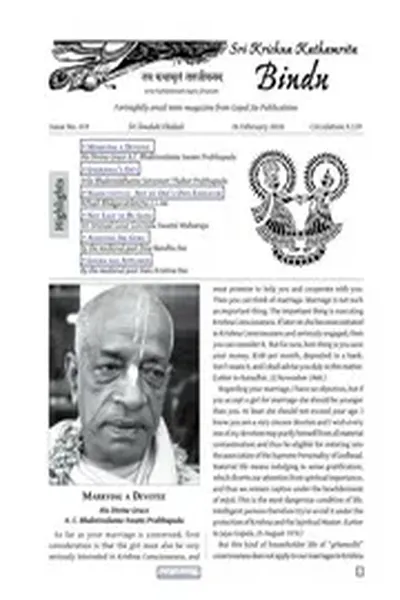
The founder of a nustieal s«'et in India. A ratli.r iiiodtrn sa«re. believed to be an avatar of Krishna..
How different paths see it
What it means today
The term Chaitanya, emerging from the rich soil of Sanskrit philosophical discourse, offers a profound counterpoint to the fragmented consciousness often experienced in the modern age. It speaks not of a mere faculty of mind, but of the fundamental, pervasive awareness that underlies all reality. As scholars like Mircea Eliade have illuminated, many ancient traditions posit a primordial consciousness, a cosmic spirit that animates the universe. Chaitanya embodies this concept, presenting it not as an abstract theological dogma, but as the very essence of being, the light that makes existence knowable.
This is not the self-referential loop of egoic consciousness, but a pure, luminous intelligence, akin to the noesis described by thinkers like Henri Corbin, a divine intellect that apprehends truth directly. In the context of Hindu traditions, particularly Advaita Vedanta, Chaitanya is often equated with Brahman, the ultimate reality, suggesting that our own deepest awareness is identical with the universal consciousness. This understanding invites a practice of inner inquiry, not to accumulate knowledge, but to recognize the inherent awareness that already is. It is the silent witness, the unchanging backdrop against which the drama of life unfolds. To apprehend Chaitanya is to realize that we are not merely observers of existence, but are, in our most fundamental nature, existence itself, awake and aware. It suggests that the pursuit of wisdom is not an acquisition, but a remembrance of what we already are.
RELATED_TERMS: Consciousness, Awareness, Spirit, Brahman, Atman, Cit, Sentience, Being
Related esoteric terms
Books on this concept






No reflections yet. Be the first.
Share your interpretation, experience, or question.
