Basil Pennington
Centering Prayer is a contemplative Christian meditation practice designed to foster a "prayer of the heart" and a deeper connection with God. It involves silently consenting to God's presence and action within, typically using a sacred word to return focus when thoughts arise.
Where the word comes from
The term "Centering Prayer" emerged in the 1970s within the Catholic contemplative tradition, specifically the Trappist order. It describes a method of prayer focused on interior stillness and centering oneself in the divine presence, drawing from ancient Christian contemplative practices.
In depth
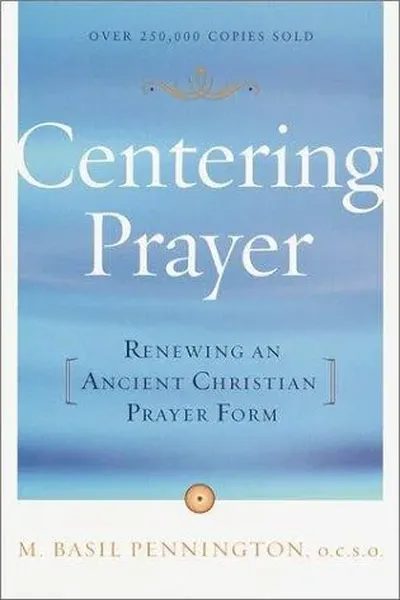
M. Basil Pennington, O.C.S.O. (1931–2005) was an American Trappist priest and leading spiritual writer, speaker, teacher, and director. He became known internationally as one of the major proponents of the centering prayer movement begun at St. Joseph's Abbey in Spencer, Massachusetts, during the 1970s.
How different paths see it
What it means today
In the hushed cloisters of St. Joseph's Abbey, a quiet revolution in prayer was taking root, a practice that would come to be known as Centering Prayer. This method, articulated with profound clarity by figures like Basil Pennington, offers a contemporary echo of the timeless quest for divine intimacy. It is not a technique for acquiring spiritual gifts, nor a method for intellectual ascent, but rather a surrender, a quiet opening of the soul to the immanent God.
The practice draws from a deep well of Christian contemplative wisdom, reminiscent of the hesychastic tradition in the East, where the "prayer of the heart" sought a direct, unmediated communion. It also finds kinship with the apophatic theology of mystics like Pseudo-Dionysius and Meister Eckhart, who spoke of God in terms of negation, of what God is not, pointing toward a reality beyond conceptual grasp. The use of a sacred word, a simple anchor like "God," "Jesus," or "Love," serves not as a mantra to be repeated endlessly, but as a gentle reminder of the intention to rest in God's presence, a soft return when the mind, like a restless bird, flits away.
What makes Centering Prayer particularly resonant for the modern seeker, caught in the relentless currents of external stimuli and internal anxieties, is its radical simplicity and its profound trust in the indwelling Spirit. It is an invitation to step out of the incessant monologue of the self and into the silent dialogue of the soul with the Divine. Mircea Eliade, in his exploration of the sacred, often spoke of moments of "recollection," of returning to the center, and Centering Prayer is precisely this: a deliberate turning inward, a conscious choice to be present to the Presence. It is a practice that, through its very stillness, can dismantle the illusions of separation and reveal the unitive ground of being. In its quietude, one discovers not an empty void, but a fullness that transcends all description, a divine presence that is always already there, waiting for our consent.
Related esoteric terms
Books on this concept







No reflections yet. Be the first.
Share your interpretation, experience, or question.
