Arka
Arka is a Sanskrit term primarily meaning "sun" or "ray of light." In Hindu traditions, it signifies the divine solar energy, often associated with deities like Surya. It can also refer to a specific type of plant, the Calotropis gigantea, used in Vedic rituals for its purifying properties.
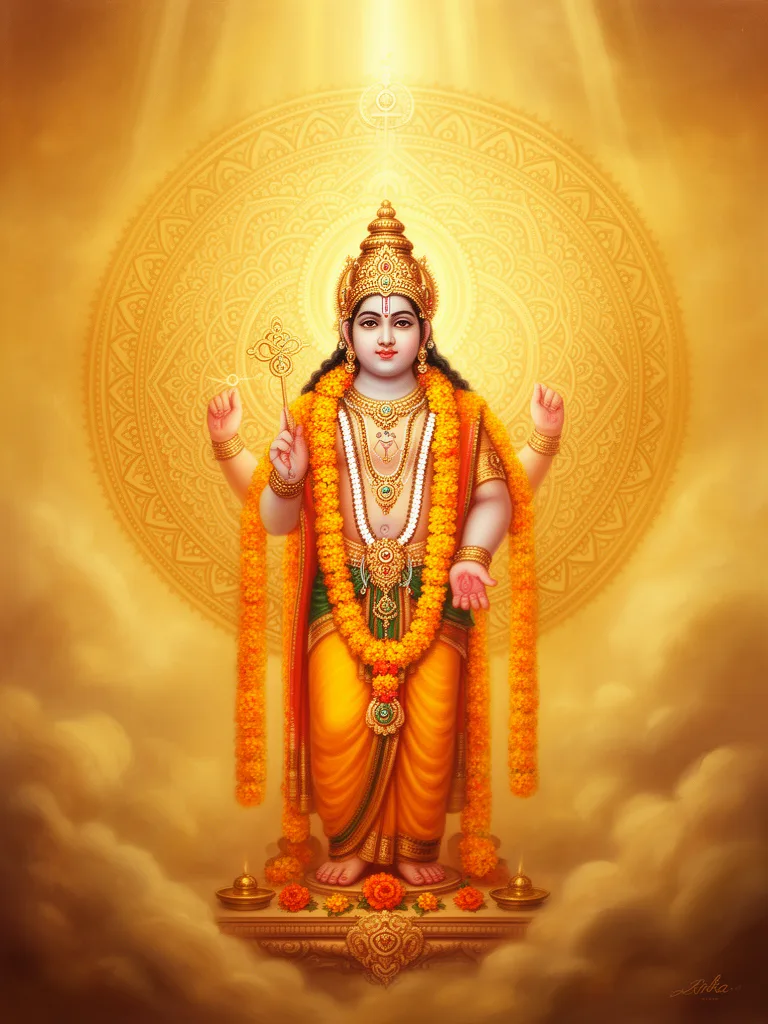
Where the word comes from
The Sanskrit word arka (अर्क) is believed to derive from the Proto-Indo-European root *h₂er-, meaning "to be dry, to be withered," perhaps referencing the sun's desiccating power. It has cognates in other Indo-European languages. The term appears in early Vedic literature, signifying the sun, its rays, or a sacrificial fire.
In depth
The Sun. Arkites. The ancient prit-sls who wt-rc attached to tln' Ark, whether of Isis. oithe Hindu Argua, and who were seven in number, like the priests of tlie Egyptian Tat or any other cruciform symbol of the three and the four, the combination of which gives a male-female number. The Arqha (or ark) was the four-fold female principle, and the flannburning over it the triple lingham.
How different paths see it
What it means today
The concept of arka offers a luminous lens through which to view the ancient Indian reverence for the sun, not merely as a celestial body but as a potent, life-giving deity and a symbol of ultimate reality. Mircea Eliade, in his seminal works on the history of religions, often highlighted the sun's role as a primordial source of order and a manifestation of the sacred, a role arka embodies with singular force. The association of arka with the plant Calotropis gigantea, a hardy and often white-flowered shrub, further deepens this connection. This plant, known for its medicinal properties and its use in offerings, becomes a terrestrial embodiment of solar power, a conduit for the sun's purifying and vitalizing energy. In Hindu ritual, the burning of arka leaves or wood symbolizes the immolation of impurities, mirroring the sun's relentless burn that banishes darkness. This practice echoes the alchemical principle of solve et coagula, of dissolution and reformation, driven by a divine fire. The esoteric interpretation, as hinted at by Blavatsky's mention of "Arkites" and cruciform symbols, suggests a deeper layer of meaning related to cosmic principles and sacred geometry, where the sun's energy is seen as a fundamental force shaping existence. The term invites contemplation on how the radiant power of the sun, so essential for physical life, also serves as a metaphor for spiritual illumination and the dispelling of ignorance. To engage with arka is to acknowledge the pervasive presence of the divine in both the grandest cosmic phenomena and the humblest elements of the earth, a sacred dialogue between heaven and earth. It reminds us that the most profound truths can be found in the simple, yet potent, manifestations of natural forces.
Related esoteric terms
Books on this concept







No reflections yet. Be the first.
Share your interpretation, experience, or question.
