Alexander J. McIvor-Tyndall
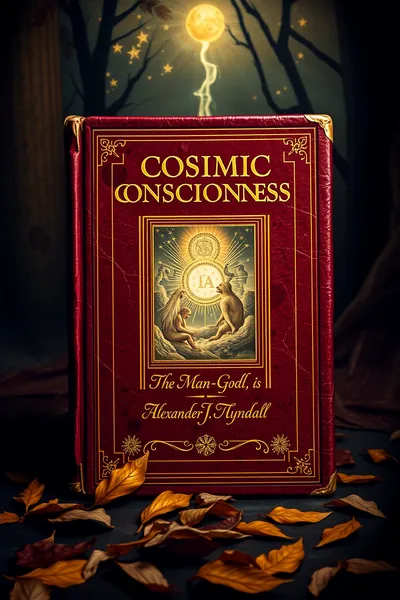
Alexander J. McIvor-Tyndall was an influential English-American figure in the New Thought movement, known for his work as a hypnotist and mentalist. He explored the power of the mind and its potential for personal transformation, contributing to early 20th-century esoteric literature.
Where the word comes from
The name "McIvor-Tyndall" is a compound surname of Scottish and English origin, reflecting a lineage. "Alexander" is of Greek derivation, meaning "defender of mankind." The moniker "Ali Nomad," adopted by McIvor-Tyndall, suggests a spiritual or philosophical journey, with "Ali" having Arabic roots meaning "high" or "exalted," and "Nomad" implying a wanderer or seeker.
In depth
Alexander James McIvor-Tyndall (March 4, 1860 – 1940), also known as Ali Nomad was an English-American hypnotist, mentalist and New Thought writer.
How different paths see it
What it means today
In the grand, often bewildering theater of human consciousness, figures like Alexander J. McIvor-Tyndall emerge as curious cartographers of the inner terrain. His dual identity, Alexander J. McIvor-Tyndall and the more evocative Ali Nomad, hints at a life lived between established societal norms and the boundless expanses of esoteric exploration. As a hypnotist and mentalist, he was not merely an entertainer, but a practitioner, engaging with the potent, often underestimated, force of the human mind.
Mircea Eliade, in his profound studies of shamanism and archaic techniques of ecstasy, illuminated how certain traditions saw the mind as a malleable substance, capable of traversing altered states and influencing the very fabric of existence. McIvor-Tyndall, operating within the burgeoning New Thought movement, tapped into a similar vein, albeit through a more Westernized, psychological lens. His work, like that of his contemporaries, implicitly challenged the materialist dogma that had begun to dominate Western thought, reasserting the primacy of consciousness.
The practice of hypnotism, when viewed through an esoteric framework, is not simply about suggestion or inducing sleep. It is about accessing deeper layers of awareness, where the veil between the conscious and unconscious mind thins, and where archetypal patterns, as described by Carl Jung, can be encountered. McIvor-Tyndall's ability to influence others through mental suggestion can be interpreted as a practical demonstration of the power of focused intention, a concept that echoes through traditions from the Hermetic axiom "Thought is the bridge," to the Buddhist understanding of karma as volitional action, including mental volitions.
His writings, though perhaps less widely read today than those of his more famous contemporaries, offer a valuable glimpse into a period of intense spiritual and psychological inquiry. They suggest that the "magic" of mentalism and hypnotism was not an external force, but an internal one, waiting to be understood and wielded. This perspective resonates deeply with modern non-dual philosophies, which often posit that the perceived solidity of the external world is a projection of our own consciousness. McIvor-Tyndall's legacy, therefore, lies not just in his specific techniques, but in his contribution to the ongoing conversation about the boundless potential of the human mind to shape its reality.
His work invites us to consider the subtle currents of mental energy that flow through us and around us, suggesting that awareness itself is a form of creative power.
Related esoteric terms
Books on this concept


No reflections yet. Be the first.
Share your interpretation, experience, or question.
