Akta
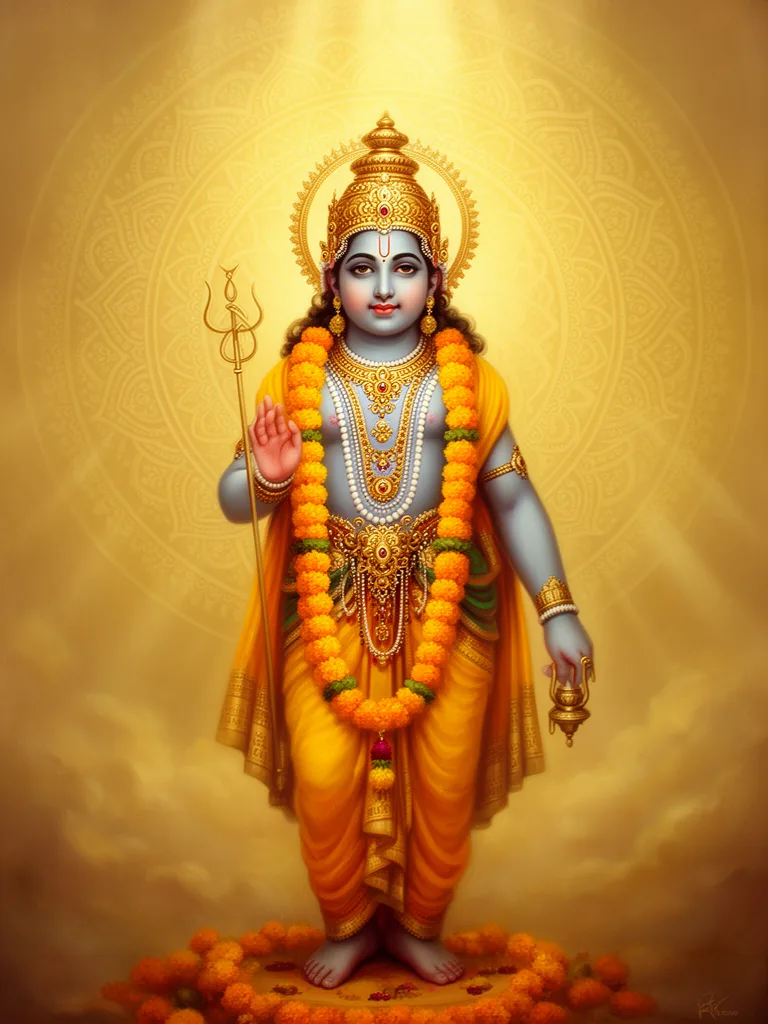
Akta, meaning "anointed," refers to the divine craftsman and creator figure in Hindu cosmology, often identified with Twashtri or Vishvakarma. This title signifies a supreme architect, the "Father of the Gods" and the origin of sacred cosmic fire, embodying the principle of divine creation and order.
Where the word comes from
The Sanskrit term "Akta" (अक्त) derives from the root "añj" (अञ्ज्), meaning "to anoint," "to smear," or "to consecrate." It signifies something that has been anointed or consecrated. In the context of the Rigveda, it is applied to the supreme creative deity, emphasizing a ritualistic and divine inauguration.
In depth
Anointed: a title of Twashtri or Visvakarman. thihighest "Creator" and Logos in the Rig-Vrda. He is called the "Father of the Gods" and "Father of the sacred Fire". (See note page 101, Vol. ir., NVc. Doct.).
How different paths see it
What it means today
In the vast Vedic pantheon, the epithet "Akta" bestowed upon the supreme creator, whether Twashtri or Vishvakarma, offers a resonant image for understanding divine agency. It suggests a consecration, a ritualistic anointing that precedes and underpins the act of creation itself. Mircea Eliade, in his explorations of the sacred, often highlighted the importance of primordial acts and rituals in establishing cosmic order. The "anointed" creator is not merely a distant architect but a divine craftsman, whose hands, imbued with sacred essence, shape the very fabric of existence. This is not a passive deity but one actively engaged in the generative process, akin to the alchemist meticulously preparing the prima materia or the shaman ritually entering altered states. The "sacred fire" mentioned in Blavatsky's definition is a potent symbol, echoing the Promethean spark of consciousness and the transformative power that animates the universe. The term invites contemplation of the divine as an active, consecrated force, a principle that imbues all of creation with its inherent holiness, much like the Gnostic concept of the divine spark hidden within matter. It speaks to a universe not born of chance but of intentional, divinely consecrated action. To consider the creator as "anointed" is to recognize a fundamental aspect of divinity as intrinsically bound to the act of bringing forth and sanctifying that which is brought forth. This echoes the Christian mystic's understanding of Christ as the Anointed One, through whom all creation is redeemed and consecrated.
RELATED_TERMS: Logos, Creator, Divine Artisan, Sacred Fire, Vishvakarma, Twashtri, Rigveda, Consecration
Related esoteric terms
Books on this concept








No reflections yet. Be the first.
Share your interpretation, experience, or question.
