Pour l'amour de Philae
 79
79

Pour l'amour de Philae
Jacq’s "Pour l'amour de Philae" attempts to capture the spiritual essence of ancient Egypt, moving beyond mere historical recounting into the realm of lived esoteric experience. The strength of the novel lies in its evocative descriptions of Egyptian landscapes and its earnest portrayal of the protagonist's spiritual quest. However, the narrative occasionally feels constrained by its didactic purpose, with certain philosophical expositions becoming somewhat heavy-handed. A particularly impactful sequence involves the protagonist's contemplation of the symbolism inherent in the inundation of the Nile, connecting earthly cycles to cosmic renewal. While the prose is generally accessible, a deeper exploration of the psychological impact of initiation rites might have further enriched the reader's connection to the protagonist's journey. Ultimately, the book offers a sincere, if occasionally uneven, glimpse into a world where the sacred permeated every aspect of existence.
📝 Description
79
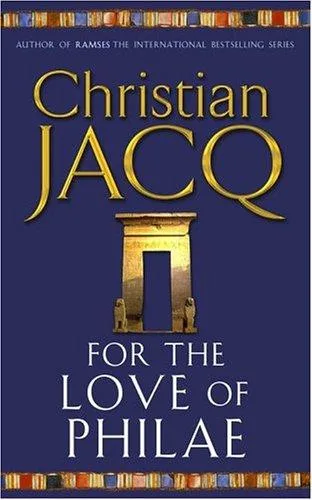
Christian Jacq's 1990 novel, Pour l'amour de Philae, delves into ancient Egyptian spirituality.
Pour l'amour de Philae, published in 1990, follows a protagonist's journey through ancient Egyptian sacred sites and esoteric practices. Christian Jacq aims to recreate the atmosphere and philosophical ideas of a civilization deeply connected to the cosmos. The narrative immerses the reader in the spiritual underpinnings of this ancient world.
The book is for those interested in ancient Egypt beyond its history, focusing on its religious beliefs, mystical rites, and philosophical concepts. It offers a fictional account illuminating esoteric traditions and the search for spiritual knowledge within a historical setting. Readers interested in comparative religion or the history of occultism will find this work engaging.
Jacq's novel engages with the late 19th and early 20th century fascination with Egyptology, a period influenced by archaeological finds and esoteric societies like the Theosophical Society. It reflects an interpretation of ancient Egyptian religion through the lens of mystery schools and occult teachings. The book taps into a tradition that views Egyptian civilization as a source of hidden knowledge and spiritual practices.
💡 Why Read This Book?
• Gain insight into the concept of Ma'at, understanding its role not just as cosmic order but as a practical ethical and spiritual principle guiding life in ancient Egypt, as depicted in the narrative. • Explore the symbolic significance of the inundation of the Nile, learning how ancient Egyptians viewed this natural event as a metaphor for death, rebirth, and the cyclical renewal of existence. • Experience the atmosphere of ancient Egyptian temple complexes, appreciating their function as centers for spiritual initiation and the transmission of esoteric knowledge.
⭐ Reader Reviews
Honest opinions from readers who have explored this book.
❓ Frequently Asked Questions
What is the primary focus of Christian Jacq's 'Pour l'amour de Philae'?
The novel centers on spiritual initiation and esoteric practices within the context of ancient Egyptian religion, aiming to convey the mystical worldview of that civilization.
When was 'Pour l'amour de Philae' first published?
Christian Jacq's 'Pour l'amour de Philae' was first published in 1990.
Does the book provide historical facts about ancient Egypt?
While fictionalized, the book draws upon historical understanding of ancient Egyptian religion, symbolism, and societal structures, particularly concerning spiritual beliefs and temple rituals.
What esoteric traditions are explored in the book?
The book explores themes rooted in ancient Egyptian mystery traditions, focusing on initiation, the afterlife, and the pursuit of divine wisdom, often interpreted through an esoteric lens.
Is 'Pour l'amour de Philae' part of a series?
Information regarding whether 'Pour l'amour de Philae' is part of a series by Christian Jacq is not readily available in the provided details, but it stands as a distinct exploration of Egyptian spirituality.
What kind of reader would appreciate 'Pour l'amour de Philae'?
Readers interested in ancient Egyptian spirituality, esoteric philosophy, and historical fiction with a mystical bent would find this book engaging.
🔮 Key Themes & Symbolism
Spiritual Initiation
The narrative likely follows a protagonist undergoing a series of trials and revelations within sacred Egyptian settings, mirroring the structure of ancient mystery schools. This process is not merely intellectual but a transformative experience aimed at unveiling deeper truths about existence, the divine, and the self. The book explores the concept of passing through symbolic gates or stages to attain higher consciousness, reflecting ancient Egyptian beliefs about the soul's journey and the attainment of divine knowledge through ritual and contemplation.
Ma'at and Cosmic Order
A central pillar of ancient Egyptian thought, Ma'at represents truth, balance, order, law, morality, and justice. 'Pour l'amour de Philae' likely integrates Ma'at not just as a philosophical concept but as a lived principle. The protagonist's journey may involve understanding and aligning oneself with this cosmic order, recognizing its manifestation in natural cycles, societal structures, and individual ethical conduct. Maintaining Ma'at is crucial for both personal well-being and the stability of the cosmos, a theme woven into the fabric of Egyptian religious practice.
The Duat and the Afterlife
The ancient Egyptian conception of the afterlife, the Duat, is a complex realm navigated by the deceased. The book probably studies the symbolic geography and spiritual challenges of this underworld, drawing from texts like the Book of the Dead. It explores the trials the soul must undergo, the judgment it faces, and the ultimate goal of achieving rebirth and eternal life in the Field of Reeds. This theme underscores the Egyptian preoccupation with death as a transition rather than an end, and the rituals designed to ensure a successful passage.
Sacred Geography and Temples
The physical field of ancient Egypt, particularly its temples and sacred sites like Philae, serves as more than a setting; it is an active participant in the spiritual drama. Temples were not merely places of worship but centers for astronomical observation, healing, and esoteric education. The book likely highlights the architectural symbolism, the alignment of structures with celestial events, and the ritualistic use of these spaces to connect the earthly realm with the divine, emphasizing the profound spiritual energy believed to reside in these locations.
💬 Memorable Quotes
Direct passages from the work, attributed to the author.
“To know the gods is to understand the patterns of the stars.”
— This interpretation highlights the deep connection between astronomy and religion in ancient Egypt. The celestial movements were seen as reflections of divine will and order, and studying them was a path to comprehending the divine realm.
“Ma'at is the balance sought in every heart and every decree.”
— This interpretation focuses on Ma'at as a universal principle. It extends beyond cosmic order to encompass personal ethics and justice, implying that aligning one's life with Ma'at is essential for harmony within oneself and society.
💡 Key Ideas
Editorial paraphrase of the work's core concepts — not direct quotes.
The Nile's flood is the breath of Osiris, renewing the land.
This paraphrased concept emphasizes the ancient Egyptian view of natural phenomena as divine actions. The annual inundation of the Nile was seen as a manifestation of the god Osiris, symbolizing death and rebirth, vital for the land's fertility and continuity.
The temple walls hold secrets whispered through millennia.
This paraphrased concept speaks to the sacred knowledge and initiatory traditions preserved within ancient Egyptian temples. It suggests that these structures were repositories of esoteric wisdom passed down through generations of priests and initiates.
The journey through the Duat is a passage into the heart of creation.
This paraphrased concept frames the Egyptian afterlife beliefs not merely as a destination but as a profound process of spiritual evolution. The challenges and revelations within the Duat are presented as integral to understanding the fundamental nature of existence.
🌙 Esoteric Significance
Tradition
The work is situated within the broader Western esoteric tradition's fascination with ancient Egypt, often interpreted through the lens of Hermeticism and mystery school paradigms. While not strictly a Hermetic text, it draws upon Egyptian cosmology, religious practices, and concepts of divine knowledge that resonate with Hermetic ideals of correspondence and spiritual ascent. It contributes to the ongoing esoteric reinterpretation of ancient Egyptian religion, viewing its pantheon and rituals as allegorical representations of inner spiritual processes and cosmic laws, distinct from purely historical or theological analyses.
Symbolism
Key symbols likely include the ankh, representing life and immortality, often invoked in contexts of divine power and spiritual rebirth. The Eye of Horus (Udjat) symbolizes protection, royal power, and good health, a potent amulet believed to ward off evil and restore wholeness. The scarab beetle, associated with Khepri, the god of the rising sun, represents creation, transformation, and resurrection, embodying the cyclical renewal of life and the journey of the soul towards light.
Modern Relevance
Contemporary practitioners of Hermeticism, Neopaganism, and various forms of modern witchcraft often draw inspiration from ancient Egyptian symbolism and religious concepts. The focus on Ma'at, the divine feminine represented by Isis, and the cyclical understanding of life and death continue to inform spiritual practices and philosophies. Thinkers and authors exploring comparative mythology and esotericism frequently reference Egyptian motifs, seeing in them enduring archetypes of cosmic order, divine wisdom, and the human quest for transcendence.
👥 Who Should Read This Book
• Students of comparative religion and ancient history seeking fictional narratives that illuminate the spiritual and esoteric dimensions of Egyptian civilization beyond standard academic texts. • Enthusiasts of esoteric traditions interested in how ancient Egyptian beliefs and practices have been interpreted and incorporated into modern occult and mystical systems. • Readers of historical fiction who appreciate immersive storytelling grounded in detailed cultural and religious contexts, particularly those drawn to themes of mystery, initiation, and the quest for spiritual knowledge.
📜 Historical Context
Published in 1990, "Pour l'amour de Philae" emerged during a period of sustained popular and academic interest in ancient Egypt, fueled by archaeological finds and ongoing Egyptological research. The late 20th century saw a continued engagement with Egyptian symbolism within esoteric circles, building on foundations laid by 19th-century occultists like Helena Blavatsky, whose Theosophical Society incorporated Egyptian motifs. Jacq’s work taps into this tradition, presenting ancient Egyptian religion through a lens that emphasizes mystery schools and spiritual initiation. This approach contrasts with purely historical or archaeological interpretations, offering a more mystical reading. While contemporary scholars focused on textual analysis and material culture, authors like Jacq catered to a readership seeking the spiritual underpinnings and hidden meanings within Egyptian civilization. The book reflects a lineage of authors who have sought to reconstruct or imagine the esoteric practices of ancient Egypt, often drawing parallels with other Western esoteric traditions.
📔 Journal Prompts
The protagonist's engagement with the concept of Ma'at.
Reflect on the symbolism of the Nile's inundation as depicted in the narrative.
The role of the temple priests in the unfolding spiritual journey.
Consider the journey through the Duat as a metaphor for personal transformation.
The perceived connection between celestial movements and divine will.
🗂️ Glossary
Ma'at
The ancient Egyptian concept of truth, balance, order, law, morality, and justice. It personified the fundamental order of the universe and was upheld by the pharaoh and the people.
Duat
The ancient Egyptian underworld or area of the dead. It was depicted as a complex landscape through which the sun god Ra and the souls of the deceased traveled during the night.
Ankh
A hieroglyphic symbol representing 'life'. It was frequently depicted in the hands of deities and pharaohs, symbolizing divine power, immortality, and the breath of life.
Isis
A major Egyptian goddess, wife of Osiris and mother of Horus. She was revered as a mother, wife, magician, and healer, embodying divine feminine power and protective magic.
Osiris
An Egyptian god of the afterlife, the underworld, and rebirth. He was famously murdered by his brother Set and resurrected by his wife Isis, becoming the ruler of the dead.
Philae
An island in the Nile River, south of Aswan, famous for its ancient Egyptian temples, particularly the Temple of Isis. It was a significant religious and pilgrimage site.
Udjat (Eye of Horus)
A powerful symbol of protection, royal power, and good health. It represents the healed eye of the god Horus and was used as an amulet to ward off evil.
🔮 Readers Also Liked
Browse all →
![The old colony town [Plymouth, Mass.], and other sketches. 1893: Iss 118](/img/thumb/the-old-colony-town-plymouth-mass-and-other-sketches-1893-iss-118-bliss-william-root-1825-1906.webp)







More by Christian Jacq
All books →





More Free Witchcraft & Paganism Books
View all →