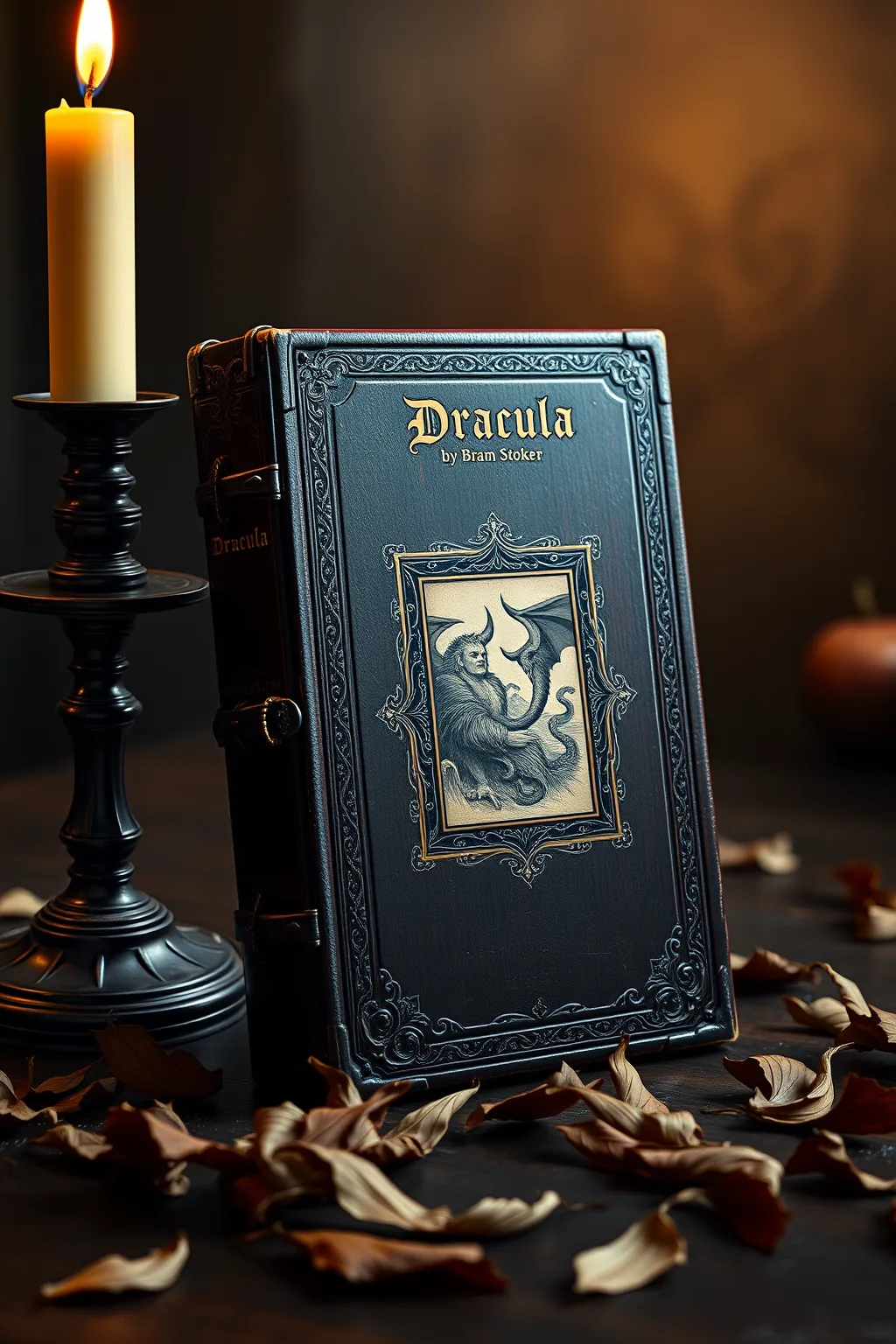
Dracula
 78
78

Dracula


Marcus Thorne, Esoteric Sciences Reviewer: Bram Stoker's 'Dracula' transcends its Gothic horror origins to become a seminal work for students of the occult. Beyond the visceral terror, it offers profound insights into archaic mythologies, the primal nature of life force, and the psychological impact of profound otherness. The novel's structure, relying on fragmented testimonies, mirrors the piecemeal acquisition of hidden knowledge. It speaks to the enduring human fascination with immortality, the shadow self, and the potent symbolism of blood. 'Dracula' is essential reading for anyone interested in the intersection of folklore, mythology, and the perennial quest for understanding humanity's darker impulses and the supernatural forces that shape our world.
📝 Description
78
Bram Stoker published 'Dracula' in 1897, a novel that has since become a touchstone for discussions of the occult.
Bram Stoker's 1897 novel 'Dracula' uses an epistolary format to tell its story through journals, letters, and newspaper clippings. The narrative follows Count Dracula, a Transylvanian nobleman with ancient roots and supernatural abilities, as he moves to England. His arrival disrupts the lives of the characters, particularly Mina Harker and her fiancé Jonathan. The novel details Dracula's attempts to spread his influence and the group's efforts to stop him.
The story examines themes of good versus evil, the clash between old traditions and modern society, and the nature of monstrosity. It touches upon psychic influence, the allure of eternal life, and the vulnerability of innocence. The fragmented accounts build suspense and immerse the reader in the characters' growing dread and their fight against a formidable, ancient foe.
While often read as a gothic horror story, 'Dracula' engages with occult ideas prevalent in the late Victorian era. Stoker's research into folklore and supernatural beliefs informed the Count's character and his powers. The novel reflects contemporary anxieties about hidden forces and the potential for ancient evil to infiltrate the modern world. It touches on themes of psychic vampirism and the manipulation of the mind, aligning with occult interests in unseen energies and spiritual corruption.
✍️ Author

Bram Stoker
Bram Stoker was an Irish author, best known for his 1897 Gothic horror novel Dracula.
💡 Why Read This Book?
Uncover the esoteric underpinnings of vampirism, explore the symbolism of eternal life and the shadow self, and engage with a narrative that mirrors the quest for forbidden knowledge. Ideal for seekers of occult lore, scholars of comparative mythology, and practitioners interested in the archetypal power of the vampire.
⭐ Reader Reviews
Honest opinions from readers who have explored this book.
❓ Frequently Asked Questions
What is the primary esoteric theme explored in 'Dracula'?
The primary esoteric theme is the nature of vampirism as a metaphor for the draining of life force and the pursuit of corrupted immortality, intertwined with ancient blood rituals and the seductive power of forbidden knowledge.
How does the novel's structure contribute to its esoteric nature?
The epistolary format, using letters, diaries, and logs, mimics the fragmented nature of occult texts, requiring the reader to piece together hidden truths and confront unsettling revelations from multiple perspectives.
What does Count Dracula symbolize from an occult perspective?
Dracula symbolizes the ancient, primal forces of the subconscious, the allure of forbidden immortality, and the corrupting influence of power derived from violating natural laws and ancestral curses.
Are there connections to specific occult traditions within the novel?
While not explicitly tied to one tradition, Stoker draws on pan-European folklore, ancient vampiric myths, and themes resonant with Gnostic ideas of spiritual corruption and the struggle against primal darkness.
How does 'Dracula' explore the concept of the 'shadow self'?
'Dracula' vividly portrays the shadow self through the Count's predatory nature and the psychological transformations he inflicts, forcing characters to confront their deepest fears and hidden desires.
🔮 Key Themes & Symbolism
The Allure and Corruption of Immortality
Dracula embodies the eternal human yearning for an existence beyond the mortal coil, yet it is a corrupted, parasitic form of immortality that thrives on the essence of others. This theme examines the Faustian bargain of seeking eternal life at the cost of one's soul and the moral decay that inevitably follows. It speaks to the esoteric concept of stagnation versus evolution, where a static, undead existence becomes a perversion of true spiritual progression. The novel probes the psychological toll of such a curse, the detachment from humanity, and the insatiable hunger that defines the undead state, serving as a potent allegory for the dangers of unchecked ambition and the price of defying natural cosmic order.
Ancient Bloodlines and Primal Forces
The Count is not merely a monster but a vessel of ancient lineage, a remnant of forgotten epochs and primal energies that predate modern civilization. His power is tied to his blood, a potent symbol in many esoteric traditions, representing life force, heritage, and mystical connection. Stoker taps into the deep-seated human fascination with ancestral power, curses, and the idea that certain bloodlines carry inherent spiritual or supernatural weight. Dracula’s existence challenges the rationalistic worldview of the Victorian era, suggesting that older, more potent forces lie dormant, waiting to reassert their dominion. This theme speaks to concepts of ancestral memory and the lingering influence of ancient spiritual currents on the present.
The Psyche Under Siege: Fear, Superstition, and the Unknown
The novel masterfully explores the psychological range of fear and how it can be amplified by superstition and the unknown. Dracula’s power lies not just in physical strength but in his ability to sow dread, manipulate minds, and exploit the vulnerabilities of the human psyche. This reflects esoteric understanding of how belief systems, fear, and psychic suggestion can manifest tangible effects. The encroaching darkness of the Count mirrors the descent into primal instincts and the erosion of rational thought when confronted with the uncanny. The characters' struggle is as much internal as external, battling their own fears and the insidious psychological warfare waged by the vampire lord.
💬 Memorable Quotes
Direct passages from the work, attributed to the author.
“The blood is the life!”
— A primal, visceral declaration of vampiric existence, emphasizing blood as the ultimate source of power and sustenance, a concept central to many ancient rituals and life-force philosophies.
“Listen to them, the children of the night. What music they make!”
— This chilling line evokes the mystical communion between Dracula and the nocturnal world, suggesting a hidden symphony of the unseen, a language understood only by those attuned to darker energies.
“We Szekelys have a right to be proud.”
— A subtle nod to Dracula's ancient lineage and pride in his heritage, hinting at a deep-rooted cultural and spiritual history that underpins his extraordinary existence and power.
“Welcome to my house! Come freely and leave freely! I bid you welcome.”
— The deceptive hospitality of the Count, a classic trope in tales of supernatural enticement, masking sinister intent and the entrapment of unsuspecting souls within his domain.
💡 Key Ideas
Editorial paraphrase of the work's core concepts — not direct quotes.
There are more things in heaven and earth, Horatio, than are dreamt of in your philosophy.
Echoing Shakespeare, this quote highlights the novel's exploration of the supernatural and the limits of human understanding when faced with cosmic mysteries and arcane forces.
🌙 Esoteric Significance
Tradition
While 'Dracula' doesn't adhere strictly to a single esoteric tradition, it draws heavily from pan-European folklore, ancient vampiric myths, and themes resonant with Gnostic concepts of spiritual corruption and the struggle against primal darkness. It touches upon the Jungian archetype of the shadow, the ancient reverence for blood as a life-force conduit, and the perennial human quest for immortality, albeit in a perverted form.
Symbolism
Key symbols include blood (life force, lineage, sacrifice), darkness (the unknown, subconscious, primal nature), castles (isolation, ancient power, ancestral curses), and the crucifix (divine protection, the struggle against evil). The act of biting symbolizes invasion, corruption, and the transference of power, while the undead state represents spiritual stagnation and a perversion of natural cycles.
Modern Relevance
In contemporary society, 'Dracula' continues to resonate as a powerful allegory for parasitic relationships, the allure of destructive power, and the exploration of identity and mortality. Its themes of confronting the 'other,' the seductive nature of forbidden knowledge, and the psychological impact of existential dread remain profoundly relevant in a world still grappling with fear, societal anxieties, and the enduring mysteries of the human condition.
👥 Who Should Read This Book
Seekers of occult lore will find 'Dracula' a seminal text, offering a body of vampire mythology and its esoteric implications. Scholars of comparative mythology and folklore will appreciate its deep roots in ancient European legends and its exploration of archetypal figures. Practitioners interested in the symbolic power of darkness, immortality, and the shadow self will discover potent metaphors for internal exploration. Even beginners to the genre can approach this classic, drawn in by its compelling narrative and accessible yet profound engagement with supernatural themes, making it a gateway to deeper metaphysical inquiry.
📜 Historical Context
Published in 1897, 'Dracula' emerged during a period of intense societal transformation in Victorian England. Scientific advancements and rationalism were on the rise, yet a concurrent fascination with the occult, spiritualism, and the lingering power of ancient folklore persisted. The era was marked by anxieties surrounding immigration, disease, and the perceived erosion of traditional values, all of which Stoker masterfully ties into his narrative. The novel tapped into widespread European legends of vampires, blood libel accusations, and the fear of the 'other' encroaching upon established society. Its gothic atmosphere, psychological depth, and exploration of forbidden desires resonated with an audience grappling with the shifting boundaries between modernity and the primal, the known and the unknown.
📔 Journal Prompts
Reflect on the concept of 'life force' as portrayed by Dracula. How does this relate to modern ideas of energy and vitality?
Consider the symbolism of the castle. What ancient psychic energies or ancestral memories might it represent in your own life?
Explore the idea of 'forbidden knowledge' in the novel. What are the personal costs and potential gains of seeking knowledge that lies beyond conventional understanding?
Analyze the psychological impact of fear and superstition on the characters. How do these elements mirror or contrast with contemporary societal anxieties?
Contemplate the allure of immortality as depicted by Dracula. What are the spiritual and existential implications of such a desire, both positive and negative?
🗂️ Glossary
Epistolary Novel
A novel composed of a series of documents, such as letters, diary entries, or newspaper clippings. This format enhances realism and allows for multiple perspectives, mirroring the fragmented nature of occult discovery.
Gothic Horror
A literary genre characterized by elements of terror, mystery, and the supernatural, often set in ancient castles or desolate landscapes, creating an atmosphere of dread and suspense.
Archetype
A universal, symbolic figure or pattern of behavior that recurs in various mythologies and literary works, representing fundamental human experiences and concepts, such as the shadow or the immortal.
Blood Libel
A false accusation that members of a religious minority, historically Jews, murdered children of other faiths to use their blood in religious rituals. This reflects the pervasive societal fears and superstitions of the era.
Shadow Self
In Jungian psychology, the 'shadow' is the unconscious aspect of the personality which the conscious ego does not readily acknowledge. Dracula can be seen as a manifestation of this dark, primal aspect of humanity.
This book appears in 1 collection
🔮 Readers Also Liked
Browse all →





More by Bram Stoker
All books →





From the “Transcendental Meditation” Collection
View all →



More Free Supernatural & Occult Fiction Books
View all →