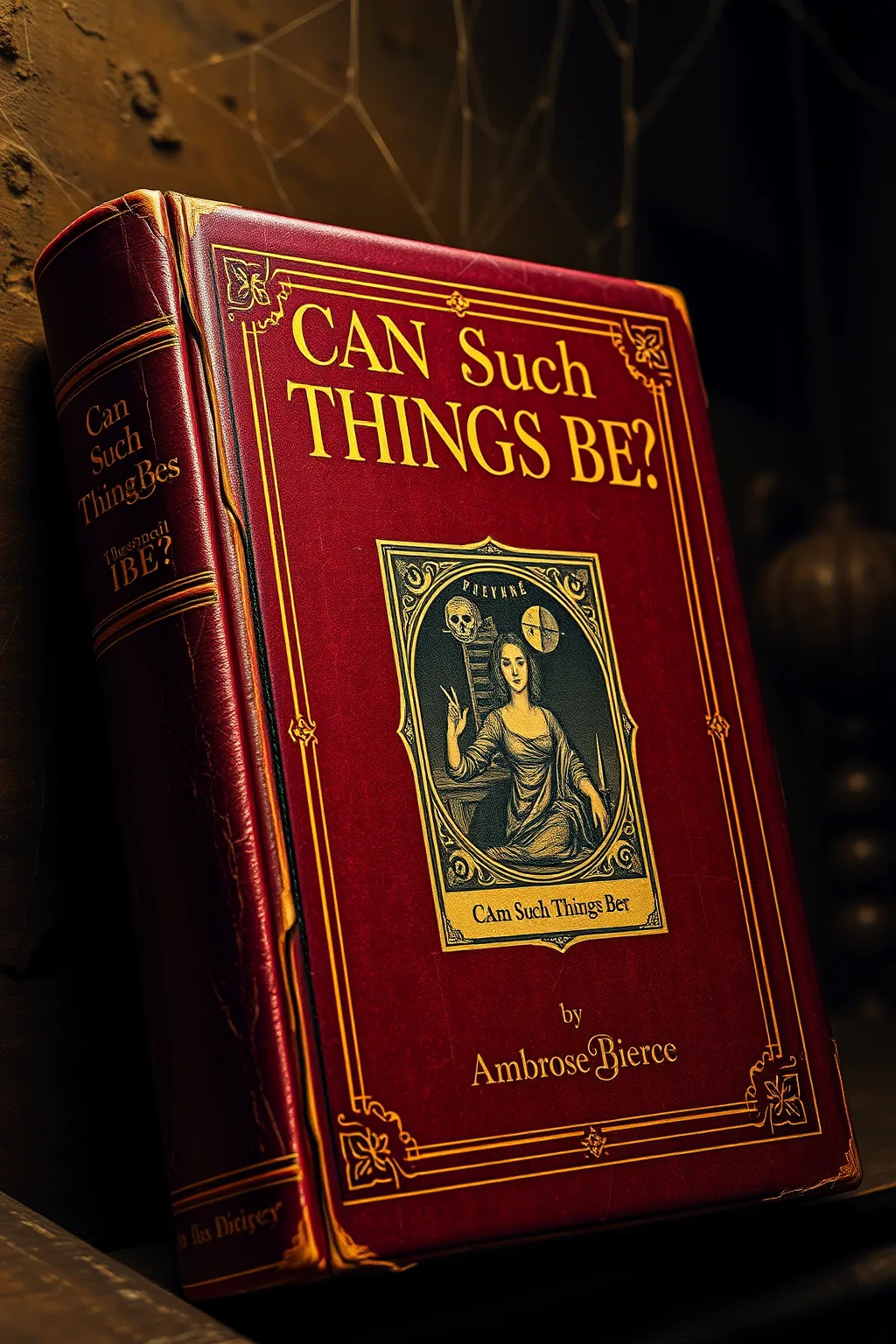
Can Such Things Be?
 71
71

Can Such Things Be?


Celeste Moreau (Divination & Symbolism Reviewer) — Ambrose Bierce's 'Can Such Things Be?' is a cornerstone of esoteric literature, offering profound insights into the nature of reality and consciousness. Bierce masterfully dissects the veil between the mundane and the mystical, employing a sharp, often satirical, wit that belies the unsettling power of his narratives. His tales resonate with a deep understanding of symbolic language and the subconscious mind, making them invaluable for practitioners and scholars of the occult. The collection's strength lies in its intellectual depth, challenging readers to question their perceived limitations of existence. This is essential reading for anyone seeking to explore the philosophical underpinnings of supernatural phenomena and the hidden forces that shape our world.
📝 Description
71
Ambrose Bierce published 'Can Such Things Be?' in 1893, a collection of unsettling supernatural tales.
Ambrose Bierce's 1893 collection, 'Can Such Things Be?', presents stories that examine the supernatural and the occult. Bierce, known for his sharp intellect and skepticism, uses these narratives to explore unsettling aspects of human psychology and reality. The tales are carefully crafted, combining a sense of visceral dread with a measured, observant approach.
These are not simple ghost stories. They touch upon forbidden knowledge, the limits of human reason, and the resonance of old legends. For those interested in the darker aspects of existence and the mysteries of what lies beyond our normal understanding, this book provides a blend of intellectual engagement and genuine fright. It shows how the uncanny can mirror our fears and desires.
Published in 1893, 'Can Such Things Be?' emerged during a period of heightened interest in spiritualism and the occult in Western society. Bierce, while often presenting a skeptical facade, engages with themes prevalent in late Victorian occultism, such as unexplained phenomena, the boundaries of perception, and the potential for unseen forces to influence human affairs. The stories reflect a cultural fascination with the spectral and the mysterious, often filtered through a lens of psychological inquiry rather than outright endorsement of supernatural claims.
✍️ Author
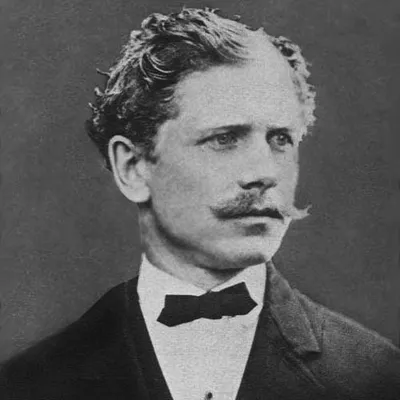
Ambrose Bierce
Ambrose Gwinnett Bierce (June 24, 1842 – c. 1914) was an American author, journalist, and poet.
💡 Why Read This Book?
Unearth chilling narratives that probe the abyss of the supernatural and the limits of human perception. 'Can Such Things Be?' is essential for seekers of hidden knowledge, scholars of American Gothic and occult literature, and practitioners interested in the psychological dimensions of the uncanny. Bierce's blend of sharp wit and profound dread offers a unique lens on the mysteries that lie beyond the veil.
⭐ Reader Reviews
Honest opinions from readers who have explored this book.
❓ Frequently Asked Questions
What is the primary genre of 'Can Such Things Be?'?
This collection is primarily classified as Supernatural & Occult Fiction, featuring tales that explore ghosts, the afterlife, uncanny occurrences, and psychological horror with a distinctive American Gothic flavor.
What distinguishes Bierce's approach to the supernatural?
Bierce's approach is marked by his sharp intellect, skeptical worldview, and a journalistic precision that lends an unsettling realism to his supernatural tales, often blurring the lines between the perceived and the actual.
Who is the intended audience for this book?
The book is ideal for readers fascinated by the paranormal, lovers of classic gothic literature, those interested in philosophical explorations of reality, and anyone who appreciates masterful storytelling with a dark, thought-provoking edge.
Does the book contain factual accounts or fiction?
While Bierce often grounds his tales in a realistic, almost reportorial style, 'Can Such Things Be?' is a collection of fictional short stories designed to explore supernatural and occult themes rather than present factual accounts.
What is the philosophical undercurrent of Bierce's stories?
Bierce often explores themes of fate, the deceptive nature of perception, the enduring impact of the past, and the unsettling possibility that reality is far stranger and more terrifying than we can comprehend.
🔮 Key Themes & Symbolism
The Unreliable Nature of Reality
Bierce masterfully deconstructs our perception of the tangible world, suggesting that the veneer of normalcy is fragile and easily penetrated by forces beyond our understanding. His narratives often leave the reader questioning what is real and what is delusion, mirroring the esoteric principle that perception is the key to unlocking hidden dimensions. This theme challenges readers to confront the limits of their own senses and intellect, inviting them to consider the possibility of parallel existences or supernatural interventions that defy rational explanation, a core tenet in many occult traditions.
The Lingering Elements of the Past
A recurring motif in Bierce's work is the persistent influence of past events, traumas, and unresolved energies on the present. Characters are often haunted not just by ghosts, but by the psychic residue of history, the weight of unatoned sins, or the spectral manifestations of forgotten conflicts. This resonates deeply with occult beliefs concerning karma, ancestral spirits, and the energetic imprints left upon places and objects. Bierce explores how the past is never truly dead, but continues to shape and manifest in the physical and spiritual realms, a concept central to understanding esoteric causality and spiritual lineage.
The Skepticism of the Rational Mind Confronted
Bierce, himself a noted skeptic, often places his rational characters in situations that defy logical explanation, forcing them to confront phenomena that shatter their worldview. This tension between empirical reason and inexplicable occurrences serves as a powerful allegory for the limitations of purely materialist thought when encountering the esoteric. The stories invite readers to acknowledge that true understanding may require embracing paradox and accepting truths that transcend scientific dogma, aligning with the mystical pursuit of gnosis beyond mere intellectual knowledge.
💬 Memorable Quotes
Direct passages from the work, attributed to the author.
“The thing that makes a ghost is not the spirit, but the imagination.”
— This highlights the psychological aspect of the supernatural, implying that our own minds can manifest or perceive spectral phenomena, a concept explored in parapsychology and certain forms of Western esotericism concerning psychic projection.
“There is no death, for we are all living in God.”
— A statement of spiritual continuity and unity, suggesting an underlying divine essence that transcends physical demise, aligning with monistic and pantheistic philosophies found in various mystical traditions.
“The dead are not dead, they are only sleeping.”
— This offers a comforting yet unsettling perspective on mortality, implying a transitional state rather than an absolute end, resonant with beliefs in reincarnation or spiritual slumber before reawakening.
“The world is a stage, and we are but players.”
— A classic metaphor for the illusory nature of worldly concerns and the predetermined roles we may play, reminiscent of fatalistic philosophies and the concept of Maya in Eastern thought.
💡 Key Ideas
Editorial paraphrase of the work's core concepts — not direct quotes.
The universe is a dream of which the God is dreaming.
This quote speaks to a panpsychist or idealist view of existence, suggesting reality is a construct of consciousness, echoing the esoteric concept of the 'Great Dreamer' or the illusory nature of the material world in some traditions.
🌙 Esoteric Significance
Tradition
Bierce's work touches upon elements of Western Esotericism, particularly its engagement with skepticism and the uncanny. While not explicitly aligned with a single tradition like Hermeticism or Kabbalah, his stories explore themes prevalent in occult thought: the thin veil between worlds, the power of the subconscious, the persistence of psychic energy, and the limitations of purely rational understanding when confronting the unknown. His tales can be seen as allegorical explorations of the perils and mysteries that lie beyond the mundane, resonating with seekers who ponder the nature of consciousness and the unseen forces shaping existence.
Symbolism
Key symbols in Bierce's work often revolve around darkness, mirrors, echoes, and the uncanny repetition of events. These elements symbolize hidden truths, the subconscious mind reflecting deeper realities, the lingering impact of past actions or traumas, and the unsettling feeling that reality is not as solid as it appears. The recurring motif of the unexplained often functions as a symbol for the limits of human knowledge and the vastness of the unknown, prompting contemplation of esoteric concepts like the Shadow Self or the collective unconscious.
Modern Relevance
In an era increasingly saturated with information yet often lacking deep meaning, Bierce's exploration of the uncanny and the limits of perception remains remarkably relevant. His stories compel readers to question the constructed nature of reality and the potential for hidden dimensions or influences. For modern practitioners and seekers, 'Can Such Things Be?' offers a powerful literary lens through which to examine the interplay between the psychological and the spiritual, reminding us that true understanding often requires venturing into the uncomfortable and the unknown, a vital aspect of personal and esoteric growth.
👥 Who Should Read This Book
This collection is a treasure for the discerning reader. For **beginners** in the occult and supernatural, it offers a sophisticated entry point, showcasing masterful storytelling that blends intellectual depth with chilling atmosphere. **Scholars** of American literature, Gothic fiction, and the history of esotericism will find rich material for analysis in Bierce's nuanced approach to the uncanny. **Seekers** of hidden knowledge and philosophical truths will be drawn to the stories' probing of reality's boundaries and the nature of consciousness. **Practitioners** interested in the psychological underpinnings of the supernatural and the power of suggestion will find resonance in Bierce's carefully crafted narratives, which often blur the line between objective phenomena and subjective experience.
📜 Historical Context
Published in 1893, 'Can Such Things Be?' emerged from a rich period of American literary development, a time when the boundaries of realism were being pushed and the shadows of American Gothic fiction deepened. The late 19th century was a fertile ground for exploring the unsettling, fueled by societal anxieties, burgeoning scientific discoveries that challenged traditional beliefs, and a renewed interest in spiritualism and the occult. Ambrose Bierce, a Civil War veteran whose experiences undoubtedly informed his stark worldview, navigated this landscape with a combination of sharp satire and profound unease. His stories reflect a growing fascination with the psychological, moving beyond simple ghost stories to look at the darker corners of the human psyche and the unsettling possibilities of existence. This era saw authors like Edgar Allan Poe and Nathaniel Hawthorne laying the groundwork for a distinctly American brand of macabre literature, and Bierce’s work stands as a crucial, often overlooked, continuation and evolution of these traditions, pushing them towards a more existential and philosophical inquiry.
📔 Journal Prompts
Reflect on a time when your perception of reality was challenged by an inexplicable event. How did you reconcile the experience with your rational mind?
Consider the concept of 'lingering echoes.' What aspects of your personal history or ancestral past do you feel still influence your present?
Bierce often uses irony and skepticism. How can a healthy dose of skepticism aid in one's spiritual or esoteric journey, rather than hinder it?
Write a short piece from the perspective of a skeptic encountering a supernatural phenomenon. Focus on their internal struggle and evolving thoughts.
Explore the idea that 'the universe is a dream.' What are the implications of this for our understanding of free will and responsibility?
🗂️ Glossary
American Gothic
A literary genre characterized by settings that evoke decay or the grotesque, and themes of psychological horror, the supernatural, and the dark side of human nature, often with a distinctly American historical or social context.
Occult
Relating to mysterious, secret, or supernatural knowledge, practices, or phenomena that are hidden from general view and often associated with magic, alchemy, or spiritualism.
Supernatural
Attributed to phenomena that are beyond the scope of normal scientific understanding or explanation, often involving ghosts, spirits, or other otherworldly entities.
Esoteric
Intended for or likely to be understood by only a small number of people with a specialized knowledge or interest; relating to the hidden or inner meaning of something.
Uncanny
Strange or mysterious, especially in an unsettling way; evoking a sense of eerie familiarity or dread that is difficult to explain.
This book appears in 1 collection
🔮 Readers Also Liked
Browse all →








More by Ambrose Bierce
All books →
From the “Transcendental Meditation” Collection
View all →







More Free Supernatural & Occult Fiction Books
View all →