The Fine Art of Necromancy
 83
83

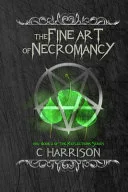
The Fine Art of Necromancy
Chris Harrison's The Fine Art of Necromancy offers an intriguing premise, focusing on the practicalities and philosophical underpinnings of resurrection rather than its mere spectacle. Frieda Schoenhofer's transformation from victim to a determined seeker of forbidden knowledge is compelling, driven by a palpable desire for retribution. The narrative's strength lies in its detailed exploration of Frieda's intellectual journey, tracing her path across various European locales as she attempts to decipher the secrets of life and death. However, the pacing occasionally falters, particularly in the middle sections, where the narrative momentum seems to decelerate in favor of exposition. A particular passage detailing Frieda's research in Avignon, hinting at ancient funerary rites, stands out for its evocative atmosphere and its grounding of the occult in historical practice. While the book successfully avoids sensationalism, it could benefit from a more consistent sense of urgency in its latter half. Nevertheless, it remains a solid entry for those interested in the mechanics of necromancy.
📝 Description
83
### What It Is
The Fine Art of Necromancy by Chris Harrison presents a narrative that intertwines themes of resurrection, revenge, and the fundamental mechanics of life and death. The story follows Frieda Schoenhofer, who, after a violent demise in Rotterdam, becomes driven by an unusual quest for vengeance through the means of resurrection. Her journey is not merely one of ambition but also of profound inquiry, demanding a deep understanding of the very forces that govern existence and cessation. The narrative spans geographical locations such as Cornwall, Luxembourg, and Avignon, charting Frieda's personal and intellectual odyssey.
### Who It's For
This work is intended for readers who appreciate narratives that explore the philosophical and mechanical aspects of esoteric concepts, particularly resurrection and its implications. It will appeal to those interested in how fictional characters grapple with mortality, the afterlife, and the ethical considerations surrounding the manipulation of life forces. Readers who enjoy character-driven stories with a strong intellectual undercurrent, set against diverse geographical backdrops, will find this book engaging. It is for those who prefer their occult fiction to be grounded in a form of speculative inquiry.
### Historical Context
The Fine Art of Necromancy emerges in a contemporary literary landscape where interest in esoteric themes, occultism, and the supernatural continues to grow. Published in 2019, it arrives at a time when digital platforms have democratized access to arcane knowledge, yet traditional narratives exploring these subjects still hold significant appeal. The book can be seen as part of a broader trend in speculative fiction that engages with ancient magical practices and philosophical questions about life, death, and consciousness, often drawing inspiration from historical occult movements and figures.
### Key Concepts
The central concept revolves around the 'mechanics of life and death,' suggesting a systematic, almost scientific, approach to understanding and potentially manipulating these fundamental states. This is explored through Frieda's quest, which implies that resurrection is not purely a matter of faith or spontaneous magic but involves a process that can be studied and enacted. The narrative also touches upon themes of revenge as a motivator for such profound undertakings, questioning the psychological and spiritual costs involved. The geographical journey itself serves as a metaphor for the internal exploration required to grasp these complex ideas.
💡 Why Read This Book?
• Learn about the methodical approach to resurrection, as Frieda Schoenhofer researches the "mechanics of life and death" across European cities like Avignon, offering a unique perspective beyond typical magical narratives. • Explore the psychological motivations behind extreme pursuits, understanding how revenge can fuel an odyssey into forbidden knowledge, as seen in Frieda's post-murder quest. • Gain insight into the intersection of arcane study and geographical exploration, as the narrative uses specific locations like Cornwall and Luxembourg to frame the character's learning process.
⭐ Reader Reviews
Honest opinions from readers who have explored this book.
❓ Frequently Asked Questions
What is the primary goal of the protagonist, Frieda Schoenhofer, in The Fine Art of Necromancy?
Frieda Schoenhofer's primary goal is resurrection, driven by a desire for revenge after being murdered. Her quest involves understanding the fundamental 'mechanics of life and death' before she can achieve her aim.
What geographical locations are significant to Frieda's journey in the book?
Frieda's odyssey takes her to several key locations, including Rotterdam, Cornwall, Luxembourg, Avignon, and her hometown of Bamberg, each serving as a backdrop for her research and personal discoveries.
Does The Fine Art of Necromancy delve into the practical 'how-to' of necromancy?
The book focuses more on the theoretical and philosophical 'mechanics' of life and death, exploring the protagonist's journey to understand these principles rather than providing a literal grimoire.
What is the publication year of Chris Harrison's The Fine Art of Necromancy?
The Fine Art of Necromancy was first published on September 7, 2019.
What role does Frieda's mother play in the narrative?
Frieda's mother, convinced her daughter requires psychiatric help, represents a grounded, conventional perspective that contrasts with Frieda's increasingly unconventional and esoteric pursuits.
Is the book based on historical necromantic practices?
While inspired by esoteric themes, the book presents a fictional exploration of necromancy, focusing on the character's intellectual and personal journey rather than strict adherence to historical occult manuals.
🔮 Key Themes & Symbolism
The Mechanics of Life and Death
The work posits that resurrection is not solely a supernatural event but a process governed by discernible 'mechanics.' Frieda Schoenhofer's journey is dedicated to uncovering these principles, suggesting an underlying order or system to existence and cessation that can be studied and potentially manipulated. This intellectual pursuit elevates the narrative beyond simple dark fantasy, framing necromancy as an academic, albeit forbidden, field of inquiry.
Revenge as a Catalyst
Frieda's motivation for pursuing the profound and dangerous art of necromancy stems from a desire for revenge following her murder. This theme explores how extreme injustice can drive individuals to seek power and knowledge beyond conventional boundaries, examining the ethical and psychological toll such a quest might entail.
Odyssey of Discovery
The narrative follows Frieda's literal and figurative journey across Europe—from Rotterdam to Avignon and beyond—as she seeks to understand the secrets of resurrection. This geographical odyssey mirrors her internal exploration of mortality, grief, and the potential for transcending death, weaving together personal transformation with arcane investigation.
The Mundane vs. the Esoteric
The book contrasts Frieda's extraordinary pursuit with the ordinary world, notably through her mother's concern for her mental well-being. This juxtaposition highlights the isolation and societal misunderstanding often faced by those who engage with esoteric knowledge, emphasizing the chasm between conventional perception and occult reality.
💬 Memorable Quotes
“Obsessed with an unusual form of revenge: resurrection.”
— This concise statement encapsulates Frieda's core motivation and the central theme of the book, highlighting the unique and extreme nature of her post-mortem objective.
“Before she can carry out her plan she must first understand the mechanics of life and death.”
— This emphasizes the intellectual and systematic approach Frieda takes towards necromancy, framing her quest as one of rigorous study rather than impulsive spellcasting.
“Her mother is convinced Frieda needs psychiatric help.”
— This highlights the societal disconnect from Frieda's profound, esoteric pursuits, illustrating the conventional view of such ambitions as signs of mental instability.
“She embarks on an odyssey that takes her to Cornwall, Luxembourg, Avignon...”
— This details the geographical scope of Frieda's quest, suggesting that her search for necromantic knowledge spans diverse locales and cultures.
“A biologist whose father took a brewing secret to the grave.”
— This hints at a parallel narrative or a character connection related to the transmission of knowledge, possibly linking biological or alchemical secrets to the broader theme of life and death.
🌙 Esoteric Significance
Tradition
While not explicitly tied to a single lineage like Hermeticism or Kabbalah, the work engages with the broader esoteric tradition of exploring the boundaries of life and death. Its focus on the 'mechanics' of resurrection suggests a rationalist or alchemical approach, akin to understanding the fundamental principles of existence that many esoteric schools investigate. It departs from purely spiritual interpretations by emphasizing a discoverable, systematic process.
Symbolism
The act of resurrection itself is a potent symbol of transformation, rebirth, and the overcoming of ultimate limitation. Frieda's journey, traversing diverse geographical locales, can symbolize the multi-faceted nature of esoteric knowledge acquisition, suggesting that understanding profound truths requires a comprehensive exploration of various environments and perspectives.
Modern Relevance
Contemporary interest in consciousness studies, transhumanism, and the philosophical implications of life extension offers fertile ground for this work's themes. Thinkers and practitioners exploring consciousness after death, or the ethics of manipulating life itself, might find Frieda's methodical quest a compelling fictional case study. It resonates with modern discussions on what constitutes 'life' and the potential for its manipulation.
👥 Who Should Read This Book
• Students of comparative religion and esotericism seeking fictional explorations of resurrection myths and death-defying practices. • Readers of philosophical fiction interested in how characters grapple with mortality, revenge, and the acquisition of forbidden knowledge. • Fans of dark fantasy and occult literature who appreciate narratives that delve into the theoretical underpinnings of magical concepts rather than relying solely on action.
📜 Historical Context
Published in 2019, The Fine Art of Necromancy arrives in an era marked by a resurgence of interest in occultism and esoteric philosophies, amplified by digital access to texts and communities. The work engages with a long tradition of necromantic literature, which has historically spanned from ancient practices to modern fiction. Unlike the more sensationalist portrayals of necromancy, this book, as suggested by its title and blurb, appears to focus on the systematic 'mechanics' of life and death, potentially drawing from philosophical underpinnings rather than purely ritualistic elements. It emerges in a literary landscape where authors like Taisia Kitaiskaia (with works exploring themes of death and the body) have also gained attention. While specific reception details for Harrison's 2019 publication are not widely documented, its thematic concerns align with contemporary explorations of mortality, consciousness, and the boundaries of existence within speculative fiction.
📔 Journal Prompts
Frieda Schoenhofer's quest for resurrection following her murder.
The 'mechanics of life and death' as a discoverable system.
The geographical odyssey as a metaphor for esoteric learning.
The role of revenge in driving profound, potentially dangerous, inquiry.
The contrast between Frieda's esoteric pursuits and societal perception.
🗂️ Glossary
Necromancy
A practice involving communication with the dead, often for divination or to gain knowledge. In fiction, it frequently extends to raising the dead or manipulating souls and life forces.
Resurrection
The act of bringing someone back to life, especially after death. In this context, it is pursued as a deliberate, mechanical process rather than a purely miraculous event.
Mechanics of Life and Death
The underlying principles, processes, or systems that govern the state of being alive and the transition to death, which the protagonist seeks to understand and potentially control.
Odyssey
A long and eventful or adventurous journey or experience. Here, it describes Frieda's quest across various European locations to acquire knowledge.
Revenge
The action of seeking retribution for a perceived wrong. In the book, it serves as a primary motivator for Frieda's exploration of necromancy.
Psychiatric Help
Medical and psychological treatment for mental health disorders. Mentioned in contrast to Frieda's esoteric goals, representing conventional understanding.
Brewing Secret
A specific, often proprietary, method or formula for making a beverage like beer. Used metaphorically or literally to suggest hidden knowledge passed down.