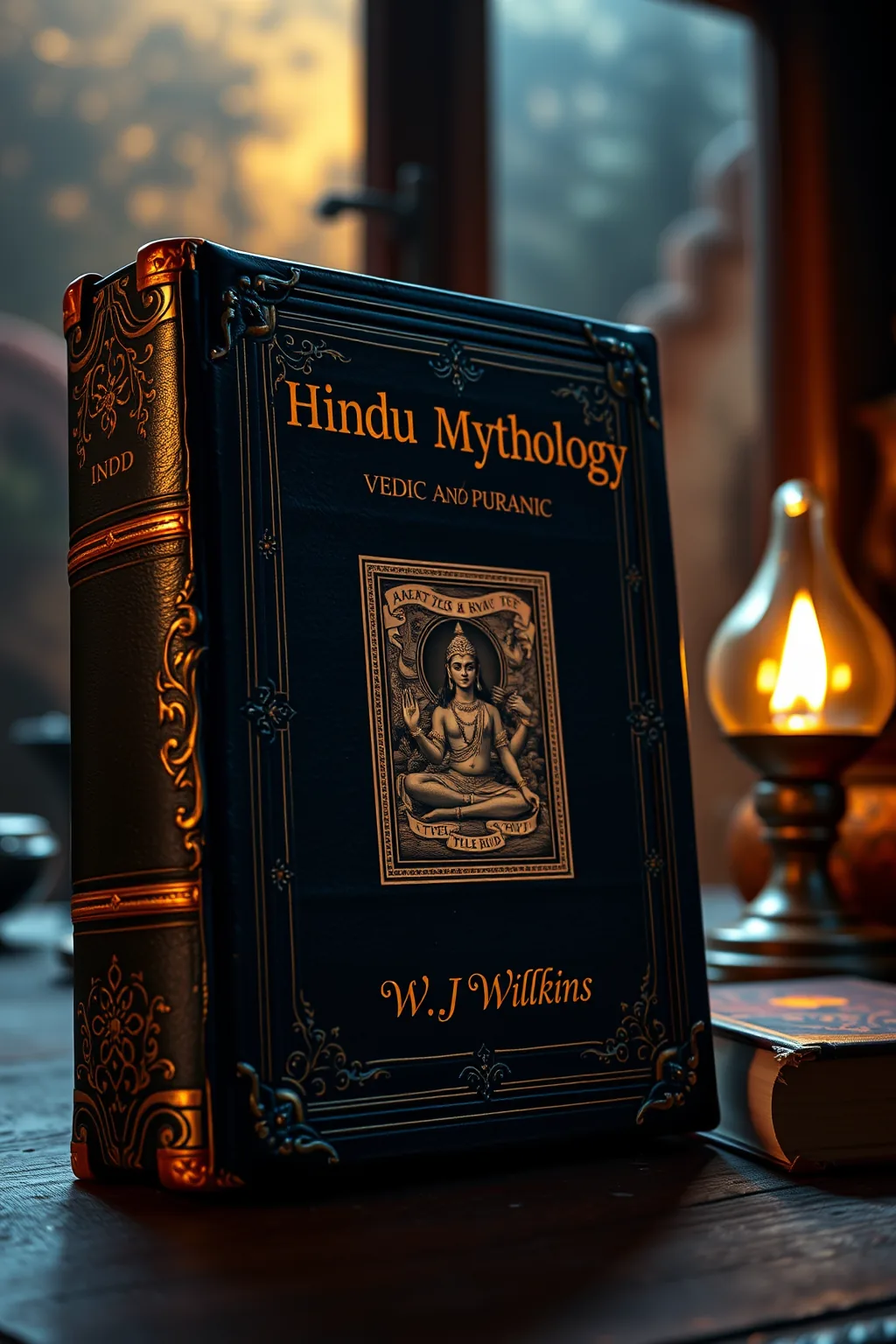
Hindu Mythology, Vedic and Puranic
 83
83

Hindu Mythology, Vedic and Puranic


Aurelia Blackwood (Occult Philosophy Critic): W. J. Wilkins' Hindu Mythology, Vedic and Puranic remains an indispensable cornerstone for any serious student of esoteric traditions. Published in 1900, its comprehensive scope and insightful analysis transcend mere historical documentation, offering a profound glimpse into the symbolic language of Brahmanical thought. Wilkins expertly navigates the transition from the elemental worship of the Vedic era to the complex devotional systems of the Puranas, revealing the evolving archetypes and philosophical currents. This work is a treasure trove for those seeking to understand the deeper, often veiled, meanings within Hindu cosmology and the spiritual pathways it delineates. Highly recommended for scholars and spiritual practitioners alike.
📝 Description
83
W. J. Wilkins' Hindu Mythology, Vedic and Puranic was published in 1900.
This book presents the myths found in the Vedic and Puranic traditions of Hinduism. Wilkins organizes the material by moving from the earlier Vedic hymns, which he describes as dealing with cosmic forces personified as deities, to the later Puranic texts. The Puranas, in Wilkins' view, feature a more developed pantheon and contain significant philosophical allegories. The author treats these narratives not just as stories but as vehicles for conveying deeper meanings and wisdom. Readers can expect to find discussions on the symbolism of creation myths, the stories of gods and heroes, and concepts related to spiritual liberation.
Wilkins aims to make these myths accessible to those interested in Hindu thought. The book covers the metaphysical ideas that form the basis of Hinduism, using the divine stories as a way to understand them. It is intended for a range of readers, from those seriously pursuing spiritual understanding to academic students of religion and anyone seeking insight into Indian civilization.
Published in 1900, this work situates itself within the academic study of Indic religions that gained momentum in the late 19th century. It approaches Vedic and Puranic mythology from a perspective that seeks to uncover underlying philosophical and potentially spiritual meanings within the narratives. While not explicitly an esoteric text itself, it engages with the symbolic language of traditions that are often considered esoteric, aiming to translate their mythic content for a Western audience interested in comparative religion and spiritual philosophy.
✍️ Author
💡 Why Read This Book?
Unravel the profound symbolic language of Hindu cosmology, from the elemental forces of the Vedas to the devotional deities of the Puranas. This book offers a unique bridge between ancient wisdom and modern spiritual inquiry. Ideal for seekers of hidden knowledge, comparative mythologists, and practitioners looking to deepen their understanding of Eastern spiritual traditions.
⭐ Reader Reviews
Honest opinions from readers who have explored this book.
❓ Frequently Asked Questions
What is the primary distinction between Vedic and Puranic mythology discussed in this book?
The Vedic tradition focuses on the worship of natural forces and sacrificial rituals, representing an earlier phase. The Puranic tradition, emerging later, emphasizes devotion to a vast pantheon of gods and goddesses, offering richer narrative and philosophical depth.
Is this book suitable for beginners interested in Hindu mythology?
Yes, while comprehensive, Wilkins' accessible prose makes it a valuable starting point for newcomers to the subject, providing a solid foundation.
Does the book delve into the philosophical underpinnings of Hindu myths?
Absolutely. Wilkins explores the symbolic meanings and philosophical concepts embedded within the myths, offering insights into the Hindu worldview and spiritual aspirations.
What is the historical significance of this book's publication date (1900)?
Its 1900 publication placed it among early, influential Western scholarly interpretations of Indian traditions, contributing to the burgeoning global interest in Eastern spirituality and philosophy.
Can this book be considered a guide to esoteric or occult practices?
While not a direct manual, it provides the foundational mythological and philosophical context that underpins many esoteric and occult interpretations within Hinduism.
🔮 Key Themes & Symbolism
The Cosmic Dance of Deities
Explore the intricate pantheon of Hindu deities, understanding their archetypal roles, cosmic functions, and symbolic representations. Wilkins reveals how figures like Brahma, Vishnu, Shiva, and the Devi are not mere characters, but personifications of universal forces and philosophical concepts, embodying the cyclical nature of existence, creation, preservation, and dissolution. Explore the divine dramas that mirror the human journey towards enlightenment and the intricate web of cosmic order that governs the universe.
Vedic Hymns as Primal Sound and Energy
Uncover the profound power and esoteric significance of the Vedic hymns. Wilkins illuminates how these ancient chants were not just prayers, but potent vibrational keys designed to resonate with the fundamental energies of the cosmos. Explore the worship of Agni (fire) as a messenger and transformer, Indra as the king of the gods and controller of atmospheric phenomena, and Soma as the elixir of consciousness. This theme explores the concept of mantra and its role in spiritual awakening and communion with the divine.
The Puranic Allegory and the Path of Devotion
Journey into the rich narratives of the Puranas, where divine stories serve as allegories for the human soul's quest. Wilkins highlights the shift towards Bhakti (devotion) as a primary spiritual path, exploring the profound emotional and psychological dimensions of worshipping deities like Rama and Krishna. Understand how these epic tales, filled with moral lessons and spiritual insights, provide a framework for ethical living and a direct, heartfelt connection to the divine, guiding devotees towards liberation and union.
💬 Memorable Quotes
Direct passages from the work, attributed to the author.
“Mythology is the unconscious mind of the race.”
— This interpretation emphasizes that myths are not mere stories but embody the collective subconscious wisdom, archetypes, and foundational beliefs of a culture.
“The sacrifice is a bridge between the human and the divine.”
— Here, the ritual act of sacrifice is presented as a sacred conduit, facilitating communication and communion between the mortal realm and the celestial powers.
“Devotion is the highest form of worship.”
— This highlights the Puranic emphasis on Bhakti, suggesting that heartfelt love and surrender to the divine is the most potent and transformative spiritual practice.
“The universe is a play of divine consciousness.”
— This profound statement points to the Hindu philosophical concept of Lila, where the cosmos is seen as the spontaneous, divinely orchestrated expression of pure awareness.
💡 Key Ideas
Editorial paraphrase of the work's core concepts — not direct quotes.
The gods are not far off, but are within us and around us.
This quote suggests that the divine is not an external entity but an immanent presence, accessible through inner exploration and connection to the natural world.
🌙 Esoteric Significance
Tradition
This work is deeply rooted in the Brahmanical tradition, specifically exploring its Vedic and Puranic streams. Esoterically, it offers insights into the symbolic language of creation, the archetypal energies of the cosmos as embodied by deities, and the philosophical underpinnings of spiritual paths like Yoga and Vedanta. It illuminates the concept of Brahman as the ultimate reality and the role of mythology in revealing the path to self-realization and liberation (Moksha).
Symbolism
The book unravels a body of symbolism. Vedic deities represent fundamental cosmic forces and natural phenomena, while Puranic figures embody complex psychological and spiritual archetypes. Concepts like the Trimurti (Brahma, Vishnu, Shiva) symbolize the eternal cycle of creation, preservation, and destruction. The sacred rivers, animals, and cosmic events depicted in the myths carry layered meanings related to purity, transformation, and spiritual journey, offering keys to understanding the subtle body and the macrocosm.
Modern Relevance
In an age often characterized by material pursuits, Wilkins' exploration of Hindu mythology provides a vital link to ancient spiritual wisdom and timeless human aspirations. The archetypal narratives offer profound psychological insights and practical guidance for navigating life's challenges. The emphasis on devotion (Bhakti) and the underlying philosophical concepts of interconnectedness and consciousness resonate deeply with contemporary seekers exploring mindfulness, holistic well-being, and the search for deeper meaning beyond the material realm.
👥 Who Should Read This Book
This comprehensive work is essential for a diverse readership. **Beginners** seeking an accessible yet profound introduction to the vast world of Hindu mythology will find Wilkins' clear exposition invaluable. **Scholars** of religion, comparative mythology, and Indology will appreciate its detailed analysis and historical context. **Spiritual seekers** yearning to understand the roots of Eastern philosophies, the archetypal significance of deities, and the pathways to divine connection will discover profound inspiration. **Practitioners** of yoga and meditation will gain a deeper appreciation for the cosmology and symbolism that inform their practices, enriching their understanding of the subtle energies and universal principles at play.
📜 Historical Context
Published in 1900, W. J. Wilkins' Hindu Mythology, Vedic and Puranic emerged during an important era of Orientalist scholarship and burgeoning Western interest in Eastern philosophies. As colonialism reshaped the Indian subcontinent, scholars and spiritual seekers in the West began to engage with its ancient texts and traditions with a mix of academic rigor and mystical curiosity. This period saw the translation and interpretation of numerous Sanskrit works, sparking dialogues about comparative religion, ancient wisdom, and alternative paths to spiritual understanding. Wilkins' work contributed significantly to this discourse, offering a comprehensive overview that sought to bridge the perceived gap between the "primitive" Vedic period and the more elaborate Puranic traditions, influencing subsequent generations of scholars and practitioners in both India and the West.
📔 Journal Prompts
Reflect on a deity from the Puranic tradition that speaks to a personal challenge or aspiration you are currently facing. How does their story offer guidance?
Consider the Vedic concept of 'Rta' (cosmic order). How can understanding and aligning with this principle enhance your daily life?
Wilkins describes the gods as embodying natural forces. Choose a natural phenomenon and explore its symbolic representation in Hindu mythology.
The Puranas often depict cycles of creation and destruction. How can this cyclical view of existence help you process personal endings and new beginnings?
Reflect on the essence of 'Bhakti' (devotion) as described in the Puranic section. What does genuine devotion mean to you, and how can you cultivate it?
🗂️ Glossary
Vedas
The oldest sacred scriptures of Hinduism, comprising hymns, rituals, and philosophical insights, considered the bedrock of Hindu tradition and spirituality.
Puranas
A vast body of Indian literature, containing narratives of creation, genealogies of gods, kings, and sages, and accounts of cosmology, philosophy, and dharma, often presented in a devotional context.
Brahman
The ultimate reality in Hinduism, the supreme cosmic spirit, the Absolute, the source and substratum of all existence, from which everything emanates and to which all returns.
Agni
The Vedic god of fire, considered a messenger between humans and gods, representing transformation, purification, and the power of sacrifice.
Bhakti
The path of devotion in Hinduism, characterized by love, surrender, and intense emotional connection to a chosen deity, seen as a direct route to spiritual liberation.
This book appears in 2 collections
🔮 Readers Also Liked
Browse all →








From the “Transcendental Meditation” Collection
View all →








More Free Spiritual Development Books
View all →