Catching the Big Fish
 75
75

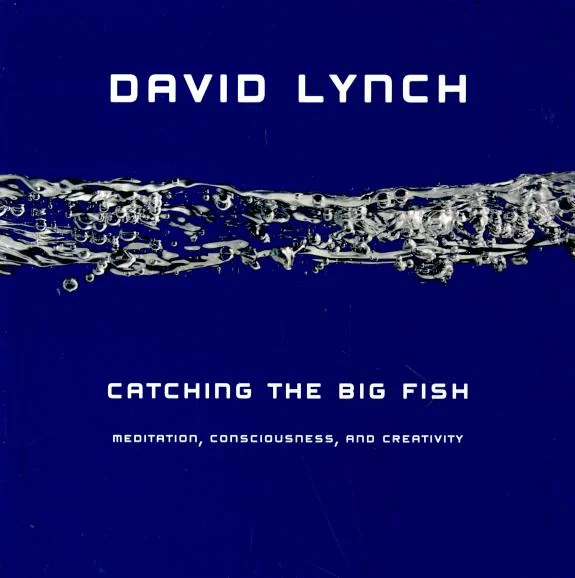
Catching the Big Fish
David Lynch’s "Catching the Big Fish" doesn't offer a roadmap; it's more like a series of signposts pointing inward. Lynch, a figure whose filmography is synonymous with the surreal and the deeply unsettling, here turns his gaze towards the genesis of his own visions. The book’s strength lies in its unvarnished honesty about his creative engine: Transcendental Meditation. He makes a compelling, if personal, case for how this practice, which he began in 1970, directly fuels his ability to "catch" ideas. The most impactful passages describe the feeling of receiving an idea, a sensation he conveys with the same intuitive grasp he brings to his cinema. However, the book’s limitation is its singular focus. While Lynch champions TM, he offers little by way of alternative methods or a critical examination of the practice itself, presenting it as the sole key. His description of the "pure idea" is evocative, but readers seeking a broader discussion on artistic inspiration beyond his specific discipline might find it narrowly defined. Ultimately, "Catching the Big Fish" is a valuable, if specialized, glimpse into the wellspring of a unique artistic mind.
📝 Description
75
David Lynch's 2007 book connects Transcendental Meditation to artistic inspiration.
Published in 2007, David Lynch's "Catching the Big Fish" details his personal method for accessing creative ideas. The book is not a typical autobiography or a guide to filmmaking. Instead, Lynch uses the metaphor of "catching the big fish" to explain how he receives inspiration. He directly links this process to his consistent practice of Transcendental Meditation, which he began in 1970.
Lynch asserts that this meditation practice has become central to his artistic output, enabling him to tap into a deeper source of creativity. The book is aimed at creators in various fields, including filmmakers, writers, and visual artists, who are interested in the origins of original thought. Fans of Lynch's unique films will find insights into his creative mind. It also speaks to individuals curious about using meditation to foster creativity and explore consciousness. Those seeking a simple meditation manual may find it less direct, as the book emphasizes the *outcomes* of meditation on creative flow rather than specific techniques.
This work situates itself within a lineage of artists and thinkers who have explored contemplative practices to enhance creative output. Lynch's explicit connection of Transcendental Meditation, a practice popularized by Maharishi Mahesh Yogi, to the generation of artistic ideas follows a tradition of integrating spiritual or meditative disciplines into creative work. His approach aligns with the broader interest in altered states of consciousness and inner experience as sources of inspiration, a theme present in various mystical and esoteric traditions that emphasize direct experience and intuition over purely rational or external methods.
💡 Why Read This Book?
• Learn how David Lynch uses Transcendental Meditation, a practice he adopted in 1970, to access a consistent stream of original concepts for his films. This offers a direct, practitioner-led perspective on meditative creativity. • Understand the "big fish" metaphor, Lynch's term for pure ideas waiting to be captured, and how he translates these abstract concepts into concrete visual narratives. • Gain insight into Lynch's personal philosophy of art creation, emphasizing intuition and the reception of ideas over intellectual construction, as detailed in his unique approach.
⭐ Reader Reviews
Honest opinions from readers who have explored this book.
❓ Frequently Asked Questions
What is the "big fish" David Lynch refers to in his book?
The "big fish" is David Lynch's metaphor for pure, fully formed ideas that present themselves to the artist. He describes the process of 'catching' these ideas as akin to fishing, requiring patience and a receptive state of mind, often achieved through meditation.
How does meditation connect to David Lynch's filmmaking?
Lynch attributes his ability to consistently generate creative ideas to his practice of Transcendental Meditation, which he began in 1970. He believes meditation quiets the mind, allowing access to a deeper reservoir of concepts and imagery essential for his unique cinematic style.
Is "Catching the Big Fish" a how-to guide for meditation?
No, the book is not a step-by-step instructional guide to meditation. While it emphasizes the benefits of Transcendental Meditation for creativity, it focuses on Lynch's personal experience and the results of the practice rather than teaching the technique itself.
What kind of ideas does David Lynch say he catches?
Lynch describes catching ideas that are often fully formed, complete with sounds, dialogue, and visuals, ready to be translated into film. These are not vague notions but specific, substantial concepts that feel 'received' rather than invented.
When was "Catching the Big Fish" first published?
David Lynch's "Catching the Big Fish" was first published in 2007. The book details his personal methods for creativity and his experiences with Transcendental Meditation.
What is the relationship between consciousness and creativity in the book?
Lynch suggests that a refined state of consciousness, achieved through practices like meditation, is directly linked to enhanced creativity. He posits that the 'field of ideas' is accessible when the mind is calm and receptive, allowing for the emergence of profound artistic concepts.
🔮 Key Themes & Symbolism
The Nature of Ideas
Lynch presents ideas not as manufactured products but as entities that exist independently in a 'field of ideas.' The artist's role, in his view, is to become a receptive vessel, akin to a fisherman patiently waiting for a 'big fish' to bite. This perspective reframes inspiration as a discovery rather than an invention, suggesting that the most potent concepts are those that present themselves fully formed, requiring the artist to simply 'catch' and transcribe them. This theme challenges conventional notions of artistic labor, emphasizing intuition and receptivity.
Transcendental Meditation as a Creative Tool
A central to Lynch's creative practice, Transcendental Meditation (TM) is presented as the primary method for accessing the 'field of ideas.' Lynch details his personal journey with TM, starting in 1970, and attributes the consistent flow of inspiration for his films, like 'Blue Velvet,' directly to this practice. He describes how TM allows him to quiet the 'thinking mind' and tap into a state of pure consciousness where creative 'fish' are more likely to be caught. The book advocates for meditation not as a spiritual pursuit alone, but as a practical technique for unlocking artistic potential.
Consciousness and Artistic Reception
The book explores the relationship between different states of consciousness and the capacity for creative reception. Lynch suggests that a calm, unified state of consciousness is essential for perceiving and capturing the subtle 'vibrations' of ideas. He contrasts this with a disturbed or overly analytical mind, which he believes hinders creativity. This theme aligns with esoteric traditions that posit a connection between inner states and the manifestation of creative energy, viewing consciousness as the primary medium through which artistic inspiration is channeled and shaped.
The Artist's Intuitive Process
Lynch champions an intuitive approach to art-making, prioritizing gut feelings and subjective experience over rigid intellectual frameworks. He recounts how ideas often arrive with an inherent sense of their own logic and form, guiding the creative process. This emphasis on intuition speaks to certain esoteric philosophies that value direct knowing and inner guidance. The book implicitly argues that trusting these intuitive impulses, facilitated by a quieted mind, leads to more authentic and powerful artistic outcomes, as seen in the surreal logic of his films.
💬 Memorable Quotes
Direct passages from the work, attributed to the author.
“Transcendental Meditation is the most powerful technique for the development of the individual.”
— Here, Lynch elevates TM beyond mere relaxation. He presents it as a fundamental tool for personal growth and unlocking potential. For him, this potential is most vividly realized in the field of creativity, making meditation a direct pathway to artistic fulfillment and insight.
“The field of ideas is a field of pure consciousness.”
— This statement links the abstract field of inspiration directly to the nature of consciousness itself. Lynch suggests that the source of all potential concepts is a fundamental, unified awareness, implying that by accessing deeper levels of consciousness, one can directly tap into this universal wellspring.
“When you have a great idea, you have to write it down immediately.”
— This practical advice highlights the ephemeral nature of inspiration. Lynch stresses the importance of immediate action to secure a 'caught' idea, preventing it from being lost. It underscores the delicate balance between receptivity and decisive action in the creative process.
💡 Key Ideas
Editorial paraphrase of the work's core concepts — not direct quotes.
Ideas are floating around us, all the time. You have to have a way to catch them.
This quote captures Lynch's core metaphor. It suggests that inspiration is not scarce but abundant, readily available in the environment or consciousness. The challenge lies not in generating ideas, but in developing the receptivity and methods—like meditation—to 'catch' them before they dissipate.
You don't have to understand it. You just have to do it.
This quote speaks to Lynch's trust in intuition and process over intellectual analysis. It applies to both meditation and filmmaking, suggesting that overthinking can obstruct the natural flow of creativity. Embracing the doing, rather than dissecting the why, is key.
🌙 Esoteric Significance
Tradition
While not explicitly aligning with a single esoteric lineage, Lynch's work touches upon principles found in Hermeticism and Neoplatonism, particularly the concept of a universal 'field of ideas' or 'Noetic field' from which all concepts emanate. His emphasis on accessing these ideas through a quieted mind and intuition aligns with mystical traditions that advocate for inner stillness to perceive higher truths. The practice of TM itself, while presented secularly, shares common ground with yogic and meditative techniques aimed at transcending ordinary consciousness to reach deeper states of awareness.
Symbolism
The central symbol is the 'big fish,' representing a complete, nascent idea. This can be interpreted as a symbol of potent, generative potential, much like the 'prima materia' in alchemy, which holds the potential for transformation. The act of 'fishing' itself symbolizes patient receptivity and the skillful engagement required to capture these potent forces. The 'field of ideas' serves as a symbolic representation of a unified consciousness or collective unconscious, a source from which archetypal concepts can emerge into individual awareness.
Modern Relevance
Lynch's perspective in "Catching the Big Fish" continues to resonate with contemporary artists, entrepreneurs, and individuals exploring mindfulness and creativity. His ideas are relevant to fields like positive psychology, which investigates the role of flow states and mindfulness in well-being and performance. Thinkers and practitioners in areas such as consciousness hacking, neuro-art, and applied meditation often reference Lynch's work as a relatable example of how internal practices can directly fuel external creative output in the digital age.
👥 Who Should Read This Book
• Artists, filmmakers, writers, and musicians seeking to understand the source of their inspiration, particularly those intrigued by Lynch's unique cinematic style. • Practitioners of meditation, especially Transcendental Meditation, looking for insights into how contemplative practices can enhance creative output and idea generation. • Individuals interested in the intersection of consciousness, creativity, and personal development, who want to explore practical methods for accessing deeper levels of imagination.
📜 Historical Context
David Lynch's "Catching the Big Fish," published in 2007, emerged during a period of heightened interest in mindfulness and its application to cognitive enhancement, including creativity. His personal adoption of Transcendental Meditation (TM) in 1970 placed him ahead of this mainstream wave. The book arrived nearly four decades after Lynch first encountered TM, founded by Maharishi Mahesh Yogi. Contemporary to Lynch's book, thinkers like Daniel Goleman were popularizing concepts of emotional intelligence and the benefits of contemplative practices. While Lynch's work is deeply personal, it tapped into a zeitgeist fascinated by the intersection of consciousness studies and artistic output. Unlike purely academic explorations of creativity, Lynch’s approach offered a raw, unmediated account from a celebrated artist, providing a counterpoint to more analytical or scientific perspectives on inspiration prevalent at the time.
📔 Journal Prompts
The 'big fish' concept as a metaphor for your own creative impulses.
Reflecting on the state of mind when you most successfully 'catch' an idea.
The role of stillness versus action in your creative process.
How the practice of meditation (or a similar quietening technique) might unlock new creative avenues.
Translating the abstract 'field of ideas' into concrete artistic forms.
🗂️ Glossary
Big Fish
David Lynch's metaphor for a fully formed idea that presents itself to the artist, ready to be captured and developed into a creative work.
Field of Ideas
A conceptual space, described by Lynch as pure consciousness, where all potential ideas exist and from which artists can draw inspiration.
Catching Ideas
The process of receiving and securing inspiration, likened to fishing. It requires a receptive mind, often achieved through practices like meditation.
Transcendental Meditation (TM)
A specific technique of silent mantra meditation introduced by Maharishi Mahesh Yogi, which Lynch credits with significantly enhancing his creative flow since 1970.
Thinking Mind
Lynch's term for the analytical, intellectual part of the brain that he believes can sometimes obstruct the natural flow of intuition and creativity.
Pure Idea
An idea received in its complete form, often accompanied by sensory details like sound and image, directly from the 'field of ideas.'
Receptivity
The state of being open and prepared to receive inspiration, cultivated through practices that quiet the mind and enhance awareness.
This book appears in 1 collection
🔮 Readers Also Liked
Browse all →









From the “Transcendental Meditation” Collection
View all →






More Free Spiritual Development Books
View all →