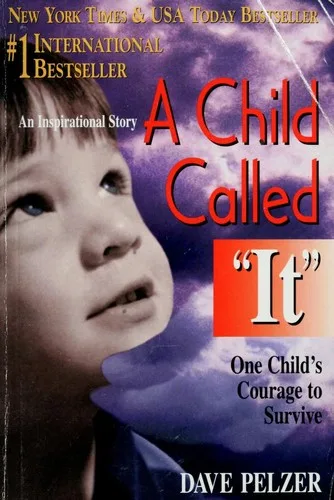
A child called "it"
 84
84

A child called "it"
David Pelzer's "A child called 'it'" is less a literary work and more a raw cry from a soul under siege. The relentless cataloging of abuse, particularly the chilling incident involving spoiled milk and the 'Mother's Rules,' forces a visceral confrontation with the reality of childhood suffering. While its power lies in this unflinching honesty, the narrative occasionally verges on repetitive, a consequence, perhaps, of conveying the cyclical nature of trauma. The absence of a more nuanced exploration of the abuser's psychology, beyond sheer malice, leaves a void, though this might be intentional to maintain focus on the victim's experience. Ultimately, it is a document of survival, not a nuanced psychological study.
📝 Description
84
David J. Pelzer's 1987 memoir details extreme childhood abuse and neglect.
David J. Pelzer's "A child called 'it'" recounts his brutal childhood, detailing the severe abuse and neglect he suffered at the hands of his mother. Published in 1987, the book lays bare the systematic deprivation, physical torment, and psychological manipulation that characterized his youth. Pelzer's narrative paints a stark picture of a life lived in constant fear and isolation within his own home, offering a direct account of survival against overwhelming odds.
This memoir appeals to readers interested in firsthand accounts of human resilience and the effects of severe trauma. It addresses individuals seeking validation from similar experiences and those who examine the darker aspects of family dynamics. The book confronts difficult truths about human cruelty and the strength required to endure such circumstances. It is a challenging read, not intended for the sensitive, but for those prepared to face disturbing realities.
While not a traditional esoteric text, "A child called 'it'" touches upon themes relevant to certain esoteric traditions concerning the resilience of the human spirit under extreme duress. It illustrates the profound impact of external forces on the development of the self, a concept examined in various psychological and spiritual frameworks. The narrative shows how an individual can maintain an inner core of selfhood despite systematic attempts to strip them of identity and humanity. This focus on inner survival against overwhelming external control resonates with traditions that emphasize the strength of consciousness and the will to endure.
💡 Why Read This Book?
• Understand the profound psychological impact of systemic child abuse, as detailed through the specific 'Mother's Rules' that governed David's every moment. • Gain insight into the concept of 'othering' and dehumanization, a core element exemplified by the title itself, "it." • Witness the raw demonstration of human resilience, particularly how David maintained a flicker of hope despite the extreme deprivation and physical abuse detailed in the 1987 publication.
⭐ Reader Reviews
Honest opinions from readers who have explored this book.
❓ Frequently Asked Questions
What is the primary theme of "A child called 'it'"?
The primary theme is survival against extreme child abuse and neglect. It details the systematic dehumanization and physical torment inflicted upon the author, David Pelzer, by his mother.
When was "A child called 'it'" first published?
The book was first published in 1987, bringing the harrowing realities of severe child abuse into public consciousness at a time when such narratives were less common.
Who is the author of "A child called 'it'"?
The author is David J. Pelzer, who wrote the memoir detailing his own traumatic childhood experiences of abuse.
What kind of abuse is depicted in the book?
The book depicts severe physical abuse, starvation, psychological torment, and extreme neglect, including being denied basic necessities and human contact.
Is "A child called 'it'" a fictional story?
No, "A child called 'it'" is a memoir, a factual account of the author's real-life experiences of childhood abuse.
What does the title "A child called 'it'" signify?
The title signifies the dehumanization of the child. By referring to him as 'it,' the abuser denies his humanity, identity, and worth, reducing him to an object.
🔮 Key Themes & Symbolism
Dehumanization and Othering
The core of the narrative revolves around the systematic dehumanization of the child, who is stripped of his name and identity, referred to only as "it." This process, driven by the abuser's deliberate cruelty, serves to erase the child's sense of self and worth. The 'Mother's Rules' are a prime example, enforcing a reality where the child is less than human, existing solely to endure torment and serve the abuser's distorted needs. This theme explores how language and treatment can actively dismantle a person's identity.
The Cycle of Abuse and Survival
The book powerfully illustrates the cyclical nature of abuse, where extreme deprivation and violence become the child's constant reality. Despite this, the narrative is fundamentally about survival. It examines the internal mechanisms and sheer will required to endure unimaginable suffering, hinting at the profound psychological and emotional fortitude necessary to persist when every external factor seeks to break one down. The memoir serves as a stark reminder of the lasting impact of such experiences.
Isolation and Control
A pervasive element is the extreme isolation imposed upon the child. Cut off from external support, love, and even basic social interaction, the child exists in a state of total dependency on the abuser. This isolation is a key tool of control, ensuring the abuser's dominance and preventing any escape or intervention. The narrative details how this enforced solitude amplifies the psychological damage and makes survival an even more formidable challenge.
The Fragility of Childhood
This memoir underscores the profound vulnerability of children and the devastating consequences when that vulnerability is exploited. It presents a stark contrast between the idealized notion of childhood and the brutal reality experienced by many. The book highlights how the foundational years of development can be irrevocably damaged by trauma, emphasizing the critical importance of a safe and nurturing environment for a child's well-being.
💬 Memorable Quotes
Direct passages from the work, attributed to the author.
“I was hungry, I was cold, I was tired, I was lonely, I was scared.”
— This simple, declarative statement captures the pervasive suffering experienced by the child. It moves beyond a single incident to describe a constant state of being, highlighting the complex nature of his torment.
“I think that my mother was a very sick woman.”
— This interpretation, offered by the author, attempts to contextualize his mother's extreme cruelty not as simple evil, but as a symptom of profound psychological disturbance, a common perspective when analyzing perpetrators of severe abuse.
“The Mother's Rules were endless.”
— This phrase points to the arbitrary and overwhelming nature of the abuser's control. The 'Rules' were not about safety or well-being but served as instruments of torment and psychological manipulation.
“I had to learn to survive.”
— This is the central thesis of the memoir. It emphasizes the active, conscious effort required to endure and overcome the horrific conditions, framing the author's childhood as a continuous struggle for survival.
💡 Key Ideas
Editorial paraphrase of the work's core concepts — not direct quotes.
They called me 'it'.
This quote directly addresses the title and the core theme of dehumanization. Being called 'it' signifies a complete denial of personhood, reducing the child to an object without name or rights.
🌙 Esoteric Significance
Tradition
While not explicitly aligned with any single esoteric tradition, "A child called 'it'" can be viewed through a Gnostic lens. The intense suffering and isolation echo the Gnostic concept of the material world as a prison, where the divine spark (the child's spirit) is trapped and tormented by malevolent forces (the abuser, the oppressive environment). The struggle for survival and eventual escape or transcendence can be interpreted as a journey towards gnosis, the liberation of the soul from material bondage.
Symbolism
The concept of being called 'it' is a powerful symbol of the stripping away of divine essence, reducing the individual to mere matter devoid of spirit or name. Food, or the denial thereof, symbolizes not just physical sustenance but the withholding of love and nourishment essential for spiritual growth. The 'Mother's Rules' can be seen as the rigid, materialistic laws of the flawed demiurge, designed to keep the divine spark bound and unaware of its true nature.
Modern Relevance
The work's exploration of extreme trauma and resilience continues to be relevant in contemporary discussions on mental health, victim advocacy, and the long-term effects of abuse. Therapists and counselors working with survivors of severe childhood trauma often reference such narratives for their stark depiction of the psychological landscape. It also informs discussions in fields like attachment theory and developmental psychology, underscoring the critical need for secure early environments.
👥 Who Should Read This Book
• Survivors of childhood abuse seeking validation and a narrative that mirrors their own experiences of dehumanization and resilience. • Students of psychology and sociology interested in direct case studies of severe trauma, control dynamics, and the impact of neglect on development. • Readers exploring themes of human endurance and the darker aspects of interpersonal relationships, who can confront graphic depictions of suffering.
📜 Historical Context
Published in 1987, David Pelzer's "A child called 'it'" arrived during a burgeoning public awareness of child abuse, spurred by earlier works and advocacy. While not a scholarly text, its raw, first-person account provided a visceral counterpoint to more clinical discussions. It gained significant traction in the late 1980s and early 1990s, resonating with a public grappling with the reality of hidden domestic horrors. Its reception was largely sympathetic, though some critics questioned the graphic nature of the details. It predated a wider academic exploration into the neurobiology of trauma but tapped into a growing societal unease about child welfare, standing in contrast to more sanitized portrayals of family life.
📔 Journal Prompts
The constant state of hunger and fear described in the book.
The dehumanizing effect of being called 'it'.
Moments of perceived escape or resilience amidst the abuse.
The psychological impact of the 'Mother's Rules'.
The author's perspective on his mother's motivations.
🗂️ Glossary
Dehumanization
The process of depriving a person or group of positive human qualities. In the book, this is exemplified by the child being referred to as 'it,' stripping him of his name and identity.
Othering
The act of perceiving or portraying someone or something as fundamentally different from and alien to oneself. The child is 'othered' by his mother, making him an object of her cruelty.
Psychological Manipulation
The exercise of undue influence over another person's mental state. The mother uses fear, isolation, and distorted rules to control the child's thoughts and behavior.
Resilience
The capacity to recover quickly from difficulties; toughness. The book documents the author's struggle to survive and maintain his will to live despite extreme adversity.
Deprivation
The state of lacking the necessities of life, such as food, shelter, and affection. The child endures severe physical and emotional deprivation.
Memoir
A historical account or biography written from personal knowledge or special sources. This book is a factual account of the author's childhood experiences.
Abuse Survivor
An individual who has experienced and endured significant physical, emotional, or sexual maltreatment. The book is a evidence of the author's survival of such abuse.
🔮 Readers Also Liked
Browse all →









More by David J. Pelzer
All books →
More Free Spiritual Development Books
View all →