The Inner Chapters
 84
84

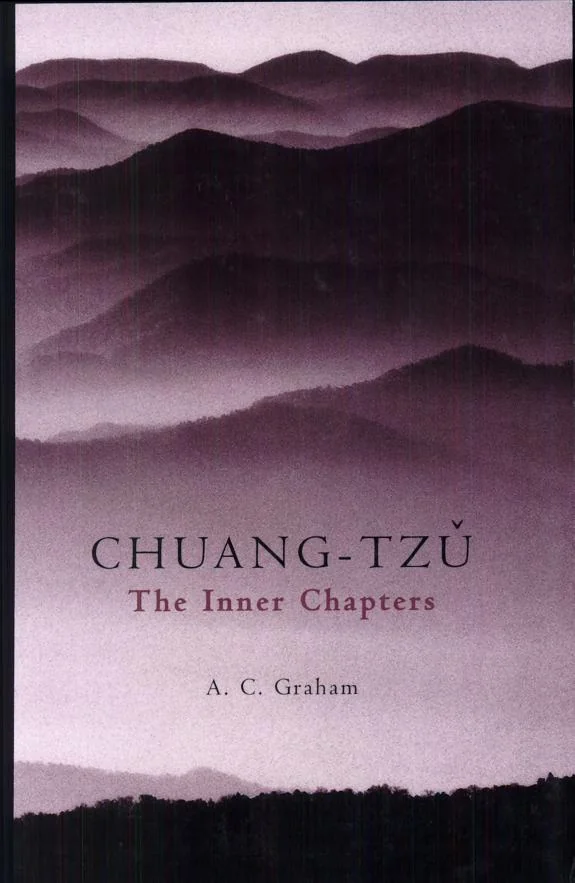
The Inner Chapters
The Chuang-Tzu's Inner Chapters offer a unique challenge to Western modes of thought, particularly its emphasis on argumentation and definition. The text famously resists easy categorization, preferring to illustrate its points through anecdote and paradox. One striking passage involves the transformation of a butterfly, questioning the very nature of waking reality and identity. While the allegorical nature is a strength, allowing for broad interpretation, its very elusiveness can be a limitation for readers accustomed to direct philosophical exposition. The work's unconventional approach to knowledge, prioritizing intuitive understanding over empirical proof, is its most enduring characteristic. It remains a vital source for understanding Taoist philosophy.
📝 Description
84
### What It Is The Inner Chapters constitute the foundational core of the Chuang-Tzu, the seminal Taoist text. Attributed primarily to the philosopher Chuang-Tzu himself, these writings emerged from the Warring States period in China, a time of intense intellectual and political ferment. They represent not a systematic philosophical treatise, but a collection of parables, dialogues, and anecdotes designed to illustrate the principles of Taoism through imaginative storytelling and paradox.
### Who It's For This collection is for seekers of wisdom who appreciate aphoristic and allegorical approaches to understanding existence. Readers interested in the philosophical underpinnings of Taoism, comparative religion, or ancient Chinese thought will find fertile ground here. It appeals to those who prefer contemplation over dogma, and who are open to challenging conventional thinking about life, death, and the nature of reality.
### Historical Context Composed between the 4th and 2nd centuries B.C., the Inner Chapters arose during a period when various philosophical schools, including Confucianism and Mohism, vied for influence in China. Chuang-Tzu's work offered a radical counterpoint to the social and ethical emphasis of Confucianism, advocating instead for a radical acceptance of nature and a detachment from worldly ambitions. This philosophical milieu shaped Chuang-Tzu's unique voice, which often satirized the rigidities of other schools.
### Key Concepts The text introduces readers to core Taoist ideas such as the Tao (the ineffable Way), Wu Wei (non-action or effortless action), the relativity of opposites (life/death, beauty/ugliness), and the importance of embracing change. Through vivid imagery, such as the famous butterfly dream, Chuang-Tzu explores the nature of consciousness, the limits of human knowledge, and the path to spiritual freedom by aligning oneself with the natural flow of the universe.
💡 Why Read This Book?
• Gain a perspective on "effortless action" (Wu Wei) by studying Chuang-Tzu's parables, understanding how aligning with natural flows can achieve more than forceful effort, a concept vital for modern stress management. • Explore the relativity of perception through the "butterfly dream" episode, challenging your assumptions about reality and selfhood, a foundational idea in Eastern philosophy since the 4th century B.C. • Contemplate the Taoist acceptance of change and impermanence by examining Chuang-Tzu's dialogues, offering a framework for navigating life's inevitable transformations.
⭐ Reader Reviews
Honest opinions from readers who have explored this book.
❓ Frequently Asked Questions
What is the historical period of The Inner Chapters?
The Inner Chapters were written primarily between the 4th and 2nd centuries B.C. during China's Warring States period, a time of significant philosophical development and political upheaval.
Who is considered the primary author of The Inner Chapters?
While part of a larger collection, the core Inner Chapters are traditionally ascribed to the philosopher Chuang-Tzu himself, who lived around the 4th century B.C.
What is the central philosophy presented in The Inner Chapters?
The text expounds on Taoism, emphasizing concepts like the Tao (the Way), Wu Wei (effortless action), spontaneity, and the acceptance of natural change and transformation.
Are there specific allegories or stories central to The Inner Chapters?
Yes, prominent examples include the story of Chuang-Tzu dreaming he was a butterfly and the allegory of the 'Useless Tree,' both illustrating key Taoist principles.
How do The Inner Chapters differ from other ancient Chinese philosophies like Confucianism?
Unlike Confucianism's focus on social order and ethics, Chuang-Tzu advocates for individual freedom, detachment from societal conventions, and living in harmony with the natural Tao.
What is the significance of the 'butterfly dream' in Taoist thought?
The butterfly dream is a famous illustration of the blurred lines between reality and illusion, and the question of identity, prompting contemplation on the nature of consciousness.
🔮 Key Themes & Symbolism
The Relativity of Opposites
Chuang-Tzu consistently challenges binary thinking, demonstrating how seemingly opposed concepts like life and death, beauty and ugliness, or right and wrong are interdependent and fluid. The text suggests that our judgments are often based on limited perspectives. For instance, what appears as disaster to one might be a natural transformation or even a benefit from another viewpoint. This theme encourages a more holistic and less judgmental understanding of existence, moving beyond rigid dualities inherent in much Western thought.
Wu Wei: Effortless Action
Central to Taoist practice, Wu Wei is often misunderstood as passivity. The Inner Chapters illustrate it as action aligned with the natural order, requiring no force or striving. It's like water flowing downhill or a skilled artisan working with the grain of wood. This principle advocates for spontaneity and responsiveness, acting without ego-driven intention. By observing the effortless effectiveness of nature, one can learn to act in harmony with the Tao, achieving greater results with less effort.
The Nature of Reality and Illusion
Through parables like the famous butterfly dream, Chuang-Tzu probes the very foundations of our perceived reality. He questions the reliability of sensory experience and the fixed nature of identity. The text suggests that our distinctions between waking and dreaming, or between self and other, might be arbitrary. This exploration invites readers to question their own assumptions about what is real and to cultivate a more flexible and open consciousness, recognizing the ephemeral quality of all phenomena.
Acceptance of Change and Death
A significant theme is the Taoist embrace of impermanence and the natural cycle of existence, including death. Chuang-Tzu presents death not as an end to be feared, but as a transformation, a natural part of the Tao's unfolding. The text encourages detachment from the fear of loss and a deeper appreciation for the present moment. By understanding that all things are in constant flux, one can find peace and equanimity amidst life's inevitable changes, including the ultimate transition.
💬 Memorable Quotes
“Once upon a time, I, Chuang-Tzu, dreamt that I was a butterfly, fluttering hither and thither, to all intents and purposes a butterfly. I was conscious only of my happiness as a butterfly, unaware that I was Chuang-Tzu. Soon, however, I awakened, and there I was, veritably myself again. Now I do not know whether I was then a man dreaming I was a butterfly, or whether I am now a butterfly dreaming I am a man.”
— This famous passage questions the solidity of identity and the nature of reality. It highlights the fluid boundary between subjective experience and objective existence, prompting profound reflection on consciousness and selfhood.
“The Tao is hidden and nameless. Yet it alone nourishes and perfects all things.”
— This encapsulates the ineffable and fundamental nature of the Tao. It is the unseen source and principle underlying all existence, the ultimate reality that sustains everything without being perceptible or definable.
“To have a full understanding of life, one must accept death.”
— This statement reflects the Taoist embrace of the natural cycle. It suggests that true comprehension of existence requires integrating the reality of death, rather than fearing or denying it, as a natural transformation.
“The man who is content with his lot is the richest man.”
— This aphorism speaks to the Taoist ideal of contentment and detachment from material desires. It posits that true wealth lies not in possessions, but in a state of inner satisfaction and acceptance of one's circumstances.
“When the shoe fits, the foot is forgotten. When the belt buckles, the belly is forgotten. When the heart is set on doing something, the feet are forgotten. When one is right with God, the body is forgotten.”
— This illustrates the concept of effortless action (Wu Wei) and profound engagement. It describes a state of such natural and complete absorption in an activity or state of being that the self and its actions become imperceptible.
🌙 Esoteric Significance
Tradition
While primarily a foundational text of philosophical Taoism, the Chuang-Tzu's exploration of the ineffable Tao, the nature of consciousness, and the pursuit of spiritual liberation aligns with broader esoteric traditions. Its emphasis on direct experience, intuition over intellect, and the realization of an underlying cosmic principle can be seen as paralleling Gnostic and Hermetic quests for gnosis and unity with the divine. The text's allegorical style and focus on inner transformation also resonate with mystical paths across various cultures.
Symbolism
The butterfly, a recurring motif, symbolizes the ephemeral nature of reality, the fluidity of identity, and the potential for transformation. It prompts questions about what constitutes genuine existence versus illusion. The 'Useless Tree' symbolizes the value of non-conformity and finding purpose outside conventional utility, challenging societal norms that prize practical application above all else. The imagery of 'heavenly man' represents an enlightened individual, free from worldly constraints and fully aligned with the Tao.
Modern Relevance
Contemporary thinkers and practitioners in fields ranging from psychology (especially transpersonal and existential) to mindfulness and certain branches of New Age spirituality draw heavily on Chuang-Tzu. His ideas on non-duality, acceptance of change, and the critique of ego-driven striving continue to offer valuable perspectives for personal development, stress reduction, and fostering a more harmonious relationship with the natural world. His work provides an ancient yet relevant counterpoint to the often materialistic and achievement-oriented focus of modern Western culture.
👥 Who Should Read This Book
• Students of comparative philosophy and religion seeking to understand the core tenets of Taoism beyond simplistic definitions. • Seekers of alternative perspectives on reality, consciousness, and the self who are open to paradox and allegorical wisdom. • Individuals interested in ancient Chinese thought and its enduring influence on Eastern mysticism and philosophical traditions.
📜 Historical Context
The Inner Chapters of the Chuang-Tzu emerged from the crucible of the Warring States period in China (roughly 475-221 B.C.), a time marked by philosophical dynamism and constant warfare. This era saw the flourishing of the "Hundred Schools of Thought," including Confucianism, Mohism, Legalism, and Taoism. Chuang-Tzu (fl. 4th century B.C.) offered a profound counter-narrative to the social and ethical prescriptions of Confucius and his followers. While Confucianism emphasized hierarchical order, ritual, and benevolence, Chuang-Tzu championed individual freedom, spontaneity, and a return to nature, often satirizing the rigidities and artificiality he perceived in other schools. His work provided a crucial spiritual and philosophical alternative, advocating for a life lived in harmony with the Tao, the underlying principle of the universe. This intellectual climate, characterized by intense debate and diverse viewpoints, allowed for the development of such radical and enduring philosophical perspectives.
📔 Journal Prompts
The butterfly dream's questioning of identity: how might recognizing the fluidity of self alter your daily interactions?
Reflect on the concept of Wu Wei as illustrated by the craftsman working with natural materials. Where can you apply this 'effortless action' in your life?
Consider Chuang-Tzu's perspective on the 'useless' tree. What conventional measures of value might be inverted or challenged by this allegory?
Explore the Taoist acceptance of change. How does the idea of death as transformation affect your view of life's impermanence?
Analyze the critique of rigid distinctions. How do binary oppositions (good/bad, beautiful/ugly) limit your understanding of the world?
🗂️ Glossary
Tao (or Dao)
The fundamental principle and underlying reality of the universe in Taoism. It is often translated as 'the Way,' 'the Path,' or 'the Principle.' It is considered ineffable, nameless, and the source of all existence.
Wu Wei
A core Taoist concept meaning 'non-action,' 'effortless action,' or 'action without striving.' It refers to acting in accordance with the natural flow of the Tao, spontaneously and without force or ego-driven intention.
Chuang-Tzu (Zhuangzi)
The philosopher to whom the Inner Chapters are attributed, living around the 4th century B.C. His name is also given to the Taoist text that contains these foundational writings.
Warring States Period
An era in ancient Chinese history (c. 475–221 B.C.) characterized by intense conflict between various states, during which major philosophical schools like Taoism and Confucianism developed.
Relativity of Opposites
The Taoist idea, central to Chuang-Tzu, that distinctions between opposing concepts (e.g., good/evil, life/death) are not absolute but depend on perspective and context.
Qi (or Chi)
Often translated as 'life force' or 'vital energy.' While not explicitly detailed in the Inner Chapters, the concept underlies the Taoist understanding of the dynamic, energetic nature of the universe.
Emptiness (Xu)
In Taoism, emptiness refers not to nothingness, but to a state of potentiality, receptivity, and freedom from preconceptions. It is through emptiness that the Tao manifests.