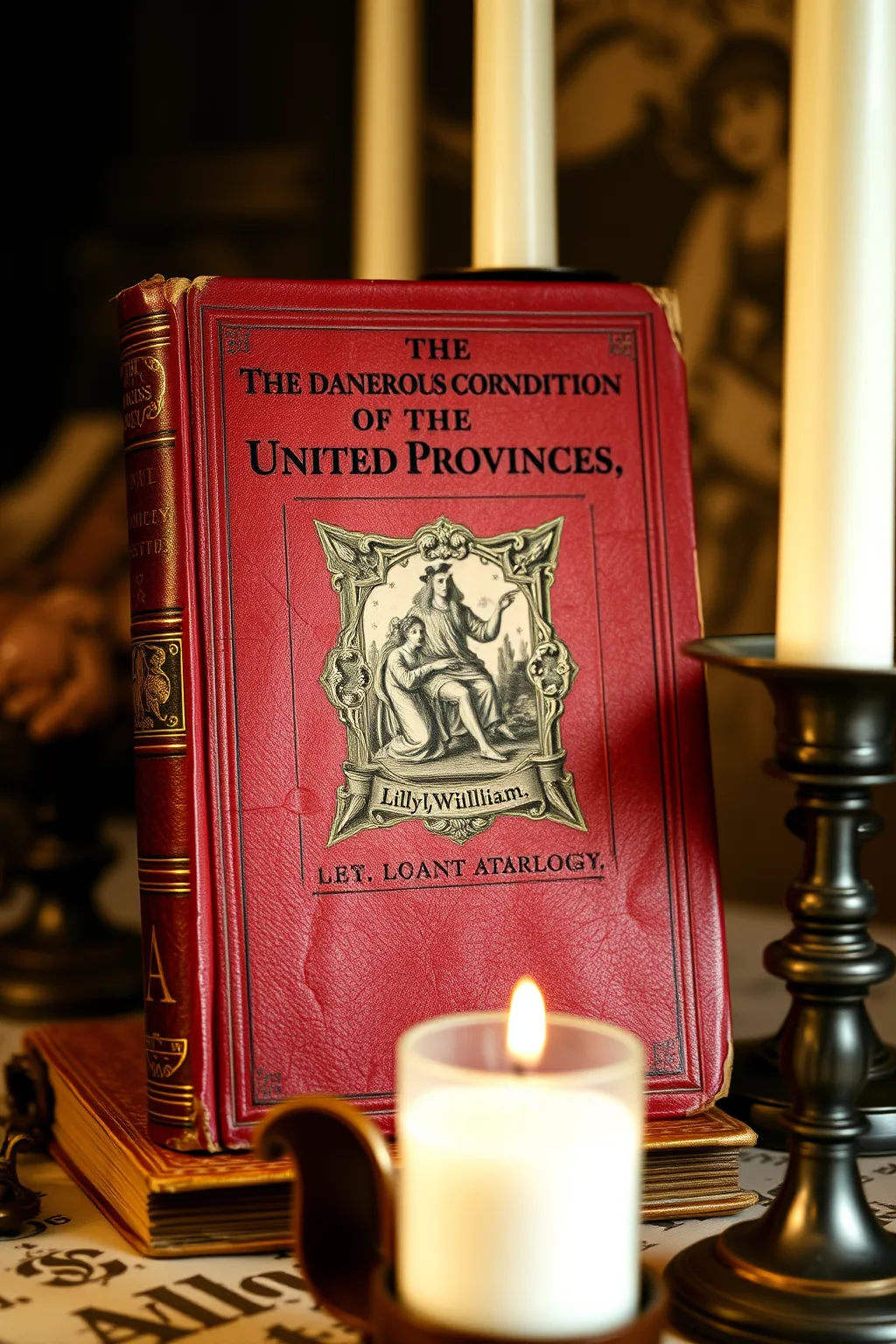
The dangerous condition of the United Provinces Prognosticated, ... 1672
 75
75

The dangerous condition of the United Provinces Prognosticated, ... 1672


William Lilly's 'The Dangerous Condition of the United Provinces Prognosticated' is a compelling testament to the enduring power of astrological prophecy. Lilly, a titan of 17th-century occultism, masterfully deciphers celestial portents, offering a darkly prescient analysis of a nation's precarious state. This work is particularly valuable for its intricate astrological reasoning, revealing the symbolic language used by practitioners to interpret world events. Its strength lies in its detailed predictions and the author's confident, authoritative voice. Ideal for scholars of esotericism, historians of astrology, and practitioners seeking to understand the historical application of predictive arts in statecraft and public affairs.
📝 Description
75
Step into the shadowed halls of 1672 with William Lilly’s 'The Dangerous Condition of the United Provinces Prognosticated'. This scarce volume is a potent artifact from an era steeped in celestial divination and prescient warnings. Lilly, a master astrologer and occultist, peers through the veil of cosmic influence to chart the turbulent destiny of the United Provinces. More than a mere historical tract, it's an invitation to explore the intricate tapestry of fate as understood by Renaissance mystics. Each page whispers of hidden currents, of planetary alignments dictating earthly affairs, and of the unseen forces that shape nations. For the discerning reader who seeks to understand the intersection of politics, prophecy, and the arcane arts, this work offers a glimpse into a worldview where the heavens held dominion over the terrestrial realm. It is a challenging yet rewarding journey into the mind of a seer, offering profound insights into the anxieties and aspirations of a world poised on the brink of change, all interpreted through the lens of sacred astrological lore.
✍️ Author
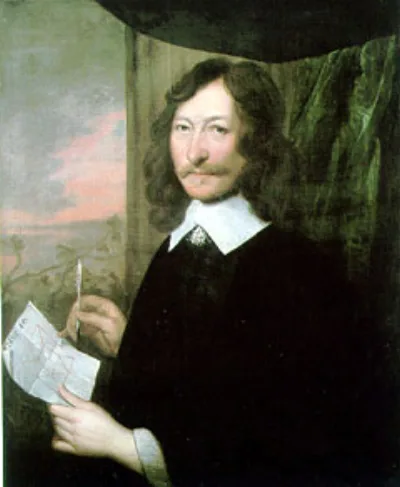
Lilly, William.
William Lilly (11 May [O.S. 1 May] 1602 – 9 June 1681) was a seventeenth century English astrologer.
💡 Why Read This Book?
Unravel the celestial prophecies of a turbulent era with a master astrologer. 'The Dangerous Condition of the United Provinces Prognosticated' offers a rare glimpse into 17th-century foresight, revealing the esoteric underpinnings of political forecasting. Ideal for seekers of hidden knowledge, students of occult history, and those fascinated by the ancient art of astrological prediction.
⭐ Reader Reviews
Honest opinions from readers who have explored this book.
❓ Frequently Asked Questions
Who was William Lilly and why is he significant?
William Lilly (1602–1681) was a prominent English astrologer and occultist, often referred to as 'the English Merlin'. He was renowned for his accurate astrological predictions, particularly concerning political events, making him a highly influential figure in 17th-century England.
What is the historical context of this book?
Published in 1672, this work reflects the anxieties and political machinations of the Anglo-Dutch Wars and the volatile European landscape of the late 17th century. It demonstrates how astrology was consulted for guidance and foresight during times of uncertainty.
What makes this book 'esoteric'?
The book is esoteric because it interprets worldly events through the lens of astrology, a system of belief that posits a connection between celestial bodies and human affairs. It delves into symbolic language and divination, aiming to reveal hidden truths about destiny.
Is this book suitable for beginners in occult studies?
While challenging due to its historical language and astrological jargon, it can be accessible to dedicated beginners interested in the history of divination and the practical application of astrology in historical contexts. Prior familiarity with basic astrological concepts would be beneficial.
What kind of 'dangerous condition' is prognosticated?
The 'dangerous condition' refers to the political, military, and potentially social or economic instability foreseen for the United Provinces (the Dutch Republic) in 1672, as interpreted through Lilly's astrological charts and celestial portents.
🔮 Key Themes & Symbolism
Celestial Determinism and Human Agency
This theme explores the 17th-century belief that celestial bodies exert a profound influence over earthly events, including the fate of nations. Lilly's work posits that astrological configurations are not merely coincidental but indicative of an underlying cosmic order guiding human destiny. It questions the extent to which individuals and states can alter their predetermined paths when faced with the immutable laws of the heavens. The text invites contemplation on the interplay between fate and free will, asking readers to consider whether humanity is a mere pawn of the stars or possesses the capacity to navigate and perhaps defy cosmic decrees.
The Art of Astrological Prognostication
At its core, this book is a practical demonstration of astrological prognostication as practiced in the 17th century. Lilly meticulously details his methods for interpreting planetary positions, aspects, and transits to forecast future events. The work serves as an invaluable resource for understanding the technical language and symbolic lexicon of Renaissance astrology, revealing how practitioners correlated celestial phenomena with terrestrial occurrences. It highlights the sophistication of these ancient arts and their role in providing guidance and perceived certainty in an often unpredictable world, offering a window into the intellectual and spiritual landscape of the era.
Political Divination and National Destiny
This theme delves into the application of esoteric knowledge for political forecasting. Lilly's prognostication for the United Provinces was not merely an academic exercise but a crucial tool for understanding national vulnerability and potential crises. The book illuminates how leaders and the populace alike sought answers in the stars during times of war and political upheaval. It underscores the historical significance of prophecy in shaping perceptions of national identity, security, and future trajectory, inviting reflection on the enduring human desire to anticipate and prepare for the challenges that lie ahead.
💬 Memorable Quotes
“The Heavens declare a tempest.”
— This concise statement encapsulates the core astrological warning, suggesting impending chaos and upheaval for the United Provinces, as foretold by celestial patterns.
“When Mars doth glare with baleful aspect...”
— This refers to the malevolent influence of the planet Mars, traditionally associated with war, conflict, and destruction, when it forms unfavorable alignments.
“The orb of Saturn casts a long shadow.”
— Saturn, symbolizing restriction, hardship, and karmic lessons, is depicted as casting an ominous influence, signifying a period of significant challenges and limitations.
“Fortune's wheel doth turn with ill intent.”
— This quote suggests that the inherent cycles of fortune are currently unfavorable, indicating a period where luck and prosperity are likely to be absent or even reversed.
“The threads of fate are tightly spun.”
— This evokes a sense of inescapable destiny, implying that the future events are predetermined and perhaps unalterable, woven by cosmic forces beyond human control.
🌙 Esoteric Significance
Tradition
This work is firmly rooted in the Western Esoteric Tradition, specifically within the lineage of Renaissance Judicial Astrology. It draws upon ancient Babylonian, Hellenistic, and Medieval astrological systems, reinterpreted and applied to contemporary political events. Lilly's methodology aligns with the hermetic principle of 'as above, so below,' viewing the cosmos as a living, interconnected entity whose patterns directly mirror and influence terrestrial occurrences. It represents a practical application of occult philosophy for divinatory purposes.
Symbolism
The symbolism in this text is primarily astrological. Planets like Mars (war), Saturn (hardship, restriction), and Jupiter (fortune, expansion) are imbued with specific meanings and influences. Aspects (angles between planets) carry symbolic weight, with conjunctions, oppositions, and squares often signifying conflict or significant change. The 'dangerous condition' itself is a symbolic representation of national vulnerability and impending crisis, interpreted through the symbolic language of the zodiac and planetary movements.
Modern Relevance
In a contemporary world still grappling with geopolitical instability and the desire for foresight, Lilly's work offers a historical perspective on how humanity has sought to understand and predict the future. While modern science may dismiss astrological determinism, the underlying human impulse to find patterns, seek guidance, and prepare for adversity remains potent. This text encourages a critical examination of belief systems, the power of narrative, and the enduring human fascination with the unknown, offering valuable insights into historical consciousness and the evolution of predictive arts.
👥 Who Should Read This Book
This volume is a treasure for several distinct audiences. For the **occult historian** and **scholar of esotericism**, it provides primary source material on 17th-century astrological practice and its application to political prognostication. **Astrology practitioners**, particularly those interested in traditional or horary astrology, will find Lilly's methodology and reasoning invaluable for historical context and study. **Seekers of esoteric knowledge** interested in understanding how past societies interpreted fate and the cosmos will find a rich, albeit challenging, exploration. **Students of early modern Europe** and the history of divination will gain a unique perspective on the intellectual and cultural landscape of the era. Beginners may find the dense language and astrological jargon challenging, but dedicated individuals will be rewarded.
📜 Historical Context
Published in 1672, 'The Dangerous Condition of the United Provinces Prognosticated' emerges from a period of intense geopolitical flux and intellectual curiosity. Europe was embroiled in the tumultuous era of the Third Anglo-Dutch War, a conflict that deeply impacted the maritime powers. In England, amidst political intrigue and societal anxieties, astrology and occult sciences were not fringe interests but were often consulted by individuals and even figures of authority for insight into future events. William Lilly, a celebrated astrologer known for his public pronouncements, operated within this climate. His work reflects the prevailing worldview where celestial movements were believed to hold profound significance for earthly affairs, influencing not just personal lives but the destinies of nations.
📔 Journal Prompts
Reflect on the concept of 'celestial determinism' presented by Lilly. How does this differ from modern understandings of causality?
Consider the role of fear and uncertainty in driving the demand for prophecy. How does this relate to contemporary societal anxieties?
Analyze the symbolic language of astrology used in the text. What planetary influences do you perceive in current global events?
Imagine you are a contemporary of Lilly. How might this prognostication influence your perception of the United Provinces' future?
Explore the idea of 'hidden knowledge' in esoteric traditions. What is its perceived value, and how does it differ from scientific knowledge?
🗂️ Glossary
Prognosticated
Predicted or foretold, especially based on signs or indications. In this context, it refers to predictions made using astrological means.
United Provinces
The historical name for the Dutch Republic, a confederation of seven provinces that existed from the late 16th to the late 18th century, known for its maritime power and trade.
Baleful Aspect
In astrology, an unfavorable or malefic alignment between celestial bodies, particularly planets associated with negative influences like Mars or Saturn.
Orb
A celestial body, typically a planet. Refers to the apparent size and shape of a planet in the sky, often used poetically.
Hermetic
Relating to Hermes Trismegistus or the esoteric philosophical and religious traditions attributed to him, often characterized by a belief in hidden knowledge and the interconnectedness of the universe.