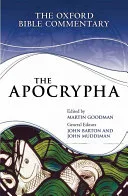
The Apocrypha
 72
72

The Apocrypha
The Oxford Bible Commentary's treatment of the Apocrypha offers a valuable, if somewhat dry, academic dissection of these often-overlooked texts. Goodman, Barton, and Muddiman provide meticulous, verse-by-verse analysis that certainly fulfills their promise of scholarly depth. The commentary shines in its detailed historical context, particularly in illuminating the societal pressures and theological debates of the Second Temple period that birthed these writings. For instance, the explanations surrounding the book of Tobit offer significant insight into Hellenistic influences on Jewish life. However, the commentary’s commitment to a strictly non-denominational, academic tone, while laudable for its impartiality, can sometimes strip the texts of their spiritual resonance for readers seeking more devotional engagement. The extensive scholarly apparatus, while accurate, may prove dense for casual readers. Ultimately, this is a reference work for serious study, not a devotional guide.
📝 Description
72
### What It Is The Apocrypha refers to a collection of ancient Jewish religious texts that were not included in the canonical Hebrew Bible (Tanakh) but were accepted into the Old Testament by Christian churches, particularly those following the Septuagint tradition. These texts, written between roughly 400 BCE and 100 CE, bridge the gap between the Old and New Testaments, offering a window into the religious and historical landscape of Second Temple Judaism. They encompass a variety of genres, including historical narratives, wisdom literature, apocalyptic visions, and expansions on biblical stories.
### Who It's For This specific edition, attributed to Martin Goodman, John Barton, and John Muddiman and first published in 2012, is presented as a scholarly resource for 21st-century students and readers. It aims to provide verse-by-verse explanations of each book, drawing on the expertise of leading biblical scholars. The commentary is designed to be non-denominational, making it accessible to individuals from diverse faith backgrounds or those approaching the texts from a purely academic or historical perspective. Its readability is a key feature for those engaging with complex theological and historical material.
### Historical Context The Apocrypha's inclusion in various biblical canons has been a subject of debate and theological distinction throughout history. While the Protestant Reformation, influenced by figures like Martin Luther, largely excluded these books from their Bibles (classifying them as apocryphal but not canonical), the Catholic and Orthodox churches continue to consider many of them to be divinely inspired scripture. The Septuagint, an ancient Greek translation of the Hebrew Bible, included these works, influencing early Christian biblical texts. Understanding the Apocrypha requires acknowledging this complex reception history and the different textual traditions that shaped biblical collections over centuries.
### Key Concepts The texts within the Apocrypha explore a range of significant theological and philosophical ideas relevant to the intertestamental period. They often delve into themes of divine justice, human wisdom, the nature of suffering, and the role of divine providence in history. Concepts such as angelology, demonology, and the expectation of a coming messianic age are frequently explored, providing context for the development of early Christian thought. The exploration of these themes offers readers a deeper appreciation for the intellectual and spiritual environment that preceded and coincided with the New Testament era.
💡 Why Read This Book?
• Gain an understanding of the historical and theological milieu that bridges the Old and New Testaments, as detailed in the commentary's explanations of texts like the Wisdom of Solomon. • Appreciate the scholarly debate surrounding the canonization of biblical texts, learning why certain books were included or excluded by different traditions since the Reformation. • Examine specific theological concepts such as angelology and eschatology as they developed in Second Temple Judaism, as explored in sections discussing apocalyptic literature.
⭐ Reader Reviews
Honest opinions from readers who have explored this book.
❓ Frequently Asked Questions
What is the primary purpose of the Oxford Bible Commentary's section on the Apocrypha?
The primary purpose is to provide a scholarly, verse-by-verse explanation of the Apocryphal books for 21st-century students and readers, offering historical context and theological analysis in a non-denominational manner.
Which biblical traditions include the Apocrypha as canonical?
The Catholic and Orthodox Christian traditions generally include many of the books of the Apocrypha as canonical scripture, often referring to them as the Deuterocanonical books.
When were the texts within the Apocrypha primarily written?
The texts comprising the Apocrypha were primarily written during the Second Temple period, roughly between 400 BCE and 100 CE.
How does the commentary address different faith backgrounds?
The commentary is carefully written and edited to be completely non-denominational, ensuring it is readable and useful for readers from all different faith backgrounds or none.
What kind of content can be found in the Apocrypha?
The Apocrypha contains a variety of literary forms including historical narratives (e.g., 1 Maccabees), wisdom literature (e.g., Ecclesiasticus), apocalyptic visions, and expansions on biblical stories (e.g., additions to Esther and Daniel).
What is the significance of the Septuagint in relation to the Apocrypha?
The Septuagint, an ancient Greek translation of the Hebrew Bible, included many of these Apocryphal texts, which subsequently influenced early Christian biblical collections and canon formation.
🔮 Key Themes & Symbolism
Bridging Scripture
The Apocrypha acts as a crucial literary and theological bridge between the Old and New Testaments. Its texts explore the evolving religious thought, messianic expectations, and historical narratives of Judaism during the crucial centuries leading up to the Common Era. The commentary illuminates how these books address themes like divine justice and human wisdom, offering context for the emergence of early Christian doctrines and the Jewish environment from which Christianity arose.
Canon Formation Debates
The inclusion and exclusion of the Apocryphal books from various biblical canons represent significant historical and theological debates. This work details the historical reception of these texts, noting their presence in the Septuagint and their subsequent differing status in Protestant, Catholic, and Orthodox traditions. Understanding this history is key to appreciating the development of authoritative scripture across different branches of Western religion.
Wisdom and Divine Providence
Several books within the Apocrypha, such as Wisdom of Solomon and Ecclesiasticus (Sirach), focus intently on the nature of wisdom, its divine origin, and its application to ethical living. The commentary unpacks these discussions, exploring how ancient authors grappled with questions of fate, free will, and the overarching guidance of a benevolent, albeit sometimes mysterious, divine power in human affairs.
Intertestamental Judaism
This collection provides unparalleled insight into the diverse religious landscape of Second Temple Judaism. It reveals the presence of various interpretative traditions, the engagement with Hellenistic philosophy and culture, and the development of concepts like angelology and the resurrection. The commentary contextualizes these texts within their original historical milieu, offering a window into a pivotal era of religious evolution.
💬 Memorable Quotes
“The commentary offers verse-by-verse explanation of every book of the Bible by the world's leading biblical scholars.”
— This statement highlights the academic rigor and collaborative nature of the Oxford Bible Commentary, emphasizing its aim to present authoritative interpretations of biblical texts.
“OBC has been designed as a completely non-denominational commentary.”
— This principle underscores the intention to make the scholarly analysis accessible and neutral, avoiding the biases of any single religious denomination for broader readership.
“It offers verse-by-verse explanation... for readers from all different faith backgrounds.”
— This emphasizes the practical application of the commentary's scholarship, aiming to serve a wide audience regardless of their personal religious affiliation or level of theological background.
“The work explores themes of divine justice, human wisdom, and the nature of suffering.”
— This paraphrased concept points to the core philosophical and theological inquiries addressed within the Apocryphal texts themselves, as analyzed by the scholars in the commentary.
“It uses the t...”
— This incomplete phrase suggests the commentary likely discusses specific methodologies, textual criticism, or historical approaches employed in its analysis of the Apocrypha.
🌙 Esoteric Significance
Tradition
While not strictly belonging to a single esoteric lineage like Hermeticism or Kabbalah, the Apocrypha is deeply significant for Western esoteric traditions due to its exploration of themes that later became central to occult studies. Its focus on angelology, demonology, divine wisdom, and apocalyptic prophecy provides foundational material for understanding the conceptual development that informed later esoteric systems. It represents a critical juncture where Jewish thought, influenced by surrounding cultures, began to articulate ideas about hidden knowledge and celestial hierarchies that resonated with mystical seekers.
Symbolism
The Apocrypha is rich with symbolism relevant to esoteric interpretation. The figure of Enoch, who 'walked with God' and was taken up, serves as an archetype of divine ascent and hidden knowledge. Angelic hierarchies and interactions, particularly prominent in texts like the Book of Enoch (though not always included in standard Apocryphal collections), offer complex symbolic systems of celestial governance and spiritual intermediaries. Furthermore, apocalyptic visions often employ symbolic language to represent cosmic struggles between good and evil, divine judgment, and the unfolding of sacred history.
Modern Relevance
Contemporary esoteric practitioners and scholars of Western esotericism frequently engage with the Apocrypha. Its texts inform studies in areas such as angel magic, Gnostic and Hermetic origins, and the historical development of apocalyptic thought. Thinkers exploring the roots of Western mysticism find in the Apocrypha a crucial link between ancient Hebrew cosmology and later Gnostic and Neoplatonic systems. The book's influence can be seen in various modern occult orders and in academic approaches to comparative religion and the history of ideas.
👥 Who Should Read This Book
['• Academic researchers of the Second Temple period will find the detailed historical and textual analysis indispensable for understanding the religious landscape of ancient Judaism.', "• Students of comparative religion will benefit from the commentary's insights into the development of biblical canons and the theological dialogues between Jewish and early Christian thought.", "• Individuals interested in the origins of Western esoteric traditions can explore the Apocrypha's discussions on angelology, wisdom, and prophecy, which later influenced occult literature."]
📜 Historical Context
The Apocrypha emerged from the fertile ground of Second Temple Judaism, a period spanning from the rebuilding of the Temple around 516 BCE to its destruction by the Romans in 70 CE. This era was marked by significant intellectual and religious ferment, influenced by Persian and Hellenistic empires. Jewish thinkers engaged with diverse philosophical ideas, leading to the development of new theological concepts, including a more formalized angelology and demonology, and heightened messianic expectations. The Septuagint, a Greek translation initiated in Alexandria around the 3rd century BCE, played a crucial role in disseminating these texts beyond Hebrew speakers. Early Christian writers, familiar with the Septuagint, incorporated many of these books into their scriptural understanding. However, the Protestant Reformation in the 16th century, championed by figures like Martin Luther, led to a re-evaluation of canonical boundaries, with Luther classifying these texts as 'apocryphal' but not fully canonical, a distinction that profoundly shaped Western biblical traditions.
📔 Journal Prompts
The concept of divine wisdom as presented in the Wisdom of Solomon, its attributes and accessibility.
Reflect on the historical reception of the Apocrypha and its varying canonical status across different Christian traditions.
Consider the role of angelic beings and their interactions as depicted in Apocryphal narratives.
Analyze the apocalyptic visions within the Apocrypha and their potential symbolic meanings for cosmic order.
The historical context of Second Temple Judaism and its influence on the themes explored in these texts.
🗂️ Glossary
Apocrypha
A collection of ancient Jewish religious texts written between approximately 400 BCE and 100 CE, not included in the Hebrew Bible but accepted into the Old Testament by some Christian traditions.
Septuagint
An ancient Greek translation of the Hebrew Bible, traditionally dated to the 3rd century BCE, which included many books now known as the Apocrypha.
Second Temple Period
The era of Jewish history from the completion of the Second Temple around 516 BCE until its destruction by the Romans in 70 CE, a time of significant religious and cultural development.
Canon
The official list of books considered to be sacred scripture within a religious tradition. The formation of the biblical canon was a complex historical process.
Non-denominational
Not affiliated with or representing a specific religious denomination; aiming for impartiality and broad appeal across different faith backgrounds.
Angelology
The study or belief in angels, including their nature, hierarchy, and roles. This was a developing area of thought in the intertestamental period.
Deuterocanonical
A term used by Catholic and Orthodox Christians for the books of the Apocrypha that they consider canonical scripture, meaning 'second canon'.