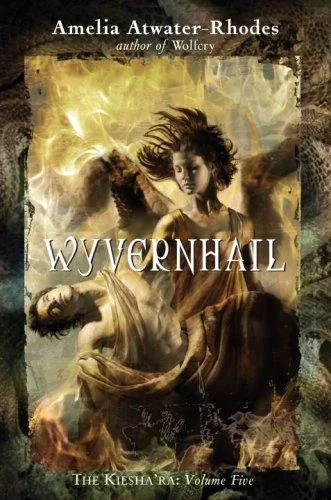
Wyvernhail: The Kiesha'ra
 76
76

Wyvernhail: The Kiesha'ra
Amelia Atwater-Rhodes’s Wyvernhail: The Kiesha'ra posits an interesting premise, focusing on inherited power and the burdens it carries. The strength of the work lies in its ambition to construct a unique mythology, hinting at ancient conflicts and supernatural lineages that feel distinct. However, the narrative occasionally falters under the weight of its own lore, with exposition sometimes crowding the character development. The depiction of the protagonist’s internal conflict regarding their predetermined fate, particularly in relation to the 'Kiesha'ra,' is a compelling element. While the prose is functional, it doesn't always elevate the fantastical elements to their full potential. Ultimately, Wyvernhail offers a solid foundation for a supernatural saga, even if it leaves room for deeper exploration in its execution.
📝 Description
76
Amelia Atwater-Rhodes published Wyvernhail: The Kiesha'ra in 2008, a young adult fantasy novel.
This novel follows a young protagonist navigating a world where magic is tied to lineage and ancient beings influence mortal affairs. The narrative weaves a complex mythology, focusing on the protagonist's journey to understand their place within a larger cosmic order.
The story examines themes of destiny, power, and the nature of good and evil. It presents a world where characters grapple with internal struggles and external forces, shaped by their inherent magical abilities. Readers can expect a character-driven narrative with detailed world-building centered on supernatural elements.
Wyvernhail: The Kiesha'ra appeals to those interested in complex relationships, moral ambiguity, and the consequences of power. It also speaks to younger readers exploring identity and belonging within a fantastical setting.
Published in 2008, Wyvernhail: The Kiesha'ra fits within the young adult fantasy genre's growing interest in darker themes and complex supernatural characters. The novel's focus on a specific lineage of beings, the Kiesha'ra, and their tied magical powers, reflects a trend of detailed magical systems and explorations of morally gray figures. Amelia Atwater-Rhodes's work contributed to a literary space that blended mythology with contemporary storytelling, offering a distinct voice in a genre that was expanding its thematic scope.
💡 Why Read This Book?
• Gain insight into the concept of inherited destiny versus free will, as explored through the protagonist's struggle with their role within the 'Kiesha'ra' lineage, offering a unique perspective on choice. • Understand the symbolic weight of the 'wyvern' motif within the novel's mythology, providing a concrete example of how mythical creatures represent power dynamics and ancient origins. • Experience a narrative that grapples with the duality of light and shadow not as opposing forces, but as interconnected elements shaping existence, a concept explored through the book's character arcs.
⭐ Reader Reviews
Honest opinions from readers who have explored this book.
❓ Frequently Asked Questions
When was Wyvernhail: The Kiesha'ra first published?
Wyvernhail: The Kiesha'ra was first published in 2008 by Amelia Atwater-Rhodes, contributing to the young adult fantasy landscape of that era.
What is the main focus of the Kiesha'ra in the book?
The Kiesha'ra refers to a lineage or order of supernatural beings whose inherited powers and destinies form a central aspect of the novel's plot and character conflicts.
Does Wyvernhail: The Kiesha'ra involve dragons?
While the title references 'Wyvernhail,' suggesting a connection to wyverns, the book's lore centers on supernatural beings and their inherent powers rather than explicitly detailing dragon-like creatures in a traditional sense.
Who is the author of Wyvernhail: The Kiesha'ra?
The author is Amelia Atwater-Rhodes, known for her young adult fantasy novels that often delve into supernatural themes and complex mythologies.
What kind of themes are explored in Wyvernhail: The Kiesha'ra?
The book explores themes of destiny, power, the nature of good and evil, identity, and the conflict between predetermined roles and personal choice within a rich fantasy setting.
Is Wyvernhail: The Kiesha'ra part of a series?
Yes, Wyvernhail: The Kiesha'ra is part of The Kiesha'ra series by Amelia Atwater-Rhodes, with subsequent books continuing the narrative and expanding the world.
🔮 Key Themes & Symbolism
Inherited Destiny and Choice
The narrative frequently examines the tension between a character's predetermined fate and their capacity for individual choice. The concept of the Kiesha'ra, a powerful lineage, often imposes a specific path on its members. This theme explores whether individuals are bound by their ancestry or if they can forge their own identities and futures, even when faced with immense inherited responsibilities and powers. It questions the very nature of free will when confronted with deeply ingrained legacies and supernatural mandates.
The Nature of Supernatural Power
Wyvernhail delves into the complexities of wielding power, particularly when it is inherent and tied to ancient supernatural orders. The book portrays power not merely as a tool but as a force that shapes character, relationships, and the world around them. It touches upon the corrupting influence of power, the burden of its use, and the ethical considerations that arise. The 'wyvern' aspect hints at primal forces and ancient might, suggesting that such power comes with significant risks and responsibilities.
Mythological Framework
The novel constructs a unique mythology, drawing on archetypal elements of fantasy literature while establishing its own lore. The 'Kiesha'ra' serves as a foundational element of this mythology, defining a specific group with unique characteristics and histories. This framework allows the author to explore themes of ancient origins, cyclical conflicts, and the interplay between mortal and supernatural realms, creating a rich backdrop for the unfolding narrative and character arcs.
Duality and Balance
While not overtly stated as a Gnostic or Manichaean struggle, the book explores the interplay of opposing forces. The concept of light and shadow, good and evil, is presented with nuance, suggesting these are not always clear-cut distinctions but rather interdependent aspects of existence. Characters often find themselves navigating gray areas, forcing them to confront moral ambiguities and understand that balance, rather than absolute victory of one side, may be the true underlying principle of their world.
💬 Memorable Quotes
“The weight of the Kiesha'ra lineage.”
— This refers to the inherent burdens, responsibilities, and often predetermined destinies associated with being part of the ancient, supernatural Kiesha'ra order, highlighting the struggle between personal will and ancestral legacy.
“The inherent power tied to bloodlines.”
— This concept underscores the novel's exploration of how supernatural abilities and destinies are passed down through generations, forming a core element of character identity and plot development.
“Navigating the balance between opposing forces.”
— This suggests the narrative's engagement with themes of duality, where characters must reconcile or manage conflicting influences, whether internal moral struggles or external cosmic powers.
“The symbolic meaning of the wyvern.”
— The 'wyvern' motif likely represents ancient power, danger, and primal forces within the book's mythology, serving as a symbol that characters and readers must interpret to understand the world's underpinnings.
“Destiny etched in ancient pacts.”
— This phrase points to the idea that characters' fates are often preordained by ancient agreements or historical events, creating a framework of destiny that the protagonists must confront.
🌙 Esoteric Significance
Tradition
While not strictly adhering to a single esoteric tradition, Wyvernhail engages with archetypes common in Western esotericism, particularly Gnosticism and Hermeticism, through its focus on inherent knowledge, lineage-based power, and the struggle against predetermined fates or corrupting influences. The concept of a hidden order (the Kiesha'ra) and the exploration of dualistic forces echo Gnostic dualism. It departs by framing these within a YA fantasy narrative, making complex ideas accessible without explicit doctrinal adherence.
Symbolism
The 'Kiesha'ra' itself symbolizes an ancient, potent lineage, representing inherited power, destiny, and potentially, a form of secret knowledge or spiritual attainment passed down through generations. The 'wyvern' motif likely serves as a symbol of primal power, ancient wisdom, and formidable, perhaps dangerous, natural or supernatural forces, embodying the raw energy that characters must contend with or master.
Modern Relevance
Contemporary fantasy authors and readers interested in intricate mythologies and the philosophical underpinnings of destiny continue to find resonance in works like Wyvernhail. Its exploration of inherited power and the tension between free will and fate aligns with ongoing discussions in philosophical and psychological circles. The book's approach to supernatural beings and their societal impact offers a lens through which to examine power structures and identity formation, relevant to modern explorations of selfhood and belonging.
👥 Who Should Read This Book
• Aspiring writers of young adult fantasy seeking examples of detailed world-building and unique supernatural lore. • Readers interested in exploring themes of destiny, inherited power, and the conflict between fate and free will within a fictional context. • Fans of supernatural fiction who appreciate narratives centered around ancient lineages and their impact on characters' lives and choices.
📜 Historical Context
Published in 2008, Wyvernhail: The Kiesha'ra arrived during a vibrant period for young adult fantasy, a genre increasingly populated by complex mythologies and morally ambiguous characters. Amelia Atwater-Rhodes's work entered a market alongside authors like Stephenie Meyer, whose Twilight series also explored supernatural romance and ancient beings, and Cassandra Clare, whose Mortal Instruments series offered intricate urban fantasy worlds. The early 2000s saw a surge in interest for detailed lore and supernatural elements, moving beyond simpler magical tales. Wyvernhail contributed to this trend by presenting a distinct supernatural lineage, the Kiesha'ra, and exploring themes of inherited power and destiny within its own unique framework. The reception of such works often highlighted their world-building capabilities and their appeal to a generation seeking deeper, more intricate fantasy narratives.
📔 Journal Prompts
The burdens and privileges of the Kiesha'ra lineage.
Reflecting on the symbolic weight of the wyvern.
How inherited power shapes character choices.
The concept of destiny etched in ancient pacts.
Navigating the balance between opposing forces in one's own life.
🗂️ Glossary
Kiesha'ra
A central concept in the novel, referring to an ancient lineage or order of supernatural beings. Membership implies inherited powers, specific destinies, and often, significant responsibilities within the book's mythology.
Wyvern
A mythical winged creature, often depicted as a dragon with two legs. In Wyvernhail, the term likely carries symbolic weight related to ancient power, primal forces, and perhaps a specific group or entity within the lore.
Destiny
The predetermined course of events that is often seen as unavoidable. In the novel, destiny is frequently linked to lineage and ancient pacts, creating a central conflict for characters grappling with their predetermined paths.
Supernatural Power
Abilities or influences that transcend the natural world. The book explores various forms of supernatural power, often tied to specific bloodlines or ancient orders like the Kiesha'ra, examining their origins and impact.
Lineage
A sequence of descendants of a particular ancestor. In Wyvernhail, lineage is crucial, as it often dictates a character's inherent powers, potential destinies, and their place within the supernatural hierarchy.
Mythology
A collection of myths or stories belonging to a particular culture or group. The novel constructs its own intricate mythology centered around the Kiesha'ra and other supernatural elements.
Duality
The state of having two parts, often seen as opposing forces like good and evil, light and shadow. The book explores how these forces interact and influence the narrative and characters.