Trollkarlens hatt
 83
83

Trollkarlens hatt
Tove Jansson's *Trollkarlens hatt* is a curious beast, less an adventure and more an extended, peculiar visitation. The arrival of the Sorcerer and his hat doesn't just disrupt the Moomin Valley; it fundamentally reorders it, turning the familiar into the peculiar. Jansson's genius lies in her understated presentation of the absurd. The talking hat, the flying carpets, the assorted magical creatures – they are simply *there*, integrated into the Moomins' world with a matter-of-factness that is both charming and subtly unsettling. The book’s strength is its ability to evoke a sense of wonder without resorting to manufactured excitement. Its limitation, however, is that the plot can feel somewhat episodic, a series of magical occurrences rather than a tightly wound narrative. The scene where the Moomins, Sniff, and Snufkin are temporarily transformed into something else entirely, a detail that highlights the book’s exploration of identity and change, is a prime example of Jansson’s subtle yet potent magic. This is not a story of grand quests, but of quiet enchantments and the peculiar ways we adapt.
📝 Description
83
Tove Jansson's 1950 book, Trollkarlens hatt, introduces a sorcerer whose hat alters reality.
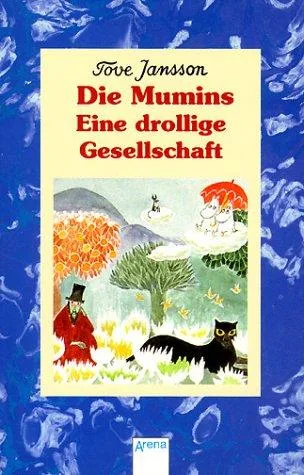
Trollkarlens hatt, or The Hat of the Wizard, is the third Moomin book by Tove Jansson, published in 1950. This installment moves beyond the Moomin Valley's earlier, simpler days. It introduces the Sorcerer and his talking top hat, which has the power to change things fundamentally. The narrative unfolds in Moomin Valley, a setting where unusual events are common. Jansson blends gentle humor and adventure with deeper observations, presenting characters and situations that test the Moomins' usual way of life. The book appeals to readers who enjoy stories with allegorical elements and social commentary woven into fantasy. It offers layers of meaning suitable for adults as well as younger readers, exploring themes of identity, belonging, and the nature of power. Fans of Jansson's distinct style and imaginative world-building will recognize her charm, while new readers can discover the depth that makes the Moomin series notable.
Published in the wake of World War II, Trollkarlens hatt emerged during a period of significant European philosophical shifts. Jansson's work, while seemingly light, responded to the era's anxieties with a unique blend of fantasy and introspection. The Moomin stories, originating in 1945, gained wider recognition as existentialism and new social ideas took hold in the 1950s and 60s. Jansson's narrative voice and character work offered a distinct perspective compared to other children's literature of the time.
💡 Why Read This Book?
• Gain insight into the nature of transformation through the Moomins' encounters with the Sorcerer's hat, understanding how external magical forces can reveal internal shifts. • Explore themes of authority and adaptation by observing how the Moomin Valley community responds to the unpredictable magic introduced in 1950, challenging established norms. • Experience Jansson's unique blend of whimsical narrative and philosophical undertones, a style that distinguishes her work from other children's literature of the mid-20th century.
⭐ Reader Reviews
Honest opinions from readers who have explored this book.
❓ Frequently Asked Questions
What is the original publication year of Trollkarlens hatt?
Trollkarlens hatt was first published in 1950, marking its place in mid-20th-century children's literature.
Who is the author of Trollkarlens hatt?
The author is Tove Jansson, a celebrated Finnish artist and writer known for the Moomin series.
What is the significance of the Sorcerer in Trollkarlens hatt?
The Sorcerer, with his magical hat, introduces elements of the extraordinary and tests the Moomins' capacity for accepting the unusual and unexpected.
Does Trollkarlens hatt belong to a series?
Yes, Trollkarlens hatt is the third book in the Moomin series, following Comet in Moominland and Moomintroll and the Comet.
Are there specific symbols associated with Trollkarlens hatt?
The primary symbol is the Sorcerer's hat itself, representing unpredictable magic, transformation, and the disruption of the ordinary.
What kind of reception did Trollkarlens hatt receive upon its release?
As part of the Moomin series, it contributed to Jansson's growing international recognition, solidifying her unique voice in children's literature.
🔮 Key Themes & Symbolism
Transformation and Identity
The Sorcerer's hat in *Trollkarlens hatt* serves as a catalyst for profound changes, not just in the environment but within the characters themselves. When the hat falls upon Moomintroll's head, it initiates a series of transformations that question the very nature of self. This aligns with esoteric traditions that view external magical influences as mirrors to internal states of being, suggesting that perceived reality can be reshaped by shifts in consciousness. The book explores how identity is fluid and can be altered by circumstance, a concept echoed in alchemical processes of transmutation.
The Nature of Authority
The Sorcerer himself, a figure of immense magical power, embodies a complex form of authority. He is not a malevolent force but an enigmatic presence whose actions, though disruptive, are often driven by a detached curiosity. This portrayal offers an esoteric perspective on power, suggesting that true authority lies not in coercion but in understanding and subtle influence. The Moomins' interactions with him, their initial apprehension giving way to acceptance of his peculiar ways, highlight the esoteric principle of observing and learning from phenomena rather than resisting them outright.
The Mundane and the Magical
Jansson masterfully blends the ordinary lives of the Moomins with extraordinary magical events, exemplified by the flying carpet and the enchanted hat. This fusion reflects an esoteric worldview where the magical is not separate from the everyday but an inherent aspect of it. The book suggests that by maintaining a state of openness and wonder, as the Moomins do, one can perceive the enchantment woven into the fabric of existence. The Moominhouse, usually a symbol of stability, becomes a site where the veil between worlds is thin.
Community and Belonging
Despite the magical disruptions, the core of *Trollkarlens hatt* remains the Moomins' enduring sense of community. Even when faced with bizarre transformations and the arrival of powerful figures like the Sorcerer, the Moomins strive to maintain their bonds and their home. This emphasis on collective well-being and mutual acceptance speaks to esoteric philosophies that prioritize harmony and interconnectedness. The book implicitly argues that true belonging is found not in sameness but in embracing diversity and supporting one another through change.
💬 Memorable Quotes
Direct passages from the work, attributed to the author.
“The Sorcerer was an old man with a long beard and a tall hat. He was looking for his cat.”
— This simple introduction establishes the Sorcerer's primary motivation and hints at a deeper, perhaps allegorical, quest. His search for a lost companion suggests themes of seeking what is lost or incomplete, a common motif in esoteric journeys.
“Everything had become topsy-turvy. The trees had turned into mushrooms and the river flowed uphill.”
— This describes the immediate, chaotic impact of the Sorcerer's magic on the Moomin Valley. It illustrates how external forces can dramatically alter perceived reality, a concept explored in various mystical traditions where the world is seen as mutable.
“Moomintroll felt a strange feeling in his head. It was as if the hat was alive.”
— This captures the moment Moomintroll interacts with the magical hat, highlighting its sentience and influence. It suggests an object imbued with consciousness, a common element in magical lore and symbolism.
“When the hat was gone, things slowly returned to their normal shapes.”
— This signifies the temporary nature of the magical disruption and the subsequent return to a semblance of order. It implies that even profound changes can be transient, and stability can be restored.
“The Sorcerer thanked them and flew away in his hat, which seemed to be his carriage.”
— This depicts the Sorcerer's departure, reinforcing the hat's magical properties and his unique mode of transport. It leaves the reader with a lasting image of the extraordinary blending with the ordinary.
🌙 Esoteric Significance
Tradition
While not overtly aligned with a single esoteric lineage, *Trollkarlens hatt* draws from universal archetypes found in Hermeticism and Gnosticism. The Sorcerer embodies the figure of the magician or the demiurge, an agent of change and transformation who operates by different laws. The book's exploration of how reality can be altered by magical forces and consciousness echoes Gnostic ideas about the illusory nature of the material world and the potential for liberation through knowledge (gnosis). Jansson's work can be seen as a modern, accessible interpretation of these ancient themes, filtering them through a lens of accessible, imaginative storytelling.
Symbolism
The most potent symbol is the Sorcerer's hat, representing the unpredictable nature of magic, the transformative power of the unconscious, and the disruption of mundane reality. It acts as a catalyst, forcing characters to confront new possibilities and aspects of themselves. The flying carpet, another key element, symbolizes freedom, transcendence, and the ability to move beyond ordinary limitations. The Moominhouse itself symbolizes the stable inner self or community, which is tested but ultimately endures the external magical influences, showcasing resilience.
Modern Relevance
Contemporary thinkers and practitioners in fields ranging from Jungian psychology to creative writing find resonance in Jansson's nuanced portrayal of the psyche and her ability to externalize internal states through magical events. The Moomin stories are often referenced in discussions about resilience, emotional intelligence, and the importance of accepting neurodiversity, as many characters exhibit unique traits. The work's gentle subversion of conventional narrative structures also appeals to experimental artists and storytellers exploring alternative forms of expression.
👥 Who Should Read This Book
• Aspiring writers and artists seeking inspiration for character archetypes and imaginative world-building, particularly those interested in blending the mundane with the magical. • Readers of comparative mythology and folklore who are interested in modern interpretations of archetypal figures like the Sorcerer and the transformative power of magical objects. • Individuals exploring themes of identity, belonging, and personal transformation, who appreciate allegorical narratives that offer subtle philosophical insights without didacticism.
📜 Historical Context
Published in 1950, *Trollkarlens hatt* emerged in the wake of World War II, a period of significant cultural and intellectual flux across Europe. Tove Jansson's Moomin series, which began in 1945, offered a distinct voice amidst a landscape increasingly influenced by existentialist thought and a growing interest in psychology. While authors like C.S. Lewis were crafting allegorical Christian narratives in *The Chronicles of Narnia*, Jansson explored themes of belonging, identity, and the acceptance of the peculiar with a subtler, more nuanced touch. Her work, characterized by its combination of whimsy and melancholy, resonated with a post-war generation seeking both escapism and meaning. The book's reception was part of the Moomins' gradual rise to international acclaim, solidifying Jansson's reputation as a singular talent whose stories offered profound observations on human nature beneath their fantastical exteriors.
📔 Journal Prompts
The Sorcerer's hat as a symbol of unexpected change.
Moomintroll's temporary transformation and self-perception.
The community's response to the Sorcerer's arrival.
The nature of the Sorcerer's authority.
Accepting the fantastical elements in the Moomin Valley.
🗂️ Glossary
Moomintroll
The central protagonist of the Moomin series, a young, kind-hearted troll who lives in Moominhouse with his family. He embodies curiosity and a gentle nature.
The Sorcerer
An enigmatic, powerful figure who arrives in the Moomin Valley with a magical hat, causing significant disruption and transformation.
Moominhouse
The beloved, blue, tower-like home of the Moomin family, symbolizing comfort, stability, and belonging.
Flying Carpet
A magical mode of transportation used by the Sorcerer, representing freedom from earthly constraints and the ability to traverse realms.
Sniff
A small, excitable creature, a friend of Moomintroll, known for his love of treasure and his sometimes timid nature.
Snufkin
Moomintroll's best friend, a nomadic wanderer who loves music and nature, valuing freedom and simplicity above all else.
Hattifatteners
Mysterious, small, ghost-like creatures who wander the world in large herds, attracted to lightning and electricity.
🔮 Readers Also Liked
Browse all →









More by Tove Jansson
All books →


More Free Occult Philosophy Books
View all →