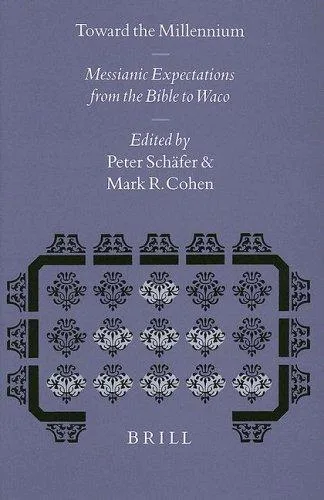
Toward the millenium
 75
75

Toward the millenium
Peter Schäfer and Mark R. Cohen's "Toward the Millennium" presents a rigorous, if dense, exploration of apocalyptic thought. Its strength lies in its meticulous attention to textual detail and its tracing of ideas across centuries of Jewish and Christian discourse. The book excels at contextualizing concepts like the "Son of Man" within their original historical settings, a feat often overshadowed by later theological interpretations. However, the sheer academic density can be a barrier for the uninitiated; it assumes a significant prior knowledge of biblical scholarship and classical languages. A passage discussing the Qumran scrolls' unique eschatological timelines, for instance, showcases the book's depth but also its potential inaccessibility. For scholars, it offers valuable insights; for general readers, it demands considerable effort. It stands as a significant academic contribution to understanding messianic expectation.
📝 Description
75
Peter Schäfer and Mark R. Cohen published "Toward the Millennium" in 1998, examining apocalyptic thought.
This scholarly work investigates apocalyptic thought and messianism, primarily within Jewish and early Christian traditions. The authors analyze the historical and theological currents that fueled expectations for an imminent end of days. They trace the development of these concepts from ancient times through the medieval period, noting their impact on religious and social movements. The book scrutinizes how ideas like the "kingdom of God," the role of the Messiah, and divine intervention shaped historical narratives and religious discourse.
It dissects the transition of these ideas from Jewish sectarianism to their reception and transformation within early Christianity and subsequent eschatological traditions. The analysis focuses on textual and ideological changes occurring across centuries. This examination contributes to a deeper comprehension of how eschatological beliefs influenced historical events and religious discussions.
The book situates itself within the study of messianic expectations and end-of-the-world beliefs prevalent in late antiquity and the Middle Ages. It maps the transmission and adaptation of these ideas across major Abrahamic traditions, particularly focusing on the historical evidence for their development. This scholarly approach grounds the study of esoteric traditions in verifiable historical and textual analysis, moving beyond purely speculative interpretations to understand the social and intellectual forces behind these powerful beliefs.
💡 Why Read This Book?
• Gain a precise understanding of how early Jewish messianic expectations differed from later Christian interpretations, as detailed in the analysis of Second Temple Judaism texts. • Grasp the specific historical conditions in 1st-century Judea that fueled apocalyptic fervor, moving beyond generalized notions of "end times" anxiety. • Learn about the evolution of the concept of a "Son of Man" from its roots in Daniel to its application in early Christian eschatology.
⭐ Reader Reviews
Honest opinions from readers who have explored this book.
❓ Frequently Asked Questions
What is the primary focus of "Toward the Millennium"?
The book primarily focuses on the historical development and interpretation of apocalyptic thought and messianism, particularly within Jewish and early Christian traditions from antiquity through the medieval period.
Who are the main scholarly figures associated with the concepts discussed?
The work engages with scholars who study ancient Judaism and early Christianity, tracing ideas related to messianism and eschatology. It builds upon the scholarship of figures analyzing texts from the Second Temple period and beyond.
Does the book cover modern millennial movements?
While the book examines the historical roots of millennial thought, its primary focus is on ancient and medieval periods. It lays the groundwork for understanding later movements but does not extensively detail contemporary ones.
What kind of textual analysis does the book employ?
It employs rigorous philological and historical-critical methods to analyze primary texts, including biblical scriptures, pseudepigrapha, and early rabbinic literature, to understand the evolution of messianic and apocalyptic ideas.
What is the significance of the "Son of Man" concept in the book?
The book explores the "Son of Man" as a key messianic and eschatological figure, tracing its origins in texts like the Book of Daniel and its subsequent interpretations and adaptations in various Jewish and early Christian apocalyptic writings.
When was "Toward the Millennium" first published?
The original publication date for "Toward the Millennium" by Peter Schäfer and Mark R. Cohen was 1998.
🔮 Key Themes & Symbolism
Jewish Messianic Expectations
This work meticulously charts the diverse landscape of Jewish messianic thought prior to and concurrent with the emergence of Christianity. It highlights how expectations for a redeemer figure evolved, influenced by political oppression and theological interpretation. The book examines various conceptions, from Davidic restoration to apocalyptic deliverers, underscoring that "messiah" was not a monolithic concept before 70 CE.
Apocalyptic Worldviews
Toward the Millennium analyzes the core tenets of apocalyptic literature, focusing on its characteristic dualism, divine intervention in history, and the promise of a coming era of justice. It explores how these worldviews provided frameworks for understanding suffering and offered hope for a transformed future, particularly within marginalized communities of antiquity.
The 'Son of Man' Figure
A central theme is the investigation of the "Son of Man" figure. The book traces its roots in biblical prophecy, particularly Daniel, and examines its complex reception and transformation within early Jewish and Christian texts. It highlights how this enigmatic figure became a focal point for messianic and eschatological speculation.
Transition to Christianity
The book scrutinizes the points of continuity and divergence between Jewish messianic traditions and the nascent Christian movement. It explores how early Christians appropriated and reinterpreted Jewish eschatological motifs and messianic titles, such as "Son of Man" and "Christ," to articulate their unique theological claims.
💬 Memorable Quotes
“The expectation of a coming messianic age was deeply embedded in Jewish thought.”
— This statement underscores that messianism wasn't a fringe idea but a significant undercurrent within Judaism, shaping religious and social discourse across various communities.
“Early Christian interpretations of scripture often sought to identify messianic prophecies fulfilled in Jesus.”
— This highlights the hermeneutical strategy employed by early followers of Jesus, who used existing Jewish scriptures to validate their belief in his messianic status.
“Apocalyptic literature provided a framework for understanding historical upheavals as divine judgment and prelude to salvation.”
— This interpretation emphasizes the function of apocalyptic texts: to make sense of chaos and suffering by framing it within a divine plan leading to ultimate redemption.
“The figure of the 'Son of Man' carried profound eschatological significance in texts beyond the Gospels.”
— This points to the broader application and varied interpretations of the 'Son of Man' title within different Jewish and early Christian apocalyptic traditions, extending its importance beyond a singular Christological focus.
“Messianic hopes were often tied to political and social liberation.”
— This interpretation connects the abstract theological concept of a messiah to concrete desires for freedom from oppression and the establishment of a just society.
🌙 Esoteric Significance
Tradition
While not strictly an esoteric text itself, "Toward the Millennium" is foundational for understanding the esoteric dimensions of Western traditions, particularly those rooted in Abrahamic faiths. It provides essential historical and theological context for Kabbalah, Gnosticism, and later Christian mysticism, all of which engage deeply with messianic and apocalyptic themes. The book's rigorous academic approach grounds esoteric concepts in their historical origins, allowing practitioners to better understand the symbolic and spiritual weight they carry.
Symbolism
Key symbols explored include the "Son of Man," representing a divine intermediary and eschatological judge, and the "Kingdom of God," symbolizing a future era of divine rule and justice. The book also implicitly addresses the symbolism of apocalyptic visions – the beasts, the heavenly throne, and the cosmic battles – as metaphorical representations of historical struggles and divine sovereignty.
Modern Relevance
Contemporary scholars and practitioners of Western esotericism, particularly those interested in Jewish mysticism (Kabbalah) and Christian eschatology, draw heavily on the historical grounding provided by this work. Thinkers exploring the roots of concepts like the "Messiah" or the "End Times" find Schäfer and Cohen's analysis indispensable for understanding the complex origins and evolution of these ideas, informing modern interpretations of spiritual and cosmic timelines.
👥 Who Should Read This Book
• Advanced students of religious studies and theology: To gain a comprehensive, scholarly understanding of the historical development of messianic and apocalyptic ideas in Judaism and early Christianity. • Researchers of ancient Near Eastern history: To contextualize the socio-political and religious environment that gave rise to these influential concepts. • Practitioners of Western Esotericism: To deepen their understanding of the historical roots and textual foundations of messianic and apocalyptic themes prevalent in traditions like Kabbalah and Christian mysticism.
📜 Historical Context
When "Toward the Millennium" was published in 1998, it entered a scholarly landscape where the study of apocalypticism and messianism was robust. Scholars like Albert Schweitzer had long since explored the eschatological dimensions of early Christianity, and more recent work by figures such as E.P. Sanders offered critical perspectives on the historical Jesus and his Jewish context. Schäfer and Cohen's work contributed to this ongoing dialogue by providing a detailed, textually grounded analysis of the evolution of these concepts specifically within Jewish traditions and their early Christian reception. The book engaged with the academic consensus emerging from the 1970s and 1980s that emphasized the Jewishness of Jesus and early Christianity, moving away from earlier Protestant-centric interpretations. Its meticulous scholarship positioned it as a key resource for specialists in the field, offering nuanced readings of ancient texts that challenged simpler, anachronistic interpretations of messianic hopes.
📔 Journal Prompts
The concept of the "Son of Man" and its varied interpretations.
Messianic expectations within Second Temple Judaism and their divergence from later Christian views.
The role of apocalyptic literature in shaping historical understanding.
How political conditions influenced eschatological beliefs in antiquity.
The transition of Jewish messianic motifs into early Christian theology.
🗂️ Glossary
Messianism
Belief in a messiah, a divinely appointed savior figure expected to bring about a new era of peace, justice, and divine rule.
Apocalypticism
A religious worldview that interprets history as a struggle between good and evil, culminating in a divine revelation and the establishment of a new, redeemed world order.
Eschatology
The theological study of final things, including concepts of the end of the world, the last judgment, and the ultimate destiny of humanity and the cosmos.
Son of Man
A figure appearing in the Book of Daniel and later Jewish and Christian texts, often associated with divine authority, judgment, and eschatological salvation.
Second Temple Period
The era of Jewish history from the rebuilding of the Second Temple in Jerusalem (c. 516 BCE) to its destruction by the Romans in 70 CE.
Pseudepigrapha
Ancient religious writings attributed to biblical figures but not considered canonical by major Jewish or Christian traditions, often containing apocalyptic or pseudomessianic themes.
Philological Analysis
The study of language in oral and written historical sources; a method involving the close examination of texts to understand their meaning, history, and context.