Thelema
 84
84

Thelema
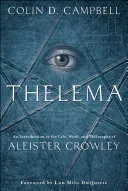
Colin D. Campbell’s "Thelema" presents a meticulously researched account of Aleister Crowley’s life and the philosophical system he founded. Rather than merely rehashing sensational anecdotes, Campbell anchors his narrative in Crowley’s intellectual development and the historical currents of late Victorian and Edwardian occultism. A significant strength is the clear exposition of Thelemic principles, particularly the nuanced interpretation of "Do what thou wilt." The work effectively demonstrates how Crowley's personal experiences and encounters, such as his interactions within the Hermetic Order of the Golden Dawn, shaped his evolving magical philosophy. However, the biography occasionally feels constrained by its focus on intellectual lineage, sometimes sidelining the more visceral, lived impact of Crowley's often tumultuous life. A particularly insightful section details Crowley's early magical workings in Egypt, revealing the genesis of key Thelemic ideas. While Campbell avoids hagiography, the book ultimately offers a balanced perspective on a figure who continues to polarize opinion. It is a valuable contribution for serious students of Western esotericism.
📝 Description
84
### What It Is Colin D. Campbell's "Thelema" offers a comprehensive examination of one of history's most controversial and influential occult figures, Aleister Crowley, and the philosophical system he developed. The book charts Crowley's life from his aristocratic upbringing and early occult explorations to his establishment of the religion of Thelema. It details the core tenets of this magickal philosophy, emphasizing its focus on individual will and the attainment of gnosis. Campbell's work aims to situate Crowley's system within its historical and intellectual context, moving beyond sensationalism to explore the underlying principles.
### Who It's For This book is intended for individuals seeking a deeper understanding of Aleister Crowley beyond popular myths. It appeals to students of Western esotericism, occult history, comparative religion, and those interested in the development of modern magickal traditions. Readers curious about the philosophical underpinnings of Thelema, its ethical framework, and its relationship to earlier esoteric movements will find this an informative resource. It is for those who wish to analyze the life and work of a complex historical personality with intellectual rigor.
### Historical Context The publication of "Thelema" in 2018 places it within a contemporary academic and esoteric discourse on Aleister Crowley. This work engages with the extensive scholarship surrounding Crowley, which gained momentum in the late 20th century with figures like Richard Kaczynski and Tobias Churton. Campbell's biography contextualizes Crowley's activities within the broader milieu of early 20th-century occultism, Freemasonry, and the Hermetic Order of the Golden Dawn. The book acknowledges the ongoing debates about Crowley's influence and the reception of his teachings, particularly in light of his notoriety and the societal shifts that occurred during his lifetime and thereafter.
### Key Concepts Campbell's "Thelema" illuminates several critical concepts central to Crowley's magical and philosophical system. The "Law of Thelema," often summarized as "Do what thou wilt shall be the whole of the Law," is explored not as simple hedonism but as the principle of acting in accordance with one's True Will. The book also addresses the concept of the "Knowledge and Conversation of the Holy Guardian Angel" (K&C of HGA), a primary goal in many of Crowley's magical practices. Furthermore, it examines the symbolism and ritualistic practices associated with the O.T.O. (Ordo Templi Orientis) and A∴A∴, organizations central to the dissemination of Thelemic principles.
💡 Why Read This Book?
• Gain a structured understanding of the "Law of Thelema," moving beyond common misconceptions of individualistic license to grasp its alignment with one's authentic purpose, as detailed in Campbell's analysis of Crowley's core philosophy. • Explore the historical development of the "Knowledge and Conversation of the Holy Guardian Angel" (K&C of HGA) as presented through Crowley's personal magical trajectory and its significance within his system, a key focus of the book. • Understand the organizational and ritualistic context of the O.T.O. and A∴A∴, as Campbell elucidates their role in disseminating Thelemic ideas and practices, providing concrete examples of their structure and aims.
⭐ Reader Reviews
Honest opinions from readers who have explored this book.
❓ Frequently Asked Questions
What is the central philosophy of Thelema as presented by Colin D. Campbell?
Campbell explains Thelema's central tenet as the "Law of Thelema," encapsulated by "Do what thou wilt shall be the whole of the Law." This is interpreted not as unbridled freedom but as fulfilling one's unique True Will, a concept explored extensively in the book with historical context.
How does "Thelema" by Colin D. Campbell discuss Aleister Crowley's early life?
The book traces Crowley's aristocratic background and early occult interests, detailing his involvement with groups like the Hermetic Order of the Golden Dawn. Campbell examines these formative experiences as crucial in shaping Crowley's later magical philosophy and the system of Thelema.
What key occult organizations are discussed in relation to Thelema?
Campbell details Crowley's significant roles within the Ordo Templi Orientis (O.T.O.) and the A∴A∴. The book explains how these organizations were instrumental in the development, practice, and dissemination of Thelemic principles and magickal systems.
Does the book focus more on Crowley's life or the philosophy of Thelema?
Campbell's "Thelema" aims to integrate both, presenting a biography that illuminates the philosophical system. The life events and intellectual evolution of Aleister Crowley are shown as intrinsically linked to the core concepts and practices of Thelema.
When was "Thelema" by Colin D. Campbell first published?
Colin D. Campbell's "Thelema" was first published on February 8, 2018, placing it within contemporary scholarship on Aleister Crowley and esoteric traditions.
What is the significance of the 'Knowledge and Conversation of the Holy Guardian Angel' in this book?
Campbell highlights the K&C of HGA as a central aspiration within Crowley's magical system. The book explores its meaning and the methods Crowley proposed for achieving this profound spiritual union.
🔮 Key Themes & Symbolism
The Law of Thelema
Campbell meticulously unpacks the "Law of Thelema," "Do what thou wilt shall be the whole of the Law." This section moves beyond superficial interpretations to explore its philosophical depth, emphasizing alignment with one's True Will rather than mere license. The work examines how this principle informed Crowley's actions and shaped his system, drawing connections to earlier philosophical ideas and Crowley's personal gnosis.
Aleister Crowley's Magickal Evolution
The book charts Crowley's trajectory as a practitioner and theorist of magick. It details his initiation into various occult orders, his travels, and his development of unique rituals and philosophical concepts. Campbell illustrates how experiences, such as his time in Egypt and his reception of the Book of the Law, were pivotal in forging his distinct magical system and public persona.
Esoteric Organizations and Ritual
Campbell provides insight into the structure and aims of organizations like the O.T.O. and A∴A∴, which were central to Crowley's efforts to disseminate his teachings. The work examines the ritualistic practices and symbolic language employed within these orders, offering readers a glimpse into the practical application of Thelemic principles and Crowley's approach to ceremonial magick.
The Quest for Gnosis
A recurring theme is Crowley's pursuit of gnosis, particularly through the attainment of the Knowledge and Conversation of the Holy Guardian Angel (K&C of HGA). Campbell explores this concept as a primary goal in Crowley's magical career, detailing the methods and theoretical frameworks he developed to achieve this ultimate form of spiritual realization.
💬 Memorable Quotes
“"Do what thou wilt shall be the whole of the Law."”
— This foundational axiom of Thelema, as presented by Campbell, is not an endorsement of hedonism but a directive to discover and enact one's deepest, truest purpose and destiny.
“The attainment of the Knowledge and Conversation of the Holy Guardian Angel.”
— Campbell frames this as a paramount objective in Crowley's magical system, representing a profound spiritual union and the discovery of one's authentic self and divine connection.
“Crowley's life and work evolved into a paradigm-shifting system of magick.”
— This suggests Campbell views Crowley's contributions as fundamentally altering the landscape of occult thought and practice, moving beyond earlier traditions to establish a distinct and potent magical philosophy.
“Understanding Thelema requires understanding its charismatic founder, Aleister Crowley.”
— Campbell emphasizes the inextricable link between the philosophy and its creator, positing that the system cannot be fully grasped without delving into the life, experiences, and intellectual development of Aleister Crowley.
“Thelema is one of the most powerful and influential systems of magick the world has ever known.”
— This statement, framing Thelema's impact, indicates Campbell's perspective on its historical significance and its enduring influence on subsequent occult movements and practitioners.
🌙 Esoteric Significance
Tradition
Thelema belongs to the Western Esoteric Tradition, drawing heavily from Hermeticism, Kabbalah, Gnosticism, and ceremonial magick. Campbell's work places it within this lineage, demonstrating how Crowley synthesized and radically reinterpreted existing esoteric doctrines. Thelema departs from some earlier traditions by placing supreme emphasis on individual will and the unique path of each practitioner, rather than adherence to a rigid, universally prescribed dogma.
Symbolism
Central symbols discussed include the Ouroboros, representing cyclical existence and eternal return, and the pentagram, signifying the microcosm of humanity and the elements. The Scarlet Woman and the Great Beast 666, figures from the Book of the Law, are explored not merely as literal entities but as archetypal forces representing liberation and the challenging of conventional morality. These symbols are integral to understanding the transformative aims of Thelemic practice.
Modern Relevance
Thelemic principles, particularly the focus on individual empowerment and self-realization, continue to influence contemporary esoteric practitioners, magickal orders, and even certain philosophical circles interested in existentialism and personal freedom. Thinkers and artists who explore themes of liberation, self-discovery, and the rejection of societal constraints often find resonance with Thelemic ideals, demonstrating its lasting impact beyond strictly occultist communities.
👥 Who Should Read This Book
• Students of Western Esotericism: Those seeking to understand the evolution of occult thought and the specific contributions of Aleister Crowley to modern magickal systems will find a detailed analysis. • Comparative Religion Scholars: Individuals interested in the formation of new religious movements and the intersection of ancient traditions with modern philosophy will benefit from the historical and doctrinal context. • Practitioners of Magick: Those engaged in occult practices looking to grasp the foundational philosophy and historical development of Thelema, as articulated by its founder, will find this an informative resource.
📜 Historical Context
Published in 2018, Colin D. Campbell's "Thelema" enters a crowded field of scholarship on Aleister Crowley, a figure who profoundly impacted 20th-century esotericism. The late 19th and early 20th centuries were a fertile ground for occult revivalism, with groups like the Hermetic Order of the Golden Dawn (which Crowley joined and later controversially left) gaining prominence. Campbell situates Crowley's work within this milieu, acknowledging his debt to and departure from traditions like Rosicrucianism and ceremonial magick. The book implicitly engages with contemporary esoteric movements and the popular reception of Crowley, often sensationalized in media. While figures like Dion Fortune and W.B. Yeats were contemporaries exploring spiritualism and occultism, Crowley carved a unique path with Thelema, a system that continues to generate debate and attract adherents, distinguishing itself from more mainstream spiritualist or theosophical currents.
📔 Journal Prompts
The Law of Thelema and its interpretation in your life.
Reflecting on the pursuit of the Knowledge and Conversation of the Holy Guardian Angel.
Crowley's engagement with Hermeticism and its legacy.
The role of individual will in personal development.
Symbols and archetypes in Thelemic magick.
🗂️ Glossary
Thelema
A philosophical and religious system founded by Aleister Crowley, centered on the principle 'Do what thou wilt shall be the whole of the Law.' It emphasizes individual will, self-realization, and spiritual attainment.
True Will
The unique purpose or destiny of an individual, as understood within Thelema. Discovering and enacting one's True Will is the central aim of Thelemic practice.
Holy Guardian Angel (HGA)
In Thelemic and related occult traditions, the HGA represents the higher genius or divine aspect of the self. Attaining its Knowledge and Conversation is a primary magical goal.
O.T.O.
Ordo Templi Orientis (Order of the Temple of the East), an international fraternal and initiatory organization founded in the early 20th century, closely associated with Aleister Crowley and the dissemination of Thelema.
A∴A∴
Astrum Argenteum (Silver Star), another magical order founded by Aleister Crowley and George Cecil Jones, focused on individual magical training and spiritual development.
Gnosis
Knowledge, particularly spiritual or mystical insight. In Thelemic contexts, it often refers to ecstatic or transformative states of awareness achieved through magical practice.
Ceremonial Magick
A structured system of ritualistic magic, often involving elaborate preparations, invocations, and symbolic actions, used to achieve specific spiritual or material results.