The yoga of Jesus

 80
80

The yoga of Jesus
Paramahansa Yogananda's The Yoga of Jesus offers a compelling, albeit specific, lens through which to view Christian scripture. Yogananda, a pivotal figure in introducing yoga to the Western world in the early 20th century, meticulously draws parallels between Jesus's life and teachings and the ancient yogic path. The strength of the book lies in its consistent application of yogic principles to biblical narratives, providing fresh interpretations for those seeking a deeper, esoteric understanding of Christianity. For instance, his exegesis of the Sermon on the Mount as a guide to yogic attainment is particularly illuminating. However, the work's limitation is its inherent presupposition: it assumes the reader is open to, or already accepts, the yogic framework as the ultimate interpretive key. Those firmly rooted in traditional exegesis may find the approach overly allegorical. Nevertheless, for spiritual seekers interested in the confluence of East and West, this book provides a unique and insightful perspective on the universal quest for divine union.
📝 Description
80
Published in 2016, The Yoga of Jesus compares the teachings of Christ with the science of Yoga.
This book examines the parallels between the ethical and metaphysical doctrines of Jesus Christ and those found in the yogic tradition. Paramahansa Yogananda, the author who introduced Kriya Yoga to the West, argues that a close study of both spiritual paths reveals a shared truth about God, humanity, and the route to spiritual freedom. The work is for individuals interested in comparative religion, esoteric Christianity, and the philosophical aspects of Yoga. It will appeal to those who want to understand the mystical elements of Jesus's life and teachings and their connection to Eastern practices. Readers familiar with Yogananda's Autobiography of a Yogi will recognize a continuation of his synthesis of diverse spiritual traditions. The book also speaks to seekers interested in the universal aspects of religious experience, moving beyond specific religious affiliations.
Yogananda's arrival in the United States in 1920 marked a time of growing interest in Eastern philosophies among Western esoteric groups. His work emphasized the practical application of Yoga and meditation, particularly Kriya Yoga, for personal spiritual growth. The Yoga of Jesus continues this emphasis, forming a theological and philosophical link between Christianity and yogic science. It aims to connect with an audience grounded in Western religious thought but open to wider spiritual exploration.
Yogananda's work emerged in the early 20th century, a period when Western esoteric circles were actively engaging with Eastern philosophies, partly due to figures like Helena Blavatsky. While others introduced broader concepts, Yogananda focused on the practical, meditative aspects of Yoga, particularly Kriya Yoga. The Yoga of Jesus functions as a bridge, connecting the Christian faith with yogic science. It addresses a Western audience, often rooted in Christian traditions, who are curious about Eastern spiritual practices and their potential to illuminate Christian mysticism.
💡 Why Read This Book?
• Learn how Yogananda interprets the Sermon on the Mount not just as ethical guidance but as a yogic roadmap for achieving inner liberation, offering a unique perspective on spiritual discipline. • Discover Yogananda's comparative analysis that positions Jesus as a master yogi, suggesting that the core teachings of Christianity align with the ancient Indian science of Yoga and its quest for God-union. • Gain insight into Yogananda's perspective on the "Kingdom of Heaven" as an attainable inner state of consciousness, directly linking biblical concepts to yogic practices of meditation and self-realization.
⭐ Reader Reviews
Honest opinions from readers who have explored this book.
❓ Frequently Asked Questions
What is the primary goal of 'The Yoga of Jesus'?
The book aims to demonstrate the profound similarities between the teachings of Jesus Christ and the ancient Indian science of Yoga, suggesting a unified spiritual truth accessible through both paths.
Who was Paramahansa Yogananda and why is his perspective significant?
Paramahansa Yogananda (1893-1952) was a yogi and guru who brought Kriya Yoga to the West in 1920. His unique position as a bridge between Eastern and Western spirituality lends weight to his comparative interpretations.
Does 'The Yoga of Jesus' suggest Jesus practiced Yoga?
Yogananda interprets Jesus's teachings and spiritual mastery through the framework of Yoga, presenting Jesus as an exemplar of yogic principles and the path to divine union, rather than stating he explicitly followed the Indian tradition.
What specific biblical text does Yogananda frequently reference?
The 'Sermon on the Mount' is a key text Yogananda uses to illustrate yogic principles, interpreting its verses as instructions for spiritual attainment and mastery over the self.
Is this book for Christians or Yoga practitioners?
It is designed for anyone interested in comparative religion, esoteric Christianity, or the philosophical aspects of Yoga. It offers a bridge for those who appreciate both traditions.
When was 'The Yoga of Jesus' first published?
The book was first published in 2016, compiling Yogananda's extensive writings and lectures on the subject matter.
🔮 Key Themes & Symbolism
Christ as Yogi
The central theme posits Jesus Christ not merely as a religious figure but as a master practitioner of Yoga, the ancient science of union with the Divine. Yogananda reinterprets Christ's miracles, parables, and pronouncements through this yogic lens. For example, the ability to walk on water or calm storms is seen as mastery over the forces of nature, attainable through advanced yogic states of consciousness. This perspective reframes Christian narratives as expressions of profound spiritual realization consistent with the highest yogic ideals, suggesting a universal blueprint for divine attainment.
The Kingdom of Heaven Within
Yogananda interprets the biblical concept of the 'Kingdom of Heaven' not as a distant afterlife but as an accessible inner state of consciousness. This aligns directly with yogic goals of realizing the divine presence within oneself through meditation and self-discipline. The book suggests that Jesus's teachings, particularly the Sermon on the Mount, provide practical instructions for cultivating this inner kingdom. Achieving this state involves purifying the mind, transcending egoic limitations, and experiencing direct communion with God, mirroring the yogic concept of Samadhi or God-realization.
Biblical Yoga Techniques
The work explores how various biblical passages and practices can be understood as veiled references to yogic techniques. Yogananda draws parallels between Jesus's fasting and prayer retreats and yogic asceticism and deep meditation. He suggests that concepts like 'the eye of the needle' might symbolize the subtle spiritual centers (chakras) within the body, requiring purification and heightened awareness to pass through. This approach seeks to reveal an underlying yogic methodology embedded within the fabric of Christian scripture, accessible to those with an esoteric understanding.
Universal Spiritual Truth
A core message is the universality of spiritual truths, transcending cultural and religious boundaries. Yogananda argues that both Christianity and Yoga, despite their distinct historical and cultural origins, point towards the same ultimate reality and the same path to achieving it. By highlighting the common ground between Jesus's teachings and yogic philosophy, the book aims to foster a sense of unity among spiritual seekers and demonstrate that the path to enlightenment is one, regardless of the name given to the Divine or the specific practices employed.
💬 Memorable Quotes
Direct passages from the work, attributed to the author.
“Jesus was the greatest Yogi of the West.”
— This is an interpretation of Yogananda's central thesis, framing Jesus within the yogic tradition. It suggests his spiritual mastery and teachings reflect the highest principles and practices found in Yoga.
“The Sermon on the Mount as a guide to spiritual perfection.”
— This interpretation points to Yogananda's approach of viewing Jesus's ethical teachings as practical instructions for achieving spiritual mastery and inner union, akin to the disciplined path of Yoga.
“The Bible and the Bhagavad Gita speak the same truth.”
— This represents Yogananda's comparative approach, asserting that the core spiritual messages within Christianity (represented by the Bible) and Hinduism (represented by the Bhagavad Gita) are fundamentally aligned.
💡 Key Ideas
Editorial paraphrase of the work's core concepts — not direct quotes.
The 'Kingdom of Heaven' is within you.
This paraphrased concept highlights Yogananda's interpretation of Jesus's message. It suggests that spiritual fulfillment and divine connection are not external pursuits but internal states achievable through self-awareness and spiritual practice, aligning with yogic goals.
Prayer and meditation are essential for realizing God.
This is a paraphrased concept reflecting Yogananda's emphasis on devotional practices. It underscores the importance of both active supplication (prayer) and silent communion (meditation) for achieving divine realization, a core part of Yoga.
🌙 Esoteric Significance
Tradition
This work draws heavily from the Advaita Vedanta and Raja Yoga traditions of India, synthesized through the lineage of Kriya Yoga. It positions itself within the broader stream of comparative mysticism, seeking to reveal universal truths underlying diverse religious expressions. While not strictly Hermetic or Gnostic, it shares their goal of uncovering hidden spiritual knowledge and the path to inner liberation, presenting a yogic interpretation of Christian esotericism.
Symbolism
The 'Kingdom of Heaven' is a key symbol, reinterpreted by Yogananda as an attainable inner state of consciousness, mirroring yogic concepts of divine realization. The 'Sermon on the Mount' functions symbolically as a yogic manual for spiritual discipline and self-mastery. Furthermore, subtle references within biblical texts are often interpreted as symbolic representations of yogic energetic centers (chakras) and pathways within the subtle body.
Modern Relevance
Contemporary spiritual seekers exploring the intersection of Western and Eastern traditions, particularly those interested in esoteric Christianity or comparative mysticism, find significant value in Yogananda's work. Modern mindfulness and meditation movements, though often secularized, echo the yogic practices Yogananda championed. Thinkers and practitioners within holistic spirituality and conscious living communities continue to draw inspiration from his synthesis of spiritual paths.
👥 Who Should Read This Book
["• Students of comparative religion: Those seeking to understand the philosophical and spiritual bridges between major world religions will find Yogananda's detailed comparisons clear.", "• Esoteric Christians: Individuals interested in mystical interpretations of Jesus's teachings and the potential for deeper spiritual practice beyond orthodox doctrine will benefit.", '• Practitioners of Yoga and Meditation: Those already engaged in yogic disciplines can gain a new perspective on the ancient wisdom of Yoga as reflected in Western spiritual traditions.']
📜 Historical Context
Paramahansa Yogananda's arrival in America in 1920 marked a significant wave of Eastern spiritual thought influencing Western esoteric circles. This period saw increased interest in philosophies like Theosophy, which itself had integrated Eastern concepts. Yogananda’s work, including his lectures and writings compiled in "The Yoga of Jesus," emerged within this milieu, yet offered a unique synthesis focused on the practical application of Kriya Yoga. He presented a vision of spiritual unity, directly contrasting with the often dogmatic religious field of the time. His teachings found fertile ground among those seeking deeper, more experiential forms of spirituality than offered by mainstream religions, and his efforts to bridge Christianity and Yoga contributed to the broader New Age movement's exploration of cross-cultural spiritual traditions. Unlike purely academic comparisons, Yogananda's approach was rooted in direct spiritual experience and yogic practice.
📔 Journal Prompts
Reflect on the concept of the 'Kingdom of Heaven' as an internal state versus an external place.
Analyze the parallels Yogananda draws between Jesus's teachings and specific yogic principles.
Consider how the 'Sermon on the Mount' might function as a guide for spiritual discipline.
Explore the idea of Christ as a 'Yogi' and what this interpretation signifies.
How might the universal spiritual truths identified by Yogananda impact your personal spiritual path?
🗂️ Glossary
Kriya Yoga
An advanced yogic meditation technique focused on accelerating spiritual evolution through controlled breathing and energy manipulation, aiming for union with the Divine.
Samadhi
A state of profound meditative consciousness in yogic philosophy, often described as a trance-like state of spiritual bliss and union with the Absolute or God.
Chakras
In yogic and Tantric traditions, these are subtle energy centers located along the spine, believed to govern various psychological and physiological functions.
Advaita Vedanta
A major school of Hindu philosophy emphasizing the oneness of the individual soul (Atman) and the ultimate reality (Brahman).
Yogi
An individual who practices Yoga, a discipline aimed at achieving spiritual enlightenment, self-realization, or union with the Divine.
Esotericism
Teachings concerned with the hidden meanings or spiritual significance of religious or philosophical doctrines, often requiring initiation or specialized knowledge.
Divine Union
The ultimate goal in many spiritual traditions, referring to the state of complete oneness or communion between the individual soul and God or the Absolute.
🔮 Readers Also Liked
Browse all →









More by Yogananda Paramahansa
All books →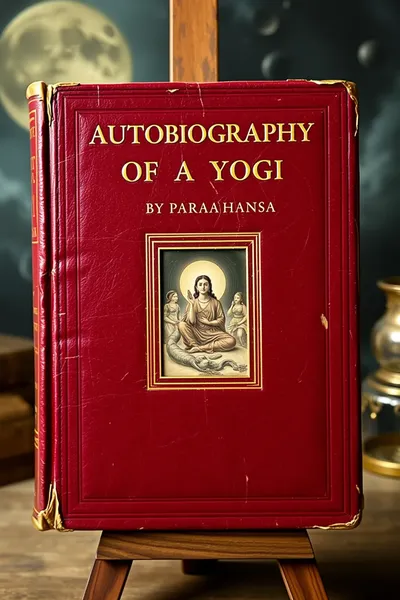





More Free Occult Philosophy Books
View all →