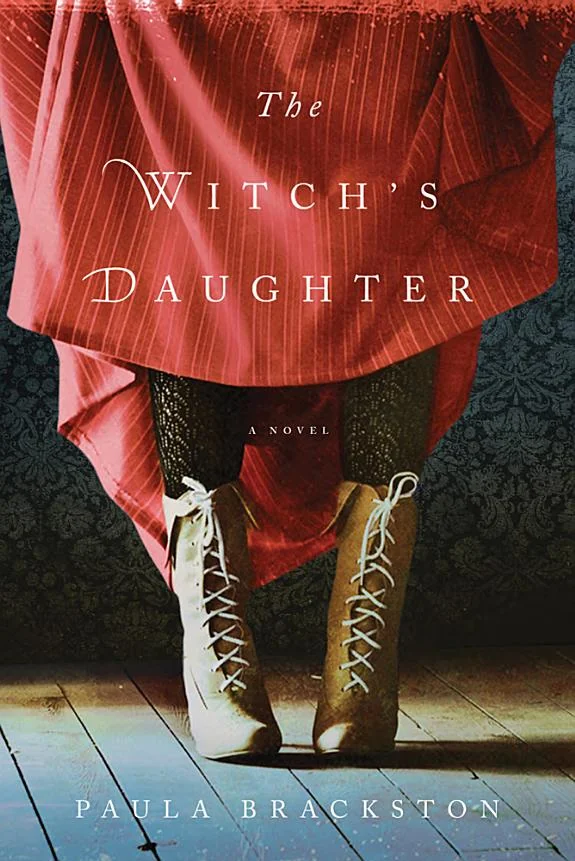
The witch's daughter
 83
83

The witch's daughter
Paula Brackston’s The Witch’s Daughter offers a compelling look at a young woman coming into her inherited magical abilities. The strength of the novel lies in its intimate portrayal of the protagonist, Elspeth, whose internal struggles with her burgeoning powers feel deeply authentic. Brackston effectively captures the isolation and fear that can accompany such a lineage, particularly when viewed through the lens of historical persecution. A particularly resonant passage details Elspeth’s first conscious manipulation of natural elements, a moment both terrifying and exhilarating.
However, the narrative occasionally feels constrained by its adherence to certain genre conventions, at times predictable in its trajectory. While the historical setting is evocative, some of the secondary characters remain somewhat underdeveloped, serving more as plot devices than fully realized individuals. Despite this, the exploration of a witch's legacy through a modern lens is handled with considerable skill.
Read more ↓
Ultimately, The Witch's Daughter provides a thoughtful character study wrapped in a magical narrative.
📝 Description
83
### What It Is The Witch's Daughter by Paula Brackston, first published in 2011, is a novel that delves into the life of a young woman grappling with an inherited, and often feared, magical lineage. Set against a backdrop of historical suspicion towards witchcraft, the narrative follows the protagonist as she navigates her burgeoning powers and the societal forces that seek to control or condemn them.
### Who It's For This book will appeal to readers interested in historical fiction with a supernatural or magical realism bent. Those who enjoy stories about the discovery of latent abilities, the complexities of family legacies, and the intersection of personal destiny with societal prejudice will find its themes engaging. It's particularly suited for those who appreciate character-driven narratives exploring themes of identity and belonging.
### Historical Context Published in 2011, The Witch's Daughter emerges from a contemporary literary landscape where explorations of folklore, witchcraft, and female agency have gained significant traction. It follows in a tradition of novels that re-examine historical periods, such as the early modern era when accusations of witchcraft were rampant, and imbues them with a modern sensibility regarding magic and its practitioners. The work engages with the enduring fascination surrounding historical witch trials.
### Key Concepts The novel centers on the concept of inherited magic, exploring how a power, potentially perceived as dangerous by others, can be both a burden and a source of strength for the individual. It examines the tension between the natural world and the human-driven societal constructs that often fear or misinterpret the mystical. The theme of self-acceptance in the face of external judgment is paramount.
💡 Why Read This Book?
• You will gain an understanding of how inherited magical legacies can manifest and be perceived through societal lenses, as explored in Elspeth's personal journey with her powers. • You will experience a nuanced depiction of the historical witch trials era (early modern period) and the societal anxieties that fueled them, presented through the narrative's backdrop. • You will feel the weight of a protagonist wrestling with her identity, a theme central to the book's exploration of self-acceptance and the challenges of wielding extraordinary abilities.
⭐ Reader Reviews
Honest opinions from readers who have explored this book.
❓ Frequently Asked Questions
What historical period does The Witch's Daughter by Paula Brackston primarily focus on?
The novel draws inspiration from historical periods marked by suspicion of witchcraft, particularly the early modern era, exploring the societal context of such beliefs.
Is The Witch's Daughter a standalone novel or part of a series?
The Witch's Daughter is a standalone novel, offering a complete narrative arc for its protagonist and her story.
What are the central themes explored in Paula Brackston's The Witch's Daughter?
Key themes include inherited magical abilities, the struggle for self-acceptance, the impact of societal prejudice on individuals, and the complexities of family legacies.
Who is the author of The Witch's Daughter?
The author is Paula Brackston, and the book was first published in 2011.
Does the book depict traditional witchcraft practices?
While it centers on a witch's lineage and inherent powers, the book focuses more on the personal and societal implications of magic rather than detailing specific ritualistic practices.
What kind of protagonist does Elspeth represent in The Witch's Daughter?
Elspeth is a young woman grappling with a powerful, inherited magical ability that sets her apart and forces her to confront societal fears and her own identity.
🔮 Key Themes & Symbolism
Inherited Magical Lineage
The novel meticulously details the concept of magic passed down through generations, focusing on Elspeth's struggle to understand and control her innate abilities. It explores the burden and potential of such an inheritance, especially within a historical context where such powers were often feared and persecuted. The narrative examines how this lineage shapes Elspeth's identity and her relationships, forcing her to confront a destiny she did not choose but must ultimately embrace.
Societal Prejudice and Fear
A significant theme is the pervasive societal fear and prejudice directed towards those perceived as 'other,' particularly women with perceived magical capabilities. The book illustrates how suspicion and condemnation, reminiscent of historical witch trials, can isolate individuals and force them into secrecy or conflict. This theme highlights the tension between individual freedom and the oppressive forces of societal judgment, forcing Elspeth to navigate a world that often misunderstands her.
Self-Acceptance and Identity
At its core, The Witch's Daughter is a story about self-discovery and the arduous journey toward self-acceptance. Elspeth's internal conflict stems from her inherited powers and the societal pressures she faces. The narrative traces her development from a hesitant individual fearing her own nature to someone who learns to accept and integrate her unique abilities into her identity, finding strength in what once seemed like a curse.
The Natural World and Mysticism
The book often connects Elspeth's powers to the natural world, suggesting a deep, intrinsic link between her magic and the elements, flora, and fauna. This connection underscores a more holistic or animistic perspective on magic, contrasting with the more rigid, fearful interpretations of the society around her. The reverence for nature serves as a counterpoint to human-made fear and control.
💬 Memorable Quotes
“Her mother's legacy was a whisper in her blood, a secret she couldn't escape.”
— This paraphrase encapsulates the inherited nature of Elspeth's magical abilities. It emphasizes that her powers are not a choice but an intrinsic part of her being, a constant, undeniable presence that influences her life and identity.
“The village eyes watched her, a silent accusation that burned hotter than any pyre.”
— This highlights the theme of societal prejudice. It conveys the intense scrutiny and judgment Elspeth faces from her community, illustrating how social ostracization and fear can be as damaging as overt persecution.
“Magic bloomed in her hands like an unexpected flower, beautiful and dangerous.”
— This metaphorical quote captures the dual nature of Elspeth's emerging powers. It suggests that her magic is both a natural, wondrous occurrence and something that carries inherent risk and potential for harm or misunderstanding.
“She learned that to survive, some truths must remain hidden, even from oneself.”
— This reflects the protagonist's early struggles and the need for self-preservation in a hostile environment. It speaks to the internal conflict of suppressing parts of oneself to conform or avoid danger.
“The earth remembered what the people forgot: the old ways, the deep power.”
— This interpretation suggests a connection to older, perhaps more natural forms of magic that are distinct from the contemporary societal views. It implies a forgotten wisdom inherent in the natural world.
🌙 Esoteric Significance
Tradition
The novel resonates with a contemporary interpretation of witchcraft that emphasizes innate personal power and connection to nature, rather than adherence to strict historical coven structures or formalized magical systems. It aligns with modern pagan and Wiccan sensibilities that celebrate the 'witch within' and see magic as an intrinsic part of the self and the natural world, diverging from darker, more malevolent portrayals often found in older folklore.
Symbolism
The recurring motif of the 'witch's daughter' itself symbolizes inherited power and the burden of lineage. The natural world, including elements like plants and weather, often serves as a symbolic extension of the protagonist's magic, representing untamed, primal forces. Shadows and light are also used symbolically, representing hidden knowledge, fear, and the struggle for self-revelation.
Modern Relevance
This work speaks to contemporary discussions surrounding feminine power, ancestral healing, and the reclamation of stigmatized identities. It finds echoes in modern witchcraft communities that explore personal spirituality, the power of intention, and the connection to the earth. Thinkers and practitioners interested in the psychological aspects of magic and its integration into everyday life find its exploration of self-discovery relevant today.
👥 Who Should Read This Book
• Readers fascinated by historical fiction interwoven with supernatural elements, particularly those interested in the societal impact of witchcraft accusations during periods like the early modern era. • Individuals exploring themes of identity, self-discovery, and the personal journey of accepting one's unique abilities or perceived 'otherness.' • Those drawn to character-driven narratives that focus on internal struggles and the development of personal power against external societal pressures.
📜 Historical Context
Paula Brackston's The Witch's Daughter, published in 2011, arrived during a period of renewed popular interest in witchcraft narratives, influenced by authors like Deborah Harkness and the ongoing exploration of folklore in contemporary fiction. The novel taps into anxieties and historical narratives surrounding the witch trials of the early modern period, a time when figures like Matthew Hopkins, the 'Witchfinder General,' were active in England during the 1640s, leading to widespread accusations and executions. Brackston's work engages with this historical backdrop but filters it through a modern lens, focusing on the psychological and personal impact of inherited magic and societal fear, rather than a direct historical reenactment. It stands apart from purely academic historical accounts by imbuing the past with a supernatural element central to the protagonist's experience.
📔 Journal Prompts
Elspeth's inherited magic and its societal reception.
The village's fear of the unknown and its manifestations.
Reflect on the balance between hidden truths and self-acceptance.
The connection between Elspeth's powers and the natural world.
The weight of a family legacy, both magical and mundane.
🗂️ Glossary
Inherited Magic
The concept of magical abilities or a predisposition towards magic being passed down genetically or through lineage from parent to child.
Witch Trials Era
Refers to periods in history, most notably the early modern period in Europe and America, characterized by widespread accusations, trials, and executions of individuals, predominantly women, accused of practicing witchcraft.
Societal Prejudice
Preconceived negative judgments or attitudes towards a group or individual based on stereotypes, fear, or misunderstanding, often leading to discrimination and persecution.
Lineage
A sequence of descendants of a particular person or group; ancestry. In this context, it refers to the ancestral line from which magical abilities are derived.
Self-Acceptance
The process of acknowledging and embracing one's own qualities, abilities, and limitations, including aspects that might be perceived as different or challenging by society.
Folkloric Witchcraft
The portrayal of witchcraft as depicted in traditional stories, myths, and legends, often involving supernatural powers, curses, and interactions with the natural or spiritual world.
Magical Realism
A literary genre in which magical elements are presented in an otherwise realistic setting, treated as mundane or normal by the characters.