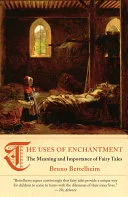
The Uses of Enchantment
 77
77

The Uses of Enchantment
Bettelheim's analysis of fairy tales, particularly in "The Uses of Enchantment," offers a compelling framework for understanding their psychological weight. His ability to connect seemingly simple narratives to complex developmental stages is remarkable, particularly his interpretation of "Hansel and Gretel" as a story of separation and individuation. The book's strength lies in its deep, empathetic engagement with the child's inner world, suggesting that fairy tales provide essential psychic structures. However, the work is not without its limitations; some modern interpretations might find Bettelheim's psychoanalytic lens overly deterministic, potentially overlooking broader cultural or historical significances beyond individual psychology. The extensive analysis of individual tales, while thorough, can sometimes feel repetitive. Despite this, the book remains a foundational text for anyone seeking to grasp the profound psychological utility of traditional storytelling.
📝 Description
77
### What It Is Bruno Bettelheim's "The Uses of Enchantment," first published in 1976 and reissued in 2010, is a landmark psychoanalytic study of fairy tales. It explores how these narratives, far from being simple children's stories, serve as crucial tools for psychological development. Bettelheim, a renowned child psychologist, examines a vast collection of traditional tales, dissecting their symbolic language and thematic elements to understand their impact on the developing child's psyche.
### Who It's For This work is essential for parents, educators, and therapists seeking a deeper understanding of childhood development and the unconscious mind. It appeals to anyone interested in the psychological underpinnings of storytelling and the enduring power of myth. Readers with an interest in Jungian psychology, folklore studies, and the archetypal patterns within narrative will find particular value here.
### Historical Context The book emerged during a period of significant discourse in psychoanalytic theory and child development. Bettelheim's work built upon and sometimes diverged from established Freudian and Jungian concepts, offering a unique perspective on the therapeutic function of stories. Its publication in 1976 was met with widespread acclaim, including a National Book Award, positioning it as a key text in the understanding of childhood psychology and the literary analysis of folk traditions.
### Key Concepts Bettelheim posits that fairy tales provide children with vital ways to grapple with their own unconscious wishes and fears. He argues that the often-harsh realities presented in these stories—such as abandonment, sibling rivalry, and the struggle between good and evil—allow children to confront these anxieties in a safe, symbolic context. The tales' clear moral dichotomies and eventual happy endings offer a sense of hope and resolution, guiding the child towards psychological integration.
💡 Why Read This Book?
• Understand how classic fairy tales like "The Frog Prince" offer symbolic resolutions to childhood anxieties, providing a framework for emotional processing. • Gain insight into Bruno Bettelheim's psychoanalytic approach, learning how he interpreted narrative structures to address developmental challenges faced by children in the mid-20th century. • Discover the psychological necessity of clear moral narratives and hopeful endings, as explored in his analysis of tales involving sibling rivalry and overcoming adversity.
⭐ Reader Reviews
Honest opinions from readers who have explored this book.
❓ Frequently Asked Questions
What is Bruno Bettelheim's central thesis in "The Uses of Enchantment"?
Bettelheim's core idea is that fairy tales are vital for children's psychological development, offering symbolic ways to confront and resolve inner conflicts and anxieties common in childhood.
When was "The Uses of Enchantment" first published?
The original publication date for "The Uses of Enchantment" was 1976.
Which specific fairy tales does Bettelheim analyze?
The book analyzes a wide array of tales, including "Hansel and Gretel," "Little Red Riding Hood," "Cinderella," "Snow White," and "The Frog Prince," among many others.
What is the significance of happy endings in the fairy tales according to Bettelheim?
Bettelheim argues that happy endings in fairy tales are crucial, providing children with hope and demonstrating that even dire situations can be overcome, fostering a sense of agency and resilience.
How does Bettelheim's work relate to Jungian psychology?
While Bettelheim's approach is primarily psychoanalytic, his focus on archetypal themes and the collective unconscious in fairy tales shares common ground with Jungian psychology's emphasis on universal symbols.
Did "The Uses of Enchantment" win any awards?
Yes, "The Uses of Enchantment" was a winner of both the National Book Award and the National Book Critics Circle Award upon its initial release.
🔮 Key Themes & Symbolism
Symbolic Resolution of Anxiety
Bettelheim posits that fairy tales provide a symbolic language through which children can process and resolve their deepest fears and anxieties. For instance, the witch in "Hansel and Gretel" can represent a child's fear of abandonment or a controlling parental figure, while the eventual triumph over her signifies the child's growing capacity to cope with such emotions. These narratives allow for the exploration of taboo subjects like aggression, jealousy, and the fear of death in a safe, allegorical space, offering a psychological blueprint for navigating difficult life experiences.
The Importance of the Oedipus Complex
The work extensively examines how fairy tales address the Oedipus complex, a central tenet of psychoanalytic theory. Tales like "Cinderella" are interpreted as illustrating a child's struggle with sibling rivalry and the desire for parental favoritism, with the protagonist's eventual ascent symbolizing a healthy resolution. Bettelheim argues that the clear portrayal of these dynamics, and the eventual "reward" for the protagonist, helps children understand and manage these complex feelings in a way that promotes healthy psychological maturation.
The Hero's Journey and Individuation
Many fairy tales, as analyzed by Bettelheim, follow the structure of the hero's journey, mirroring the process of individuation. The protagonist, often initially passive or downtrodden, must embark on a quest, face trials, and overcome obstacles to achieve self-realization and integration. This narrative arc provides a powerful model for children, demonstrating that challenges are surmountable and that personal growth involves confronting the unknown and integrating different aspects of the self, leading to a more complete and mature personality.
Moral Clarity and Hope
Bettelheim emphasizes the crucial role of moral clarity in fairy tales. The stark contrast between good and evil, and the predictable, often rewarding, outcome for good, provides children with a foundational understanding of ethical principles. This moral framework, coupled with the pervasive theme of hope and eventual success, is presented as essential for fostering a child's optimism and belief in their ability to overcome adversity. The stories assure children that their efforts will be recognized and that a positive future is attainable.
💬 Memorable Quotes
“The fairy tale is the most helpful form of literature for a child.”
— This statement encapsulates Bettelheim's central argument: that the unique structure and symbolic content of fairy tales are uniquely suited to address the psychological needs and developmental challenges of children.
“The fairy tale helps the child to understand his/her own developmental problems and the anxieties associated with them.”
— This highlights the therapeutic function of fairy tales, suggesting they act as a mirror, allowing children to see their own internal struggles reflected in narrative form, thereby gaining a sense of understanding and control.
“Without the help of the fairy tale, the child might feel that he is alone in his predicaments.”
— This interpretation underscores the communal and validating aspect of fairy tales. By encountering similar struggles in stories, children realize their experiences are not unique, fostering a sense of shared humanity and reducing feelings of isolation.
“The fairy tale assures the child that his/her difficulties are not unique and that he/she will be able to overcome them.”
— This points to the dual role of fairy tales: normalization of struggle and instillation of hope. The narrative's resolution provides a template for the child's own potential for triumph over adversity.
“The fairy tale's ending offers security and reassurance.”
— This emphasizes the cathartic and comforting power of the conclusion in fairy tales. The resolution provides a sense of order and safety, reinforcing the child's belief that positive outcomes are possible after hardship.
🌙 Esoteric Significance
Tradition
While not explicitly aligned with a single esoteric lineage, Bettelheim's work deeply engages with the archetypal psychology championed by Carl Jung, which itself draws from Gnosticism and Hermeticism's focus on inner transformation and symbolic understanding. His analysis of fairy tales as vessels of universal psychological truths and patterns echoes the esoteric view of myths and stories as encoded wisdom, guiding the individual towards self-knowledge and integration.
Symbolism
The "enchantment" itself can be seen as a metaphor for the numinous power inherent in symbolic narratives. Symbols like the "witch" in "Hansel and Gretel" represent primal fears and destructive impulses, while the "prince" or "princess" often symbolizes the integrated, authentic self. The "forest" frequently symbolizes the unconscious mind, a place of both danger and potential discovery, which the protagonist must navigate to achieve individuation.
Modern Relevance
Bettelheim's exploration of archetypal narratives continues to influence contemporary depth psychology, narrative therapy, and even fields like transpersonal psychology. Thinkers and practitioners who focus on myth, symbolism, and the power of storytelling for personal growth often reference his work. His framework provides a valuable lens for understanding how ancient stories continue to speak to modern anxieties and aspirations for wholeness.
👥 Who Should Read This Book
• Parents and caregivers seeking to understand the psychological impact of stories on children and how to use them therapeutically. • Students of psychology, folklore, and comparative literature interested in psychoanalytic interpretations of narrative and myth. • Individuals on a path of personal growth who wish to explore archetypal patterns and symbolic meanings within fairy tales and their own lives.
📜 Historical Context
Published in 1976, "The Uses of Enchantment" emerged from the fertile ground of mid-20th-century psychoanalytic thought and child psychology. Bruno Bettelheim, already a prominent figure, drew heavily on Freudian concepts but also engaged with Jungian archetypes, offering a unique synthesis. This era saw intense debate surrounding child-rearing and the psychological impact of media. Bettelheim's work positioned fairy tales not as mere entertainment but as essential psychological tools, a stance that resonated widely and earned him accolades, including the National Book Award and National Book Critics Circle Award. His approach contrasted with more behaviorist or purely literary analyses of folklore. While highly influential, his interpretations, rooted in psychoanalysis, would later be challenged by feminist and post-structuralist critics who offered different lenses through which to view these enduring narratives.
📔 Journal Prompts
The symbolic representation of the "witch" in "Hansel and Gretel" and your own childhood fears.
The "hero's journey" as a pattern for overcoming personal obstacles.
Reflecting on the moral clarity of fairy tales and their influence on your ethical development.
Analyzing the "happy ending" in a favorite childhood fairy tale and its psychological significance.
The "forest" as a symbol of the unconscious in "Little Red Riding Hood" and your own encounters with the unknown.
🗂️ Glossary
Psychoanalytic Theory
A psychological approach, pioneered by Sigmund Freud, that emphasizes the influence of the unconscious mind and early childhood experiences on behavior and personality.
Archetype
In Jungian psychology, a universal, archaic pattern and image that derives from the collective unconscious and is part of the inherited structure of the human mind.
Oedipus Complex
A psychoanalytic concept describing a child's unconscious desire for the parent of the opposite sex and feelings of rivalry towards the parent of the same sex.
Individuation
A psychological process by which a person becomes whole, integrating the conscious and unconscious aspects of their psyche to develop a unique personality.
Symbolic Language
The use of symbols to represent ideas and qualities, particularly in literature and psychology, where objects or actions carry deeper meanings.
Unconscious Mind
The part of the mind of which one is not aware, containing urges, instincts, and repressed memories that influence behavior.
Separation-Individuation
A psychoanalytic concept describing the developmental process where a child distinguishes themselves from their primary caregiver and establishes a sense of self.