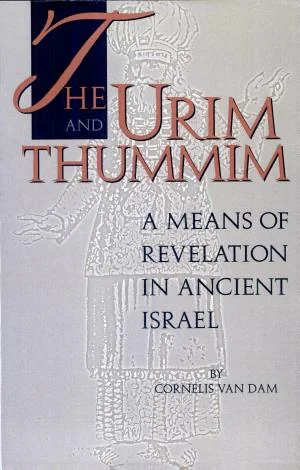
The Urim and Thummim
 73
73

The Urim and Thummim
Cornelis Van Dam's "The Urim and Thummim" is a welcome and thorough engagement with a topic that has languished in academic obscurity for too long. The author commendably brings together disparate biblical references, examining the textual evidence for the Urim and Thummim's function as an oracular device. His survey of historical interpretations and translations provides a solid foundation for his own analysis. The book’s strength lies in its systematic approach, meticulously dissecting the phrase 'to enquire of Yahweh/God' and its linkage to priestly consultation. A limitation, however, is the inherent nature of the source material; where biblical texts are silent or ambiguous, the book necessarily relies on scholarly inference rather than definitive pronouncements, which can sometimes feel speculative. The detailed examination of the Urim and Thummim’s place within the priestly vestments, as described in Exodus, is particularly illuminating. Ultimately, Van Dam delivers a valuable, if dense, scholarly resource for understanding this obscure element of Israelite worship.
📝 Description
73
### What It Is Cornelis Van Dam's "The Urim and Thummim" offers a comprehensive scholarly examination of a pivotal, yet often overlooked, artifact from ancient Israelite religious practice. This work meticulously reconstructs the understanding and function of the Urim and Thummim, the enigmatic divine instruments employed by the high priest for seeking God's guidance.
### Who It's For This book is essential for scholars of biblical studies, ancient Near Eastern religions, and those interested in the history of divination and oracular practices. It will also appeal to theological students and clergy seeking deeper understanding of Old Testament priestly functions and the nature of divine communication.
### Historical Context Published in 1997, Van Dam's study emerged in an academic landscape where the Urim and Thummim had received limited dedicated attention since the 19th century. The book addresses a gap in scholarship, particularly regarding their role in the historical books of the Old Testament and the frequent biblical phrase 'to enquire of Yahweh/God'.
### Key Concepts The central focus is the Urim and Thummim as a means of high-priestly revelation. Van Dam analyzes their linguistic roots, physical description (though scarce), and ritualistic use. He connects their function to the broader concept of divine consultation and the establishment of authoritative decisions within the Israelite community.
💡 Why Read This Book?
• Gain a foundational understanding of the Urim and Thummim, learning how this ancient priestly artifact functioned as a direct means of divine revelation, as explored in chapters discussing its use in the historical books. • Understand the historical and linguistic context of 'to enquire of Yahweh/God,' a phrase deeply intertwined with the Urim and Thummim, as detailed in Van Dam's analysis of biblical texts. • Appreciate the scholarly history of interpreting this enigmatic object, recognizing how Cornelis Van Dam's 1997 work addressed a significant gap in the study of ancient Israelite religious practices.
⭐ Reader Reviews
Honest opinions from readers who have explored this book.
❓ Frequently Asked Questions
What exactly were the Urim and Thummim?
The Urim and Thummim were sacred objects used by the ancient Israelite high priest to discern God's will. While their precise form is debated, they were likely part of the priestly vestments and functioned as an oracular device for divine consultation.
When were the Urim and Thummim last studied extensively?
According to Van Dam's introduction, the last exhaustive study of the Urim and Thummim predated his 1997 publication by a significant margin, dating back to 1824, highlighting the need for his comprehensive research.
What biblical books discuss the Urim and Thummim?
The Urim and Thummim are mentioned or alluded to in several books of the Old Testament, particularly within the historical books like Exodus, Leviticus, Numbers, Deuteronomy, Joshua, Judges, Samuel, and Nehemiah.
How did the Urim and Thummim relate to 'enquiring of God'?
The phrase 'to enquire of Yahweh/God' in the Old Testament is frequently linked to the function of the Urim and Thummim. It signifies the process by which the high priest used these objects to seek divine guidance or judgment.
Is this book accessible to non-academics?
While scholarly, the book aims to be an exhaustive study. Readers with a serious interest in biblical archaeology, ancient religion, or the history of divination will find it rewarding, though it assumes some familiarity with theological concepts.
What is the main contribution of Cornelis Van Dam's study?
Van Dam's primary contribution is providing the first comprehensive scholarly treatment of the Urim and Thummim in over 170 years, consolidating existing knowledge and presenting new analysis on their function and significance.
🔮 Key Themes & Symbolism
Priestly Oracular Function
The core of Van Dam's work examines the Urim and Thummim as a functional tool for divine communication within the Israelite theocracy. It details how the high priest utilized these objects to receive direct guidance from Yahweh, influencing decisions on matters of war, justice, and communal direction. The book scrutinizes the textual evidence linking the Urim and Thummim to specific instances of seeking God's counsel, thereby illuminating the mechanisms of perceived divine intervention in ancient Israelite society.
Linguistic and Textual Analysis
Van Dam engages deeply with the biblical text, analyzing the etymology and usage of terms related to the Urim and Thummim and the act of 'enquiring of God'. This section scrutinizes variations in translations and interpretations across different versions of scripture, seeking to establish a more precise understanding of the objects' names and their theological implications. The work highlights how linguistic nuances contribute to our comprehension of their ritualistic purpose.
Historical Interpretation
The book charts the scholarly reception and interpretation of the Urim and Thummim from antiquity to the modern era. By surveying previous studies, particularly noting the gap since 1824, Van Dam contextualizes his own research within a long tradition of biblical scholarship. He addresses differing views on the nature, appearance, and operational methods of these enigmatic artifacts, offering a critical evaluation of past theories.
Theological Significance
Beyond their practical use, the Urim and Thummim held profound theological weight, representing a tangible link between the divine and human realms through the priesthood. Van Dam explores how their presence underscored the centrality of God's authority and the covenant relationship with Israel. The study considers the implications of such direct divine access for the religious and political structure of ancient Israel.
💬 Memorable Quotes
“The Urim and Thummim were instrumental in the high priest's role as an intermediary for divine revelation.”
— This highlights the central thesis: these objects weren't mere adornments but active tools for accessing God's will, crucial for the functioning of ancient Israelite governance and religious life.
“Understanding the phrase 'to enquire of Yahweh' requires examining the role of the Urim and Thummim.”
— This points to the interconnectedness of biblical language and ritual practice, suggesting that the common phrase for seeking divine guidance is directly illuminated by the study of these specific priestly artifacts.
“The scarcity of direct description necessitates careful analysis of contextual biblical data.”
— This acknowledges the challenge of studying the Urim and Thummim, emphasizing Van Dam's methodical approach of piecing together information from various biblical accounts rather than relying on explicit, detailed descriptions.
“This work rectifies a long-standing lack of exhaustive scholarly attention to the Urim and Thummim.”
— This statement frames the book's purpose: to fill a significant void in academic research by providing a thorough and modern investigation into a previously under-examined aspect of biblical history and religion.
“The historical books of the Old Testament provide crucial evidence for the Urim and Thummim's practical application.”
— This indicates the primary textual focus for Van Dam's research, emphasizing that the narrative accounts of ancient Israel offer the most concrete examples of how the Urim and Thummim were actually used in significant events.
🌙 Esoteric Significance
Tradition
While primarily a work of biblical scholarship, "The Urim and Thummim" touches upon traditions concerned with divine revelation and oracular practice, which resonate with esoteric lineages. Its focus on a specific artifact used for discerning God's will aligns with Hermetic and Kabbalistic interests in divine communication and symbolic tools. However, Van Dam's approach is firmly grounded in historical-critical biblical studies, departing from the more mystical or allegorical interpretations often found in purely esoteric traditions.
Symbolism
The Urim and Thummim themselves are potent symbols of divine immediacy and accessible truth within the ancient Israelite context. Their function represents the potential for direct, authoritative guidance from the sacred. Within esoteric thought, such instruments can symbolize the 'inner oracle' or the faculty of spiritual intuition, suggesting that divine wisdom can be accessed through dedicated practice and the proper 'attire' or spiritual disposition.
Modern Relevance
Contemporary thinkers and practitioners interested in the history of divination, comparative religion, and the phenomenology of religious experience find value in Van Dam's meticulous research. While not directly promoting esoteric practices, the book provides a factual basis for understanding ancient methods of seeking divine counsel, which can inform modern explorations of intuition, synchronicity, and the search for meaning in a complex world.
👥 Who Should Read This Book
['• Biblical Scholars and Theologians: Those researching Old Testament history, priestly functions, and ancient Near Eastern religious practices will find this an indispensable reference for understanding divine communication methods.', "• Students of Ancient Divination: Individuals interested in the historical development and practice of oracular systems across different cultures will benefit from the detailed analysis of the Urim and Thummim's function.", '• Serious Inquirers into Religious Artifacts: Readers seeking deep, fact-based knowledge about specific religious objects and their role in historical societies will appreciate the exhaustive study presented.']
📜 Historical Context
Cornelis Van Dam's "The Urim and Thummim" was published in 1997, a period marked by robust scholarship in biblical studies and ancient Near Eastern history. While the 19th century saw significant engagement with the topic, notably with studies like Carl Friedrich Keil's commentaries, dedicated monographs on the Urim and Thummim had become infrequent by the late 20th century. Van Dam's work emerged to address this scholarly lacuna, specifically targeting the lack of comprehensive research since 1824. The intellectual climate encouraged interdisciplinary approaches, drawing on textual criticism, archaeology, and comparative religion. Van Dam's study engaged with the ongoing debates surrounding Israelite religious practice and the nature of divination, positioning itself against more skeptical or purely mythological interpretations prevalent in some circles. While not facing direct censorship, its rigorous academic approach and detailed textual analysis appealed to scholars within the mainstream of biblical studies and theological institutions.
📔 Journal Prompts
The enigmatic nature of the Urim and Thummim: what does their obscurity suggest about divine communication?
Reflecting on the high priest's role in 'enquiring of Yahweh' through the Urim and Thummim.
Consider the concept of divine revelation as mediated through specific artifacts like the Urim and Thummim.
How might the historical context of the Urim and Thummim inform contemporary approaches to seeking guidance?
Analyzing the textual variations surrounding the Urim and Thummim: what can be learned from interpretative history?
🗂️ Glossary
Urim and Thummim
Biblical artifacts, likely part of the high priest's attire, used to discern God's will through an oracular process. Their exact form and method of operation remain subjects of scholarly debate.
High Priest
The chief priestly authority in ancient Israel, responsible for mediating between God and the people, performing sacred rituals, and notably, using the Urim and Thummim for divine consultation.
Enquire of Yahweh/God
A biblical phrase denoting the act of seeking divine guidance, counsel, or judgment, often specifically associated with the use of the Urim and Thummim by the high priest.
Oracular Device
An object or mechanism believed to provide divine pronouncements or answers to questions, such as the Urim and Thummim, the Oracle of Delphi, or various forms of divination.
Biblical Scholarship
The academic study of the Bible, employing methods of historical criticism, textual analysis, archaeology, and linguistic research to understand its origins, development, and meaning.
Historical Books (Old Testament)
The section of the Old Testament that narrates the history of ancient Israel, including books like Joshua, Judges, Samuel, Kings, and Chronicles, where the Urim and Thummim are often mentioned or implied.
Vestments
Special ceremonial clothing worn by religious officials, such as the priestly garments described in Exodus that included the Urim and Thummim.