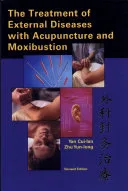
The Treatment of External Diseases with Acupuncture and Moxibustion
 77
77

The Treatment of External Diseases with Acupuncture and Moxibustion
Cui-lan Yan's clinical manual, The Treatment of External Diseases with Acupuncture and Moxibustion, offers a direct, no-nonsense approach to applying traditional techniques to common ailments. Its strength lies in its clear focus on actionable protocols, particularly for conditions like traumatic injuries and dermatological complaints, which are often less emphasized in general TCM texts. The inclusion of Western practitioners as a target audience is commendable, though the depth of explanation for certain TCM concepts might still present a learning curve. A notable aspect is the straightforward presentation of point prescriptions and moxibustion techniques, such as those detailed for joint pain. While it provides a valuable toolkit, readers seeking deep theoretical underpinnings of TCM's energetic philosophy may need to supplement this work. Nonetheless, it serves as a highly practical resource for expanding clinical practice.
📝 Description
77
### What It Is The Treatment of External Diseases with Acupuncture and Moxibustion is a clinical manual that bridges traditional Chinese medicine with the needs of Western practitioners. Originally authored by Cui-lan Yan, a respected acupuncturist from Tangshan, Hebei, the work focuses on practical application rather than theoretical exposition. It details methods for treating a range of conditions that manifest externally, offering a systematic approach to patient care.
### Who It's For This text is principally aimed at medical professionals seeking to expand their therapeutic repertoire. Acupuncturists, osteopaths, physical therapists, and physicians interested in integrative approaches will find its clinical guidance particularly valuable. It serves those who encounter patients with musculoskeletal complaints, dermatological issues, and post-operative recovery challenges, providing specific protocols for these ailments.
### Historical Context Published in 1997, this manual emerged during a period of increasing global interest in Traditional Chinese Medicine (TCM) within Western medical circles. The author, Cui-lan Yan, specialized in external diseases, a common area of practice in China. The book's intention to cater to Western practitioners reflects the ongoing efforts to translate and adapt complex TCM diagnostic and treatment paradigms for diverse medical systems and understanding.
### Key Concepts The core concepts revolve around the meridian system and the application of acupuncture and moxibustion to address visible or externally palpable conditions. This includes the strategic insertion of needles to influence Qi flow and the application of heat to stimulate specific points or areas. The emphasis is on observable results and the direct treatment of symptoms affecting the skin, muscles, and joints.
💡 Why Read This Book?
• Gain specific protocols for treating traumatic injuries and dermatological conditions, directly applicable to diverse patient presentations, as detailed in sections covering these common external ailments. • Understand the application of acupuncture and moxibustion for muscle and joint problems from a clinical perspective, mirroring the practical approach found in Cui-lan Yan's work. • Enhance your therapeutic options for postoperative complaints by learning techniques outlined for recovery, expanding your scope beyond more generalized treatment modalities.
⭐ Reader Reviews
Honest opinions from readers who have explored this book.
❓ Frequently Asked Questions
What specific types of external diseases are covered in Cui-lan Yan's book?
The book covers traumatic injuries, muscle and joint problems, dermatological conditions, and postoperative complaints, offering practical acupuncture and moxibustion treatments for each.
Who is the primary intended audience for this acupuncture manual?
The primary audience is Western medical practitioners, including acupuncturists and physicians, who wish to expand their treatment capabilities for external conditions.
When was The Treatment of External Diseases with Acupuncture and Moxibustion first published?
The book was first published in 1997, reflecting a period of growing interest in TCM in Western medical communities.
Where did the author, Cui-lan Yan, practice acupuncture?
Cui-lan Yan was a well-known acupuncturist specializing in external diseases from Tangshan, Hebei, China.
Does the book explain the theoretical basis of acupuncture for these conditions?
While it focuses on clinical application and protocols, the work implicitly relies on the principles of Traditional Chinese Medicine regarding Qi flow and meridian pathways for treating external manifestations.
What is moxibustion, and how is it presented in this book?
Moxibustion involves applying heat, typically from burning mugwort, to acupuncture points. The book details its use as a complementary therapy alongside needling for various external conditions.
🔮 Key Themes & Symbolism
Meridian Pathways and External Manifestations
The work underscores how imbalances within the body's energetic pathways, or meridians, can manifest as external symptoms. Cui-lan Yan details how specific points along these meridians are targeted with acupuncture needles and moxibustion to redirect Qi and alleviate conditions affecting the skin, muscles, and joints. The focus remains on the practical correlation between internal energetic flow and observable external pathology, offering a systematic diagnostic and therapeutic framework.
Clinical Protocols for Trauma and Injury
A significant portion of the book is dedicated to the treatment of traumatic injuries. It provides detailed acupuncture and moxibustion protocols designed to address acute and chronic pain stemming from physical impact, sprains, and strains. The emphasis is on achieving functional recovery and pain relief through precise point selection and therapeutic techniques, reflecting established practices within Chinese medicine for managing musculoskeletal damage.
Dermatological Applications
The manual extends its scope to encompass various dermatological conditions. By applying principles of TCM, Cui-lan Yan outlines methods for using acupuncture and moxibustion to treat external skin ailments. This approach views skin issues not merely as surface problems but as indicators of underlying systemic imbalances, suggesting that targeted energetic interventions can influence their resolution and improve skin health.
Postoperative Recovery Support
The book addresses the role of acupuncture and moxibustion in facilitating recovery after surgical procedures. It presents techniques aimed at managing pain, reducing inflammation, and promoting tissue healing, thereby complementing conventional postoperative care. This application highlights the versatility of these therapies in supporting the body's natural healing processes during critical recovery phases.
💬 Memorable Quotes
“The treatment of external diseases relies on precise point selection along meridian pathways.”
— This highlights the core tenet of acupuncture: that specific points are chosen based on their connection to the body's energetic channels to address particular ailments manifesting externally.
“Moxibustion provides therapeutic heat to invigorate Qi and blood circulation.”
— This paraphrased concept explains the function of moxibustion, emphasizing its role in warming meridians and improving blood flow, which is crucial for treating certain types of pain and stagnation.
“Traumatic injuries require prompt and targeted application of needling techniques.”
— This emphasizes the urgency and specificity needed when treating acute physical damage with acupuncture, suggesting that timely intervention with appropriate methods yields better outcomes.
“Skin conditions can often be addressed through systemic regulation via acupuncture.”
— This suggests that visible dermatological issues are viewed in TCM as reflections of internal health, and acupuncture can influence these conditions by balancing the body's overall energetic state.
“Postoperative recovery benefits from therapies that promote healing and reduce discomfort.”
— This points to the value of acupuncture and moxibustion in supporting the body's natural repair mechanisms after surgery, aiding in pain management and faster recuperation.
🌙 Esoteric Significance
Tradition
While not overtly esoteric in the Western sense (e.g., Hermetic or Kabbalistic), this work is deeply rooted in the Taoist philosophical underpinnings of Traditional Chinese Medicine. The concept of Qi, the energetic life force, and the meridian system represent a profound metaphysical framework for understanding health and disease. It operates within a lineage that views the body as an interconnected energetic field, a perspective shared with many esoteric traditions that explore subtle energies and their influence on the physical form.
Symbolism
The primary symbolism lies in the meridian system itself, which functions as a map of invisible energetic pathways. Acupuncture points, often referred to by evocative names, act as symbolic gateways or control points within this system. The needle, a tool of precise intervention, symbolizes the practitioner's ability to interact with and subtly redirect these vital energies, while moxibustion, using heat, symbolizes the nurturing and restorative aspects of energetic cultivation.
Modern Relevance
Contemporary practitioners of integrative medicine, particularly those in fields like pain management, sports medicine, and dermatology, draw upon the clinical methodologies presented in works like Yan's. Thinkers exploring psychosomatic connections and the body's innate healing intelligence also find resonance with the TCM approach to treating external diseases as indicators of internal energetic balance. The book's pragmatic approach continues to inform modern acupuncture practice seeking evidence-based integration.
👥 Who Should Read This Book
• Acupuncturists and TCM practitioners seeking to refine their skills in treating external conditions like traumatic injuries and dermatological issues, benefiting from specific clinical protocols. • Western medical professionals (physicians, physical therapists) interested in complementary therapies for musculoskeletal complaints and postoperative recovery, gaining practical techniques. • Students of comparative medicine and healing systems looking to understand the practical application of Traditional Chinese Medicine in addressing physically manifested ailments.
📜 Historical Context
Published in 1997, Cui-lan Yan's manual emerged during a significant wave of Western engagement with Traditional Chinese Medicine (TCM). The late 20th century saw a growing demand for alternative and complementary therapies, prompting translations and adaptations of classical Chinese medical texts. Yan's work, specifically targeting Western practitioners, reflects this trend towards making TCM more accessible outside its original cultural context. It arrived at a time when fields like osteopathy and physiotherapy were also exploring manual therapies for musculoskeletal issues, creating a fertile ground for such a clinical guide. While competing schools of thought in Western medicine focused on pharmaceutical or surgical interventions, Yan's book offered a distinct, energetic approach. The book’s practical focus aimed to bridge the gap between the theoretical complexity of TCM and the clinical needs of practitioners trained in different paradigms, contributing to the broader acceptance and integration of acupuncture.
📔 Journal Prompts
The application of acupuncture and moxibustion to external diseases.
Meridian pathways as they relate to dermatological conditions.
The role of Qi and blood circulation in treating traumatic injuries.
Comparing postoperative recovery techniques from this manual with Western approaches.
The strategic selection of acupuncture points for muscle and joint problems.
🗂️ Glossary
Acupuncture
A technique originating from Traditional Chinese Medicine involving the insertion of fine needles into specific points on the body to stimulate energy flow and promote healing.
Moxibustion
A therapeutic technique in Traditional Chinese Medicine that involves burning dried mugwort herb near the skin or directly on acupuncture points to warm meridians and expel cold.
Meridian
In Traditional Chinese Medicine, an invisible pathway or channel through which Qi (vital energy) and blood circulate throughout the body.
Qi
The fundamental concept in Traditional Chinese Medicine representing vital energy or life force that animates all living things and flows through the meridians.
External Diseases
Conditions that manifest on the body's surface or affect external structures like skin, muscles, and joints, as distinct from internal organ diseases in TCM theory.
Postoperative Complaints
Ailments or discomfort experienced by a patient following a surgical procedure, which may include pain, swelling, or impaired healing.
Dermatological Conditions
Diseases or disorders affecting the skin, hair, and nails.