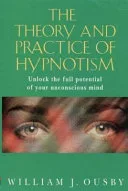
The Theory and Practice of Hypnotism
 77
77

The Theory and Practice of Hypnotism
William J. Ousby's "The Theory and Practice of Hypnotism" approaches its subject with a clarity that belies the often sensationalized nature of hypnosis. Published in 1990, it eschews sensationalism for a methodical exposition of hypnotic techniques. Ousby, identified as a psychoanalyst, grounds his explanations in psychological principles, making the processes accessible. The strength of the book lies in its balanced presentation of both the theory behind hypnosis and its practical applications, particularly in self-hypnosis for personal enhancement. A specific passage detailing the induction process, which emphasizes establishing rapport and utilizing rhythmic suggestion, is particularly instructive. However, the work could benefit from a deeper engagement with the ethical considerations surrounding hypnotic influence, a topic that feels somewhat understated given the subject matter's potential for misuse. Nevertheless, for its clear, practical guidance on harnessing the unconscious, Ousby's text remains a solid reference.
📝 Description
77
### What It Is William J. Ousby's "The Theory and Practice of Hypnotism," first published in 1990, offers a structured exploration of hypnotic states and their application. The work presents hypnosis not as mere stagecraft, but as a psychological tool for accessing deeper cognitive functions. It details methods for inducing and maintaining hypnotic trances, alongside techniques for therapeutic and self-improvement purposes. The book aims to demystify the process, making it understandable for a broad audience.
### Who It's For This book is intended for individuals curious about the mechanics of the mind and altered states of consciousness. It will appeal to those interested in psychology, self-help, and the practical applications of hypnosis for personal growth. Students of esoteric traditions seeking to understand the historical and practical aspects of mind manipulation will also find value here. It serves as an accessible entry point for anyone wishing to explore their own subconscious potential.
### Historical Context Emerging in 1990, Ousby's work arrived during a period when interest in psychoanalysis and alternative therapeutic techniques was experiencing a resurgence, albeit with a more critical lens than in earlier eras. The book situates itself within the broader landscape of early 20th-century psychological exploration, where figures like Sigmund Freud and Carl Jung were mapping the unconscious. While not strictly occult, hypnotism has long been intertwined with esoteric practices, and Ousby's text provides a more clinical perspective on phenomena that have captured the mystical imagination for centuries.
### Key Concepts The central thesis revolves around hypnosis as a means to unlock the latent power of the unconscious mind. Ousby elucidates techniques for achieving a hypnotic state, emphasizing the importance of suggestion and focused attention. The book covers self-hypnosis as a tool for personal development, stress reduction, and enhancing creativity. It explains the mechanism by which the conscious mind's critical faculty is bypassed, allowing for direct communication with the subconscious. This enables the integration of new perspectives and behaviors.
💡 Why Read This Book?
• Understand the core principles of hypnotic induction as detailed in Ousby's 1990 text, allowing you to differentiate between stage trickery and genuine psychological technique. • Learn practical self-hypnosis methods presented in the book, enabling you to explore personal development and stress management through direct engagement with your unconscious mind. • Gain insight into the psychoanalytic underpinnings of hypnosis, as explored by Ousby, providing a framework for how suggestion influences the subconscious, a concept relevant to various esoteric studies.
⭐ Reader Reviews
Honest opinions from readers who have explored this book.
❓ Frequently Asked Questions
When was "The Theory and Practice of Hypnotism" originally published?
The book was first published in 1990, marking its entry into the discourse on psychological techniques during that era.
What is the primary benefit of hypnosis according to William J. Ousby?
Ousby explains that hypnosis enables individuals to tap into the creative energy and potential of their unconscious mind for various benefits.
Is "The Theory and Practice of Hypnotism" suitable for beginners?
Yes, the book aims to make the techniques and benefits of hypnosis and self-hypnosis available to everyone, suggesting an accessible approach for novices.
What is self-hypnosis as described in the book?
Self-hypnosis, as presented by Ousby, is a technique that allows individuals to induce a hypnotic state in themselves for personal growth, relaxation, or problem-solving.
What is the author's background?
William J. Ousby is described as a renowned psychoanalyst, lending a clinical and psychological perspective to his work on hypnotism.
Does the book cover advanced hypnotic techniques?
While it makes techniques available to everyone, the book focuses on the foundational theory and practice, providing a comprehensive overview rather than exclusively advanced methods.
🔮 Key Themes & Symbolism
Unlocking the Unconscious
The central theme is the power residing within the unconscious mind, a concept explored by psychoanalysis since the early 20th century. Ousby posits hypnosis as the key to accessing this reservoir of creative energy and untapped potential. The book details how hypnotic suggestion can bypass the conscious censor, allowing for direct communication and integration of subconscious material, leading to personal transformation and enhanced cognitive abilities. This aligns with esoteric traditions that view the unconscious as a source of hidden knowledge and power.
The Mechanics of Suggestion
Ousby meticulously breaks down the process of hypnotic suggestion, explaining how specific verbal and non-verbal cues can influence an individual's perception, thoughts, and behaviors while in a hypnotic state. The work emphasizes the importance of clarity, repetition, and belief in the efficacy of suggestions. This exploration delves into the psychological mechanisms that make hypnosis work, distinguishing it from mere parlor tricks and highlighting its potential as a therapeutic and developmental tool. Understanding suggestion is critical for both practitioners and those undergoing hypnosis.
Self-Hypnosis for Personal Empowerment
A significant portion of the book is dedicated to the practice of self-hypnosis, presenting it as an accessible method for self-improvement available to all. Ousby outlines practical techniques that individuals can employ to induce hypnotic states in themselves, fostering relaxation, reducing stress, enhancing creativity, and overcoming personal limitations. This empowers the reader to take an active role in their own psychological well-being, drawing parallels with self-guided spiritual or mental disciplines found in various esoteric paths.
Psychoanalytic Foundations
The work is rooted in psychoanalytic theory, viewing the unconscious as a critical component of the human psyche. Ousby's background as a psychoanalyst informs his explanation of how hypnosis interacts with repressed memories, desires, and archetypal patterns. The book bridges the gap between clinical psychology and the broader human experience of altered states, offering a rational framework for phenomena often relegated to mysticism. This perspective provides a scientific grounding for the esoteric interest in the hidden depths of the mind.
💬 Memorable Quotes
“Hypnosis enables us to tap the creative energy of our unconscious mind.”
— This core statement encapsulates Ousby's thesis: that the hypnotic state is a gateway to the vast, untapped potential residing within our subconscious, offering a source for innovation and personal power.
“It makes the techniques - & the enormous benefits - of hypnosis & self-hypnosis available to everyone.”
— This highlights the book's democratizing intent, aiming to demystify hypnotism and present its practical applications as accessible tools for personal development, not exclusive skills.
“The conscious mind's critical faculty is bypassed, allowing direct communication with the subconscious.”
— This describes the fundamental mechanism of hypnosis as explained by Ousby, where the logical, analytical part of the mind is temporarily subdued to facilitate deeper psychological access.
“Self-hypnosis can be employed for stress reduction and enhancing creativity.”
— This points to the practical, self-directed applications of hypnotic techniques, positioning the book as a guide for personal growth and well-being through internal exploration.
“Hypnotism is presented as a psychological tool, not mere stagecraft.”
— This clarifies Ousby's intention to elevate the understanding of hypnotism beyond entertainment, grounding it in psychological theory and therapeutic potential.
🌙 Esoteric Significance
Tradition
While Ousby's text is primarily grounded in psychoanalytic psychology, its exploration of the unconscious mind and altered states of consciousness connects it tangentially to esoteric traditions like Hermeticism and Western Esotericism, which have long investigated the inner workings of the psyche. It offers a more clinical lens on concepts like accessing hidden knowledge or influencing the self, which are central to many mystical paths. Ousby's work provides a rational framework for phenomena that esoteric traditions might describe through symbolic language or direct spiritual experience.
Symbolism
The primary 'symbol' explored is the unconscious mind itself, depicted as a vast, fertile territory accessible through the 'gateway' of hypnosis. The act of suggestion functions symbolically, representing the power of focused intention and belief to reshape inner landscapes. The 'trance state' can be seen as a symbolic journey into inner realms, mirroring initiatory processes found in various esoteric systems where the practitioner navigates internal symbolic landscapes to achieve transformation.
Modern Relevance
Ousby's work remains relevant for contemporary practitioners of mindfulness, biofeedback, and neuro-linguistic programming (NLP), many of whom draw upon similar principles of suggestion and focused attention to achieve altered states and personal change. Thinkers exploring consciousness studies and the efficacy of therapeutic hypnosis continue to reference foundational texts like this. Its accessible explanation of hypnotic mechanics provides a valuable bridge for those in modern esoteric circles seeking to understand the psychological underpinnings of practices that aim for inner exploration and self-mastery.
👥 Who Should Read This Book
• Individuals interested in psychology and the mechanics of the human mind seeking a practical guide to altered states of consciousness. • Self-help enthusiasts looking for structured techniques to manage stress, enhance creativity, and foster personal development through self-hypnosis. • Students of esoteric traditions wanting to understand the psychological basis of practices involving deep introspection and mind-influence, bridging clinical psychology with metaphysical exploration.
📜 Historical Context
William J. Ousby's "The Theory and Practice of Hypnotism," published in 1990, emerged in a landscape where the psychological sciences were increasingly professionalizing and differentiating. While the early 20th century saw figures like Sigmund Freud and Carl Jung popularizing explorations of the unconscious, by 1990, psychoanalysis itself was undergoing reevaluation. Hypnotism, having experienced periods of both intense interest and skepticism since its Mesmeric origins in the 18th century, was seeking a more robust scientific and therapeutic footing. Ousby's work can be seen as contributing to this effort, offering a psychoanalytically informed perspective that sought to demystify the practice. It navigated the intellectual currents influenced by cognitive psychology and a growing interest in mind-body connections, distinguishing itself from the more sensationalistic portrayals common in popular culture. The book's reception likely placed it alongside contemporary self-help literature and academic texts on altered states of consciousness, rather than within the overtly occult or esoteric publishing spheres, though its subject matter inherently overlaps with such interests.
📔 Journal Prompts
The concept of tapping creative energy via the unconscious mind.
The specific techniques for inducing a hypnotic state.
The distinction between conscious and subconscious communication.
The application of self-hypnosis for personal development goals.
The role of suggestion in altering perception and behavior.
🗂️ Glossary
Hypnosis
A state of human consciousness involving focused attention and reduced peripheral awareness characterized by an enhanced capacity for response to suggestion.
Unconscious Mind
The part of the mind of which one is not aware and which influences one's behavior and feelings, often considered a reservoir of repressed thoughts and emotions.
Self-Hypnosis
The practice of inducing a hypnotic state in oneself, typically for therapeutic purposes, self-improvement, or relaxation.
Suggestion
In hypnosis, a prompt or idea presented to the subject that influences their thoughts, feelings, or actions during the hypnotic state.
Psychoanalysis
A system of psychological theory and therapy which aimed to treat mental disorders by investigating the interaction of conscious and unconscious elements in the mind.
Trance State
A state of altered consciousness, typically characterized by deep relaxation and heightened suggestibility, achieved through hypnosis.
Critical Faculty
The part of the conscious mind responsible for logical analysis, judgment, and skepticism, which is typically bypassed during hypnosis.