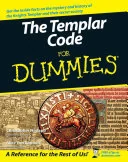
The Templar Code For Dummies
 74
74

The Templar Code For Dummies
Hodapp and Von Kannon's "The Templar Code For Dummies" offers a welcome antidote to the more outlandish Templar lore. The book's strength lies in its systematic breakdown of the Knights' operational framework, presenting their 'Code' as a logical construct for a medieval military-religious order. The authors successfully translate abstract notions of chivalry and faith into tangible principles that governed daily life and grand strategy. However, the "For Dummies" format, while accessible, occasionally simplifies potentially nuanced historical debates. A particularly effective section details the transition from simple monastic vows to the complex responsibilities of a warrior-monk, highlighting the practical evolution of the Order's identity. While not groundbreaking scholarship, it provides a solid, digestible overview for the uninitiated. The work serves as a competent primer on Templar organizational philosophy.
📝 Description
74
### A Knight's Way of Life Christopher Hodapp and Alice Von Kannon's "The Templar Code For Dummies" moves beyond sensationalist myths to examine the actual principles that guided the Knights Templar. The book focuses on the 'Code' as the foundational element of their existence – the unwritten rules, shared beliefs, and communal identity that fostered their remarkable cohesion and drive. It seeks to demystify the order by presenting a structured understanding of their operational and spiritual framework.
### For the Curious Explorer This work is intended for readers new to Templar history or those seeking a clear, organized introduction to the subject. It is particularly suited for individuals who appreciate a "For Dummies" approach, valuing straightforward explanations over dense academic jargon. The authors aim to equip the general reader with foundational knowledge about the Knights Templar, making complex historical and esoteric concepts accessible and understandable.
### Medieval Brotherhoods in Context Published in 2011, "The Templar Code" emerges during a period of sustained popular interest in historical secret societies and chivalric orders. It arrives in the wake of numerous fictional portrayals and speculative theories that often overshadow historical realities. The book aims to ground discussions about the Templars by presenting their internal structure and ethical codes, situating them within the broader landscape of 12th-century monastic and military orders.
### Decoding the Templar Ethos The core concepts explored include the hierarchy and vows of the order, their unique spiritual interpretations, and the practical application of their principles in their military and financial roles. The book dissects elements often associated with Templar mystique, such as their rituals and symbolic language, presenting them not as arcane secrets but as integral components of their collective identity and operational effectiveness. The goal is to understand the 'why' behind their actions and their enduring legacy.
💡 Why Read This Book?
• Gain a structured understanding of the Knights Templar's internal 'Code,' clarifying their operational and spiritual principles as outlined in the book's examination of their vows and hierarchy. • Explore the practical application of Templar ethos during the Crusades, learning how their specific code influenced their military actions and resilience in the Holy Land. • Demystify common Templar symbols and rituals by understanding their intended meaning within the Order's established framework, as detailed in the book's analysis of their medieval context.
⭐ Reader Reviews
Honest opinions from readers who have explored this book.
❓ Frequently Asked Questions
What was the primary purpose of the Knights Templar's 'Code' as presented in the book?
The book posits the Templar 'Code' served to bind the knights together through shared beliefs and strict rules, fostering discipline, courage, and a unified identity for their military and spiritual missions.
Does 'The Templar Code For Dummies' discuss the historical fate of the Knights Templar?
Yes, while focusing on their internal code, the book touches upon the historical context of their dissolution, explaining how their unique structure and perceived power contributed to their downfall in the early 14th century.
Is this book suitable for someone with no prior knowledge of medieval history?
Absolutely. The 'For Dummies' approach is designed for beginners, explaining complex historical and organizational concepts related to the Templars in clear, accessible language.
What kind of rituals are discussed in 'The Templar Code For Dummies'?
The book addresses the rituals associated with Templar initiation and their daily monastic life, interpreting them as integral to the Order's spiritual discipline and communal bonds, rather than purely esoteric secrets.
How does this book differentiate itself from speculative theories about the Templars?
It distinguishes itself by focusing on the documented or logically inferred principles and structures that governed the Knights Templar, grounding the narrative in historical context rather than unverified conspiracy theories.
When was 'The Templar Code For Dummies' first published?
The book was first published on February 14, 2011, positioning it as a modern interpretation and accessible guide to the historical Knights Templar.
🔮 Key Themes & Symbolism
The Templar 'Code'
The central theme is the concept of a 'Code' – not a literal cipher, but the set of principles, rules, and shared ethos that defined the Knights Templar. This code dictated their conduct, fostered their unity, and inspired their actions, moving beyond sensational myths to understand the practical and spiritual framework of their lives. The book explores how this internal discipline enabled their remarkable feats of courage and endurance during the Crusades.
Structure and Hierarchy
The work details the organizational structure of the Knights Templar, from their initiation rites to their military and administrative roles. It clarifies the hierarchy within the Order, explaining the distinct responsibilities of different ranks and how this structured approach contributed to their effectiveness as a military force and a financial institution in the 12th and 13th centuries.
Spirituality and Monasticism
Beyond their martial identity, the book examines the spiritual underpinnings of the Templar Order. It delves into their monastic vows and how these were integrated with their warrior roles, exploring the unique blend of religious devotion and military service that characterized their existence. This theme seeks to illuminate the 'why' behind their dedication and sacrifices.
Myth vs. Reality
A significant aspect of the book is its effort to separate historical fact from popular myth and speculation surrounding the Knights Templar. By focusing on the 'Code' and observable structures, Hodapp and Von Kannon aim to provide a grounded, rational perspective on the Order, demystifying elements often shrouded in mystery and conspiracy.
💬 Memorable Quotes
“The Code by which the Knights Templar lived and died.”
— This phrase encapsulates the book's central thesis: that a defined set of principles, rather than mere secrecy, was the driving force behind the Templars' existence and their ultimate fate.
“The Code that bound them together in secrecy.”
— This highlights the communal aspect of the Templar Code, suggesting it fostered a shared identity and loyalty that was crucial for their operations, even if their activities involved clandestine elements.
“The Code that inspired them to nearly superhuman feats of courage and endurance.”
— This emphasizes the motivational power of the Templar Code, attributing their exceptional bravery and resilience in battle and hardship to the strength of their shared convictions and discipline.
“The meaning behind the cryptic codes and secret rituals of the medieval brother”
— This suggests the book aims to decode the symbolic language and practices of the Templars, presenting them not as inherently occult but as components of their unique fraternal identity and operational methods.
“More than an intriguing cipher or a mysterious symbol.”
— This positions the Templar Code as a substantive, overarching framework for understanding the Order, moving past superficial fascination with symbols to grasp the deeper operational and ethical structure.
🌙 Esoteric Significance
Tradition
While not strictly adhering to a single esoteric lineage, "The Templar Code" engages with themes often explored in Western esoteric traditions, particularly those concerning chivalric orders and hidden knowledge. It approaches the Templars from a historical and organizational perspective, but by examining their 'Code,' rituals, and symbolism, it touches upon concepts of sacred orders and initiatory structures relevant to Hermetic and Rosicrucian studies.
Symbolism
The book likely explores symbols such as the eight-pointed cross, representing spiritual rebirth or the eight beatitudes, and the double-headed eagle, a symbol of dual power (spiritual and temporal) found in various medieval and esoteric contexts. It interprets these not as purely mystical keys but as markers of identity and belief within the Templar framework.
Modern Relevance
Contemporary interest in Templar history, often fueled by popular culture, finds a grounding point in works like this. Modern esoteric practitioners and historians of secret societies may draw on its clear exposition of Templar structure and ethos to contrast with more modern interpretations or to understand the historical roots of certain symbolic motifs that have reappeared in later occult movements.
👥 Who Should Read This Book
• Beginning students of medieval military orders seeking a clear, foundational overview of the Knights Templar's organizational principles. • Readers intrigued by historical societies who want to understand the Templars beyond sensational myths, focusing on their internal 'Code' and daily life. • Individuals interested in the 'For Dummies' series looking for an accessible introduction to the historical context and structure of one of history's most famous knightly orders.
📜 Historical Context
Published in 2011, "The Templar Code For Dummies" entered a cultural landscape saturated with Templar mystique, fueled by fiction and speculative history. It arrived nearly 700 years after the Order's dramatic suppression in 1312, a period marked by intense debate among historians regarding Templar wealth, power, and alleged heresy. The book's 'For Dummies' format suggests an aim to democratize knowledge about the Templars, offering a structured, accessible counterpoint to the more esoteric or conspiratorial narratives that often dominate popular discourse. It implicitly engages with the legacy of earlier Templar scholarship, such as that by Henri de Curzon in the late 19th century, by seeking to present a more grounded view of the Order's internal workings.
📔 Journal Prompts
The Templar 'Code' as a framework for discipline.
The integration of monastic vows with military service.
Interpreting Templar symbols within their historical context.
The Knights Templar's role as bankers in the 12th century.
Comparing Templar structure to modern organizations.
🗂️ Glossary
Knights Templar
A medieval Catholic military order founded around 1119, dedicated to protecting Christian pilgrims in the Holy Land and later becoming a significant financial power before its dissolution in 1312.
The 'Code'
As presented in the book, this refers to the guiding principles, rules, and shared ethos that governed the Knights Templar's lives, actions, and internal cohesion, rather than a literal cipher.
Chivalry
The medieval knightly system of conduct, including military skill, honor, courtesy, and religious devotion, which influenced the ethos and behavior of orders like the Templars.
Monastic Vows
The solemn promises of poverty, chastity, and obedience taken by monks, which were also adopted by the Templars, shaping their spiritual and communal life.
Crusades
A series of religious wars sanctioned by the Latin Church in the medieval period, primarily aimed at recovering the Holy Land from Islamic rule, in which the Templars played a significant military role.
Suppression of the Templars
The arrest, trial, and dissolution of the Knights Templar order by King Philip IV of France and Pope Clement V, beginning in 1307 and culminating in 1312, leading to the execution of its leaders.
Initiation Rites
The ceremonies and rituals involved in admitting a new member into the Knights Templar order, marking their transition and commitment to the Templar way of life.