The Spiritual Writings of Yogi Ramacharaka
 80
80

The Spiritual Writings of Yogi Ramacharaka
Atkinson’s decision to adopt the persona of Yogi Ramacharaka was a strategic masterstroke for popularizing Eastern thought. The strength of this compilation lies in its direct, unvarnished presentation of yogic principles, particularly the "Science of Breath." Atkinson, while not a Hindu, succeeded in translating complex ideas into digestible lessons for a Western readership of the early 1900s. However, the writing, while clear, can feel didactic, lacking the experiential depth one might find in more contemporary yogic literature. The section on "The Life Beyond Death" offers a fascinating glimpse into early 20th-century spiritualist interpretations of reincarnation and the astral plane, though some of its conclusions might strike modern readers as dated. It remains a significant document of spiritual transmission, nonetheless.
📝 Description
80
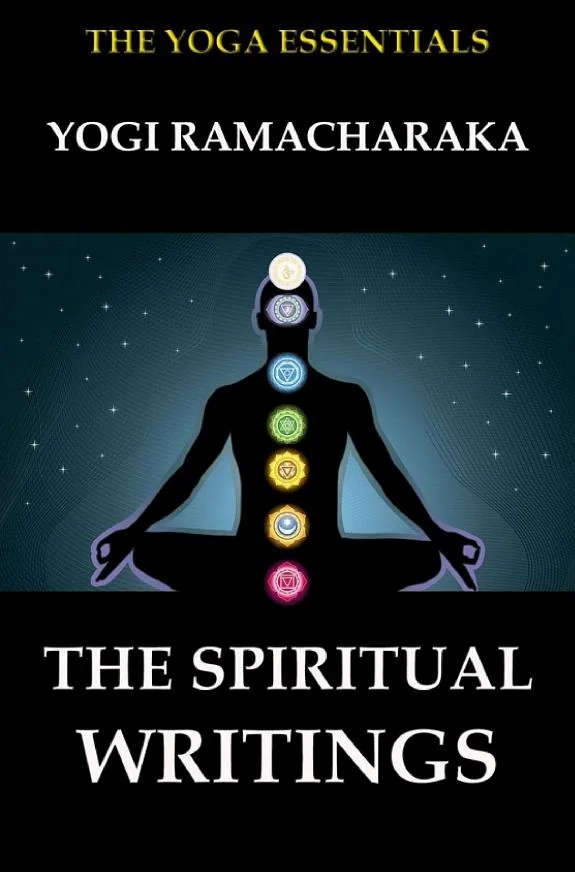
### What It Is The Spiritual Writings of Yogi Ramacharaka is a compilation of influential works by William Walker Atkinson, a pivotal figure in the New Thought movement. Published under the pseudonym Yogi Ramacharaka, these texts aimed to introduce Eastern philosophical and spiritual concepts to a Western audience at the turn of the 20th century. The collection offers foundational teachings on yogic philosophy, breath control, and the nature of life beyond physical death.
### Who It's For This book is intended for students of comparative religion, esoteric philosophy, and New Thought. It will appeal to those interested in the historical dissemination of Eastern spirituality in the West and individuals seeking practical techniques for mental and spiritual development. Readers familiar with Atkinson's other works will find a consistent thread of his philosophical inquiry.
### Historical Context William Walker Atkinson, writing as Yogi Ramacharaka, was active during a period of intense interest in spiritualism and Eastern religions in Europe and America. He disseminated ideas that would later be explored by figures in movements like Theosophy. His work presented yogic principles in a format accessible to Westerners, often contrasting with or complementing contemporary Western metaphysical systems and the burgeoning New Thought philosophy.
### Key Concepts The writings explore the science of breath as a fundamental tool for spiritual and physical well-being, presenting it as a key to unlocking mental powers and achieving higher consciousness. The book also addresses the nature of the soul and the continuity of consciousness after death, drawing parallels between Hindu yogic beliefs and Western spiritual aspirations. The interconnectedness of mind, body, and spirit forms a central tenet.
💡 Why Read This Book?
• Gain practical breathing techniques from "Fourteen Lessons in Yogi Philosophy and Oriental Occultism" to enhance mental clarity and vitality. • Understand the historical bridge between 19th-century American spiritualism and early introductions to Hindu yogic philosophy, as presented by Atkinson in the early 1900s. • Explore early Western interpretations of the "Life Beyond Death," drawing parallels between yogic concepts and contemporary metaphysical beliefs of the era.
⭐ Reader Reviews
Honest opinions from readers who have explored this book.
❓ Frequently Asked Questions
Who was Yogi Ramacharaka and why did he use a pseudonym?
Yogi Ramacharaka was a pseudonym for William Walker Atkinson, a prolific writer and a key figure in the New Thought movement. He adopted the persona to introduce Eastern philosophy to the West, claiming to be a Hindu yogi, though he was not.
What are the main subjects covered in The Spiritual Writings of Yogi Ramacharaka?
The book covers yogic philosophy, the science of breath (pranayama), mental development, and discussions on the continuity of consciousness and life after physical death, drawing from Hindu traditions.
When were these writings originally published?
While this compilation was published in 2014, the original works by Yogi Ramacharaka (William Walker Atkinson) were published much earlier, primarily in the early 20th century, with many appearing around 1905-1906.
Is this book a practical guide to yoga?
It offers practical principles, particularly concerning breath control and mental discipline, framed within yogic philosophy. It is more of a philosophical and spiritual guide than a physical yoga manual.
What is the New Thought movement?
The New Thought movement is a spiritual, philosophical, and New Age movement that emerged in the United States in the 19th century, emphasizing the power of thought and belief to create positive outcomes in one's life.
How does William Walker Atkinson's work differ from other spiritual writers of his time?
Atkinson's distinctive approach was his synthesis of Eastern philosophies with Western metaphysical and New Thought ideas, presented in accessible, often serialized, formats. His use of pseudonyms like Yogi Ramacharaka allowed him to explore diverse spiritual traditions.
🔮 Key Themes & Symbolism
The Science of Breath
This compilation places significant emphasis on pranayama, the yogic science of breath, as detailed in 'The Hindu-Yogi Science Of Breath.' Atkinson presents breath control not merely as a physical exercise but as a fundamental key to unlocking psychic abilities, mental clarity, and spiritual advancement. The text explains how conscious regulation of respiration can influence one's vital energy (prana) and, consequently, one's state of consciousness and physical health, making it a central pillar of yogic practice for achieving higher awareness.
Life Beyond Death
In 'The Life Beyond Death,' Ramacharaka explores concepts of the soul, consciousness, and the continuity of existence post-mortem. Drawing from Hindu doctrines and early 20th-century spiritualist ideas, the work posits that consciousness persists and evolves through various planes of existence. It aims to demystify death, presenting it as a transition rather than an end, and offers a framework for understanding reincarnation and the spiritual journey of the soul, aligning yogic thought with Western metaphysical inquiries.
Yogi Philosophy
'Fourteen Lessons in Yogi Philosophy' offers a systematic introduction to yogic principles for the uninitiated Western reader. Atkinson breaks down complex ideas into manageable lessons, covering topics such as the nature of the mind, the development of intuition, and the practical application of yogic thought in daily life. This section acts as a primer, making the esoteric teachings of the East accessible and relevant to individuals seeking self-improvement and spiritual understanding.
Eastern Philosophy in the West
A recurring theme is Atkinson's deliberate effort, under the Yogi Ramacharaka guise, to bridge the philosophical and spiritual traditions of India with Western thought. He recognized a burgeoning interest in Eastern mysticism and sought to present these teachings in a way that would resonate with the contemporary intellectual climate, particularly within the New Thought movement. This compilation stands as a historical document of that cross-cultural spiritual transmission.
💬 Memorable Quotes
“The breath is the motor of life.”
— This concise statement encapsulates the yogic view that conscious breathing is not just a biological function but the very engine of vitality, consciousness, and spiritual energy, central to the teachings presented.
“Thought is the only reality.”
— This reflects the idealist and New Thought underpinnings of Atkinson's philosophy, suggesting that the material world is secondary to the power and primacy of mental states and consciousness.
“The Yogi does not merely wish for immortality; he knows it.”
— This highlights the confidence and certainty derived from yogic practice and understanding, contrasting passive desire with the experiential knowledge of eternal consciousness.
“The mind is a plane on which we can travel.”
— This interpretation of the mind as a vehicle or dimension suggests that through yogic discipline, one can consciously direct their mental focus and explore inner states and realms.
“Death is but a change of clothing for the soul.”
— A common metaphor for reincarnation and spiritual continuity, this phrase from the book suggests that the physical body is a temporary garment for the eternal soul, emphasizing transformation over annihilation.
🌙 Esoteric Significance
Tradition
This work fits within the broader Hermetic and esoteric traditions, particularly the New Thought movement of the late 19th and early 20th centuries. While drawing heavily on Hindu yogic philosophy, it is adapted and presented through a Western psychological and metaphysical framework. It represents an early attempt to distill and popularize complex Eastern concepts for Western consumption, making it a bridge text between Eastern spirituality and Western occultism.
Symbolism
Key symbols include the 'breath' itself, representing prana or life force, and the 'mind,' conceptualized as a controllable instrument for spiritual ascent. The idea of 'planes of existence' beyond the physical is also central, symbolizing the layered nature of consciousness and the spiritual journey. The writings implicitly use the metaphor of 'awakening' to denote the attainment of higher consciousness, a common motif in many esoteric traditions.
Modern Relevance
Contemporary interest in mindfulness, breathwork, and the mind-body connection owes a debt to pioneers like Atkinson. His accessible introductions to yogic principles continue to inform modern practitioners of meditation, yoga, and self-help, particularly those interested in the psychological and practical applications of spiritual disciplines. His work is often cited in discussions of Western esoteric history and the popularization of Eastern thought.
👥 Who Should Read This Book
• Students of William Walker Atkinson's extensive bibliography, seeking to understand his engagement with Eastern philosophy under a distinct pseudonym. • Aspiring practitioners of meditation and breathwork interested in the historical development of these techniques in Western esoteric thought. • Researchers of comparative religion and intellectual history, examining the cross-cultural transmission of spiritual ideas in the early 20th century.
📜 Historical Context
The spiritual writings of Yogi Ramacharaka emerged during a fervent period of spiritual exploration in the late 19th and early 20th centuries, an era marked by the rise of Theosophy and the New Thought movement. William Walker Atkinson, the man behind the pseudonym, was a prolific contributor to this milieu, seeking to synthesize Eastern esoteric doctrines with Western metaphysical thought. His work aimed to demystify yogic practices for a Western audience, presenting them through accessible lessons and treatises. This period saw figures like Helena Blavatsky popularizing Eastern religions, creating fertile ground for Atkinson's more pragmatic, psychological interpretations of yoga. While figures like Swami Vivekananda were also introducing Vedanta to America, Atkinson’s approach was distinctly filtered through the lens of New Thought, emphasizing mental power and self-realization through practical application. His writings were widely distributed, influencing countless individuals seeking spiritual understanding outside traditional religious frameworks.
📔 Journal Prompts
The conscious control of breath as described in 'The Hindu-Yogi Science Of Breath.'
The concept of the mind as a 'plane on which we can travel.'
Your understanding of 'The Life Beyond Death' prior to reading these texts.
The practical application of yogic philosophy in daily Western life.
The role of pseudonyms in spiritual and philosophical discourse, as exemplified by Yogi Ramacharaka.
🗂️ Glossary
Prana
In yogic philosophy, the vital life force or energy that animates all beings. The 'Science of Breath' focuses on its regulation through conscious breathing exercises.
Yogi
An individual who practices yoga, typically one who has attained high spiritual realization and can control body and mind. Ramacharaka uses the term to denote practitioners of yogic philosophy.
New Thought
A spiritual, philosophical, and New Age movement that emerged in the 19th century, emphasizing the power of thought and belief to create reality and achieve spiritual and material well-being.
Astral Plane
In esoteric traditions, a plane of existence intermediate between the physical and the purely spiritual, often associated with emotions, desires, and subtle bodies.
Consciousness
The state of being aware of and responsive to one's surroundings; the mind. Ramacharaka explores its continuity beyond physical death and its potential for expansion.
Esoteric
Intended for or likely to be understood by only a small number of people with specialized knowledge or interest; secret or mysterious.
Metaphysical
Based on abstract reasoning or thinking; dealing with the fundamental nature of reality, existence, and knowledge.
















![Tales of Mystery and Imagination [22 stories]](/img/thumb/tales-of-mystery-and-imagination-22-stories-edgar-allan-poe-520084.webp)