The Secrets of Afro-Cuban Divination

 83
83

The Secrets of Afro-Cuban Divination
Ócha'ni Lele’s *The Secrets of Afro-Cuban Divination* provides a much-needed, in-depth look into the mechanics and philosophy of two foundational divinatory systems. The author’s direct engagement with the material is evident, particularly in the detailed explanations of shell casting for Diloggún, offering a practical perspective often missing in more academic treatments. One notable strength is the clear delineation between the roles of the Babalawo and the Santero/Santera within their respective divinatory practices. However, the narrative occasionally becomes dense, especially when detailing the intricate genealogies of the Odu, which might challenge readers new to this cosmology. A passage that particularly stands out is the explanation of *Eji Ogbe*, the first Odu, and its foundational significance, illustrating the author's deep respect for the tradition. Ultimately, this book serves as a valuable, if sometimes demanding, resource for understanding Afro-Cuban spiritual mechanics.
📝 Description
83
Ócha'ni Lele's 1992 work demystifies Afro-Cuban divination systems.
This book examines the divination practices of the Yoruba people as they developed in Cuba. It explains the methods and spiritual foundations of systems like Ifá and Diloggún. The text clarifies the roles of Orishas, ancestors, and cosmic forces within these traditions. The author presents these spiritual arts with respect for their history and cultural importance, aiming to make them accessible.
The volume is for serious students of African diasporic religions, practitioners of Santería and Ifá, and scholars. It suits those wanting to understand divination more deeply than surface interpretations. Individuals interested in Cuban religious syncretism will find it valuable. While prior knowledge of Yoruba cosmology helps, the book offers sufficient background for newcomers willing to engage with its content.
This book sits within the study of African diasporic religions, specifically the traditions that traveled from West Africa to the Caribbean. It details divination methods that are integral to spiritual paths like Regla de Ocha and Ifá, which blend Yoruba cosmology with Cuban history and culture. The text focuses on the practical application and spiritual understanding of these systems, acknowledging their syncretic evolution and their role in maintaining connection with ancestral spirits and deities.
💡 Why Read This Book?
• Gain practical insight into the Diloggún divination system, including the specific meanings of the 12 main *Odu* (chapters) derived from cowrie shell configurations, offering a tangible skill. • Understand the spiritual cosmology of *Orishas* and their connection to natural forces, as detailed through the lens of Ifá divination, enriching your perception of spiritual interconnectedness. • Learn about the historical preservation of Yoruba traditions in Cuba post-slavery, highlighting specific syncretic practices that emerged, providing a unique perspective on cultural resilience.
⭐ Reader Reviews
Honest opinions from readers who have explored this book.
❓ Frequently Asked Questions
What is the primary difference between Ifá and Diloggún divination as explained in the book?
The book clarifies that Ifá is typically practiced by male priests (Babalawo) using divination chains and palm nuts, while Diloggún uses cowrie shells and is often practiced by female priests (Santeras) and male priests (Santeros), with distinct sets of verses (Odu).
When was the first edition of 'The Secrets of Afro-Cuban Divination' published?
The first edition of 'The Secrets of Afro-Cuban Divination' by Ócha'ni Lele was published in the year 2000.
Does the book explain how to interpret the messages from the Orishas?
Yes, the book details the methodologies and interpretive frameworks for both Ifá and Diloggún, explaining how the configurations of shells or the divination chain correspond to specific verses (Odu) that carry messages from the Orishas.
Is this book suitable for someone completely new to Afro-Cuban religions?
While the book offers some foundational context, it is most beneficial for those with a basic understanding of Yoruba cosmology and the Orishas. Newcomers might find it dense but can still gain valuable insights into the divinatory systems.
What role do the Odu play in Afro-Cuban divination?
The Odu are the fundamental verses or chapters of knowledge within Ifá and Diloggún. The book explains that each Odu contains wisdom, prophecies, and guidance that are interpreted by the diviner based on the divination outcome.
Are there practical exercises or rituals described for readers to perform?
The book focuses primarily on explaining the theory and practice of divination systems. While it details the processes, it is designed more for understanding and learning rather than providing step-by-step ritual instructions for untrained individuals.
🔮 Key Themes & Symbolism
The Orisha Pantheon
The book centers on the *Orishas*, divine intermediaries originating from Yoruba mythology. These powerful beings, representing natural forces and human archetypes, are central to understanding the spiritual range of Afro-Cuban religions. Ócha'ni Lele details their roles, characteristics, and how they communicate through divinatory practices. The text elucidates how deities like Elegua, Ogun, and Yemaya are invoked and understood within the context of divination, providing practitioners with a framework for spiritual communication and guidance from these potent forces.
Ifá Divination
Ifá stands as a paramount divinatory system explored in this work, practiced by the *Babalawo*. The book meticulously describes the tools, such as the divination chain (*opele*) and sacred palm nuts (*ikin*), and the intricate process of casting them. Central to Ifá is the vast corpus of the *Odu*, the 256 chapters of wisdom and prophecy. The text examines how the Babalawo interprets the patterns formed by these tools, aligning them with specific Odu to provide counsel and foresight, emphasizing its role as a sophisticated oracle.
Diloggún and Cowrie Shells
Diloggún, the divination system utilizing cowrie shells, is given considerable attention. Ócha'ni Lele explains the specific methods employed by *Santeras* and *Santeros*, detailing how the shells are thrown and the meaning derived from their various configurations. The work outlines the principal *Odu* of the Diloggún, emphasizing the practical application of this system for everyday guidance and spiritual consultation. This section highlights the accessibility of Diloggún as a means of communication with the divine and ancestors.
Cultural Syncretism
The text implicitly addresses the historical process of syncretism, where Yoruba religious practices, including divination, were preserved and transformed in Cuba. While not a primary focus, the adaptation of these traditions within a new cultural milieu, often influenced by Catholicism, is a crucial underlying theme. The persistence of these distinct divinatory systems, like Ifá and Diloggún, demonstrates the resilience of African spiritual heritage and its ability to evolve while retaining core tenets, particularly evident in the post-slavery era.
💬 Memorable Quotes
Direct passages from the work, attributed to the author.
“The Odu are the sacred verses that hold the wisdom of the universe.”
— This statement underscores the foundational importance of the Odu within Ifá and Diloggún. It frames these verses not merely as pronouncements but as a comprehensive library of cosmic knowledge essential for divination.
“Elegua opens the doors of destiny for the diviner and the supplicant.”
— This highlights Elegua's key role as the opener of ways and guardian of thresholds. It signifies that no spiritual communication or divination can truly commence without Elegua's permission and intervention.
“The cowrie shell speaks with the voice of the ancestors.”
— This interpretation emphasizes the sacred nature of the Diloggún shells, linking them directly to ancestral wisdom. It suggests that the messages received through shell divination carry the weight and authority of generations past.
“The irofa and ikin are the tools through which the divine is consulted.”
— This highlights the tangible instruments used in Ifá divination. It positions these objects not as mere artifacts but as conduits, essential for facilitating a direct connection and dialogue with the divine forces.
“Understanding the relationships between the Orishas is key to interpreting their messages.”
— This points to the interconnectedness of the divine pantheon. It suggests that a holistic understanding of how Orishas interact and influence each other is crucial for accurate divination and spiritual comprehension.
🌙 Esoteric Significance
Tradition
This work is deeply rooted in the Yoruba religious and philosophical tradition, specifically as it evolved within the Cuban context of Regla de Ocha (Santería) and Ifá. It represents a significant contribution to the literature on African diasporic religions, which often sit adjacent to Western esoteric traditions like Hermeticism but maintain their distinct cosmologies and divinatory practices. Lele’s text functions as an insider’s guide, preserving and explaining these practices with fidelity to their original spiritual intent, rather than interpreting them solely through a Western esoteric lens.
Symbolism
Key symbols include the *cowrie shell* (*Diloggún*), representing wealth, fortune, and the voice of the feminine divine and ancestors in divination. The *divination chain* (*Opele*) and *sacred palm nuts* (*Ikin*) are potent symbols of Ifá, acting as direct instruments for consulting Orunmila and receiving divine pronouncements. The *Odu* themselves, the 256 chapters of Ifá, symbolize the totality of existence, fate, and the cyclical nature of life, acting as the narrative body of cosmic law.
Modern Relevance
Contemporary practitioners of Santería and Ifá, as well as scholars of religion and comparative divination, continue to draw upon this text for its detailed explanations. Its influence can be seen in modern online spiritual communities, educational workshops, and academic research focusing on African diasporic traditions. The work provides a foundational reference for understanding the complex interplay of spirituality, ancestry, and cosmic order that informs many modern spiritual paths seeking connection to African roots.
👥 Who Should Read This Book
• Aspiring priests and priestesses of Santería and Ifá seeking to understand the foundational divinatory systems they may one day practice or study. • Scholars of African diaspora religions and comparative mythology interested in the specific syncretic developments and philosophical underpinnings of Cuban spiritual traditions. • Individuals exploring personal divination methods who wish to gain a deeper, more culturally informed perspective beyond generic fortune-telling practices.
📜 Historical Context
Published in 2000, Ócha'ni Lele’s work emerged during a period of renewed interest in Afro-Caribbean spiritual traditions, particularly following the increased visibility of Santería in the late 20th century. This era saw a proliferation of texts, moving beyond earlier anthropological surveys like those by Lydia Cabrera in the mid-20th century, towards more practitioner-focused guides. The intellectual currents were influenced by post-colonial studies and a desire to reclaim and accurately represent African diasporic religions, often previously marginalized or misunderstood. While not facing direct censorship as in earlier colonial periods, these traditions still navigated societal skepticism. The book's detailed exposition of Ifá and Diloggún contributed to a growing body of literature that sought to present these systems with their internal logic and spiritual depth, distinguishing them from syncretic practices that might have been more superficially understood by contemporaries engaging with comparative religion.
📔 Journal Prompts
The role of Elegua as the opener of paths in divination.
Interpreting the symbolism of the cowrie shell in Diloggún.
How the Odu verses shape guidance for practitioners.
The significance of the Babalawo's tools in Ifá consultation.
Reflecting on the resilience of Yoruba traditions in Cuba.
🗂️ Glossary
Orisha
Deities or spirits originating from Yoruba religion, representing forces of nature and human archetypes. They act as intermediaries between humanity and the supreme creator, Olodumare.
Ifá
A complex divination system originating from the Yoruba people, typically practiced by male priests (Babalawo), utilizing divination chains and sacred verses (Odu).
Diloggún
A divinatory system using cowrie shells, commonly practiced by Santeras and Santeros within the Regla de Ocha tradition, which interprets the patterns of fallen shells.
Odu
The 256 chapters or verses that form the corpus of knowledge in Ifá and Diloggún divination, containing wisdom, prophecies, and guidance.
Babalawo
A male priest within the Ifá tradition, highly trained in divination, divination ceremonies, and the extensive body of Ifá literature (Odu).
Santero/Santera
A priest or priestess within the Regla de Ocha (Santería) tradition, often skilled in Diloggún divination and the worship of the Orishas.
Opele
A divination chain used in Ifá, typically consisting of eight halves of seeds or pods, which is thrown to consult Orunmila and determine which Odu is speaking.
🔮 Readers Also Liked
Browse all →







More by Ócha'ni Lele
All books →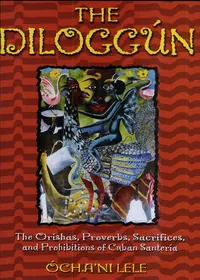





More Free Occult Philosophy Books
View all →